Artwork
Path through a Wheat Field (Sentier dans les bles)
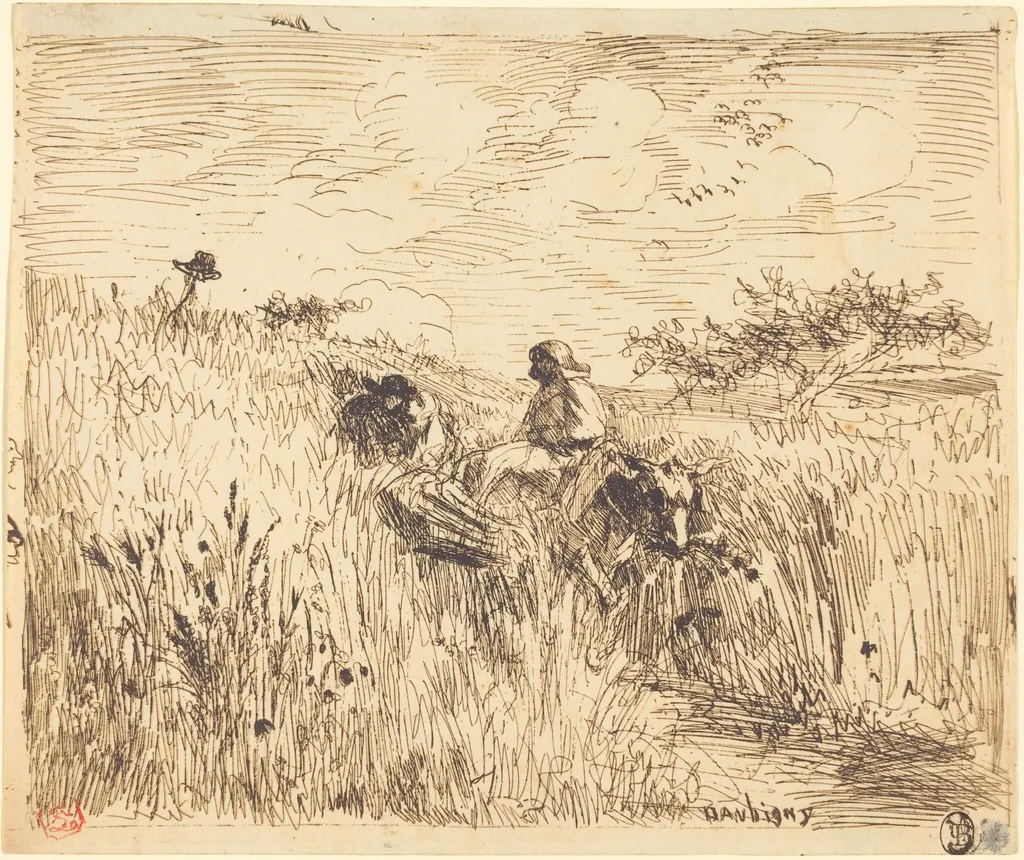
Path through a Wheat Field (Sentier dans les bles) is a print by the Impressionist artist Charles François Daubigny. It dates from 1862 and is held in the collection of the National Gallery of Art. Created in 1862, *Path through a Wheat Field* (Sentier dans les blés) is a print by French landscape painter Charles‑François Da Daubigny.
About this work
Overview
Created in 1862, *Path through a Wheat Field* (Sentier dans les blés) is a print by French landscape painter Charles‑François Da Daubigny. Executed in the hybrid cliché‑verre process, the work presents a quiet rural scene where a narrow track winds among golden wheat, framed by trees and low shrubbery that recede toward the horizon.
Subject & Meaning
The composition depicts a cultivated field at the height of the harvest, the path suggesting a gentle invitation to move through the countryside. By emphasizing the varied heights of the stalks and the play of light across the terrain, Da Daubigny conveys a sense of calm permanence in the agrarian landscape, reflecting his long‑standing interest in the French countryside.
Technique & Style
Cliché‑verre combines photographic exposure with traditional printmaking.
Cliché‑verre combines photographic exposure with traditional printmaking. Da Daubigny coated a glass plate with a light‑sensitive emulsion, drew the scene with a brush, and then exposed it to light before developing the image onto paper. The resulting print retains the painterly texture of his brushwork while achieving the tonal subtlety of a photograph, merging realism with a soft, atmospheric quality.
History & Provenance
Da Daubigny, a leading figure of the Barbizon school, was an early adopter of the cliché‑verre method, which was explored by only a handful of artists in the mid‑nineteenth century. The work was produced during a period when he was expanding his print output beyond etching, contributing to the technique’s brief popularity among French landscape artists.
Context
The print emerges at a time when French artists were increasingly turning to direct observation of nature, a shift that would later inform Impressionism. Da Daubigny's focus on everyday rural scenes and his experimental approach to print media place the work within the broader movement toward naturalism and technical innovation in the 1860s.
Own this work as a print
Artist & collection
Artist
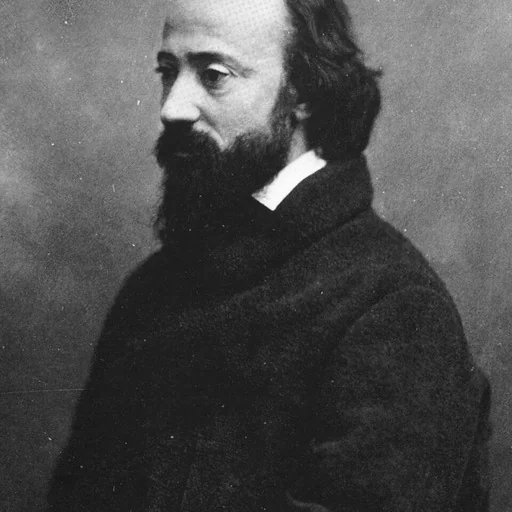
Charles-François Daubigny ( DOH-bin-yee, US: DOH-been-YEE, doh-BEEN-yee, French: ; 15 February 1817 – 19 February 1878) was a French painter, one of the members of the Barbizon school, and is considered an important precursor of…

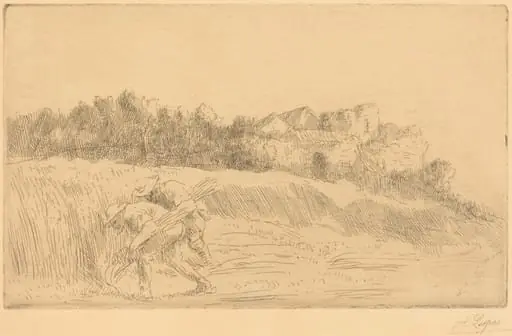 Harvesters (Les moissoneurs)
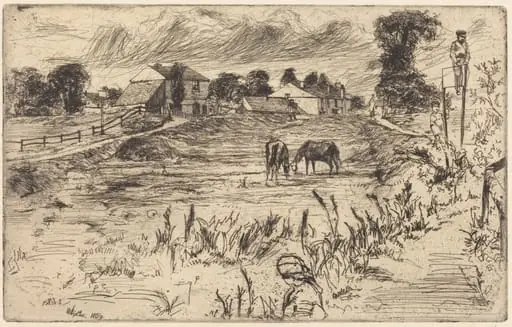 Landscape with Horses
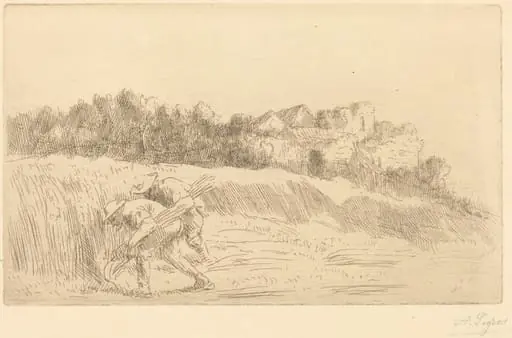 Harvesters (Les moissoneurs)
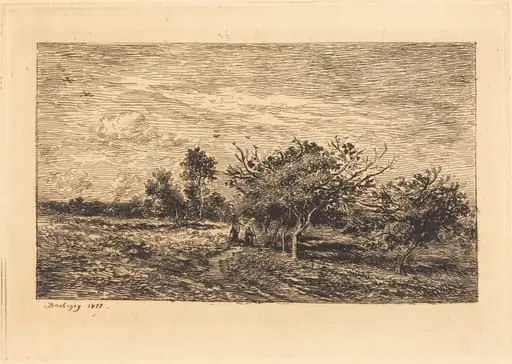 Apple Trees in Auvers (Pommiers a Auvers)
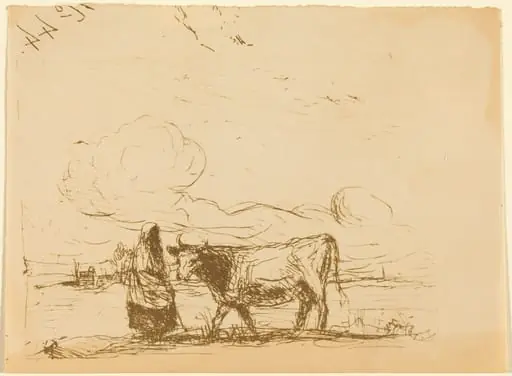 Cow and Its Keeper (La Vache et sa gardienne)
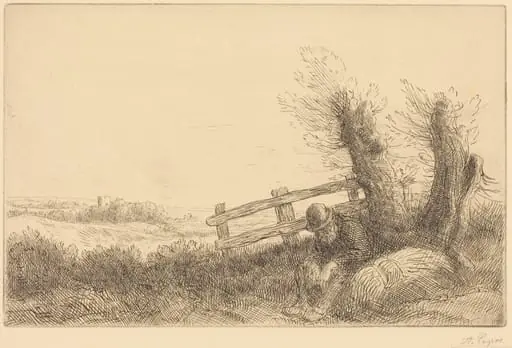 Farmer Reclining (Le fermier au repos)
 Old Willesley House
 Banks of the Yanne (Les bords de la Yanne)
 The Rider in the Reeds (Le Cavalier dans les roseaux)
 The Lonely Tower (La Tour isolee)