Artwork
Wandering Saltimbanques
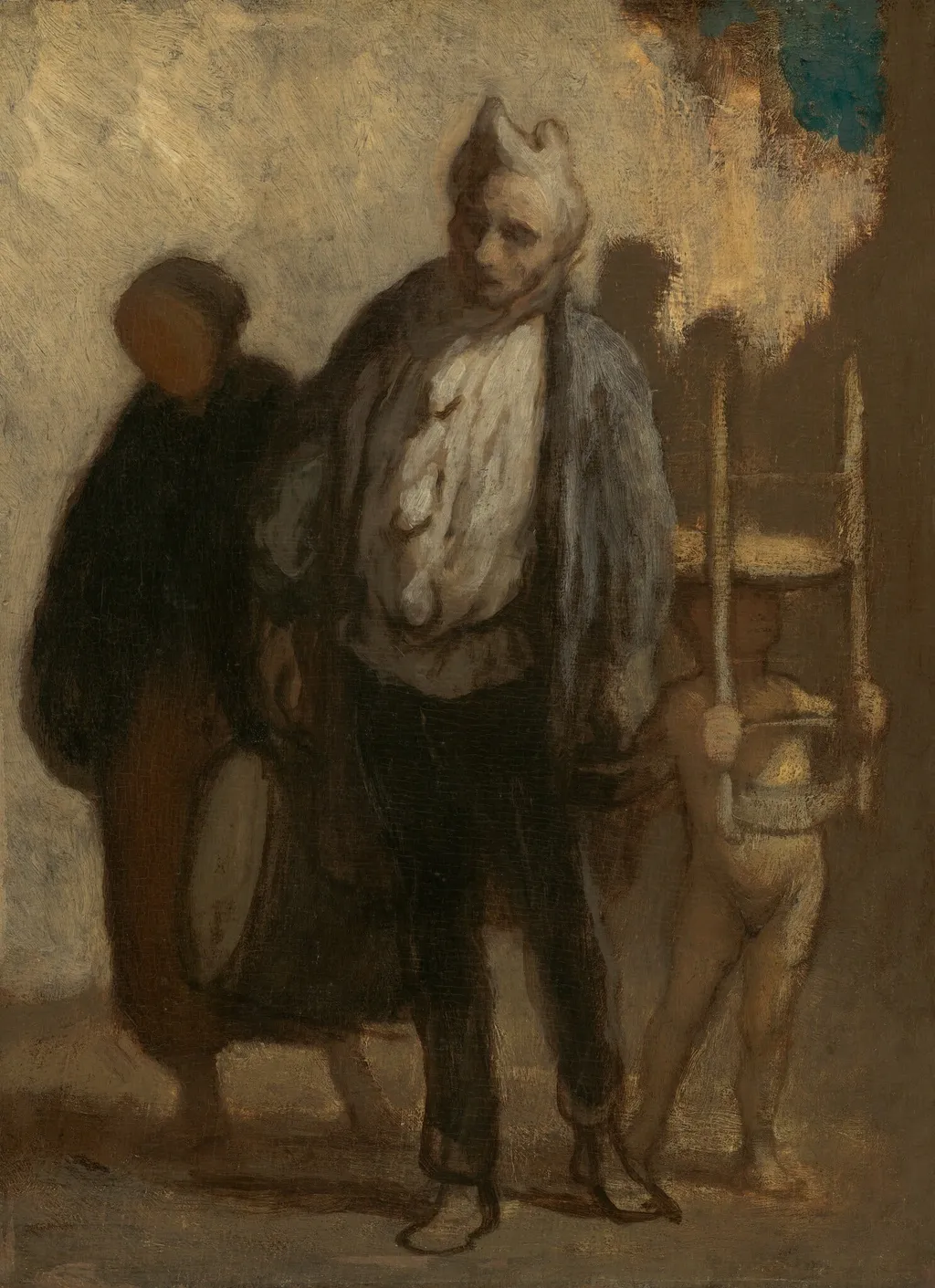
Wandering Saltimbanques is an oil painting by the Realist artist Honoré Daumier. It dates from 1848 and is held in the collection of the National Gallery of Art.
About this work
Overview
Honoré Daumier’s *Wandering Saltimbanques* (1848) is an oil painting on wood that captures a brief moment in a narrow, dimly lit alley. Two figures—one in a tall hat and a threadbare coat, the other in dark attire holding the first’s arm—move through a setting marked by rough walls and a leaning ladder, rendered with a muted palette and soft illumination.
Subject & Meaning
The work depicts itinerant entertainers, a motif that underscores the precariousness of marginal lives in mid‑nineteenth‑century France. By focusing on these wandering performers, Daumier highlights themes of transience, economic hardship, and the social invisibility of those who exist on the periphery of urban life.
Technique & Style
Daumier employs thick, impasto brushstrokes to convey the texture of the figures’ clothing, while the surrounding architecture is suggested with looser, less defined strokes. The lighting is diffused, allowing shadows to merge gently with the background, creating a subdued atmosphere that emphasizes the figures rather than the setting.
History & Provenance
Created during a period of political turbulence in France, the painting reflects Daumier’s republican sympathies and his reputation for socially critical art. Although primarily known for his satirical lithographs, this early oil work demonstrates his engagement with genre scenes that document everyday life.
Own this work as a print
Artist & collection
Artist
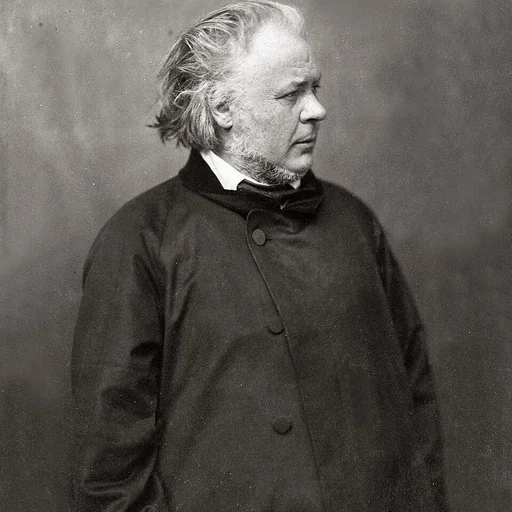
Honoré-Victorin Daumier was a French painter, sculptor, and printmaker, whose many works offer commentary on the social and political life in France, from the Revolution of 1830 to the fall of the Second French Empire in 1870.