Artwork
The Dancer
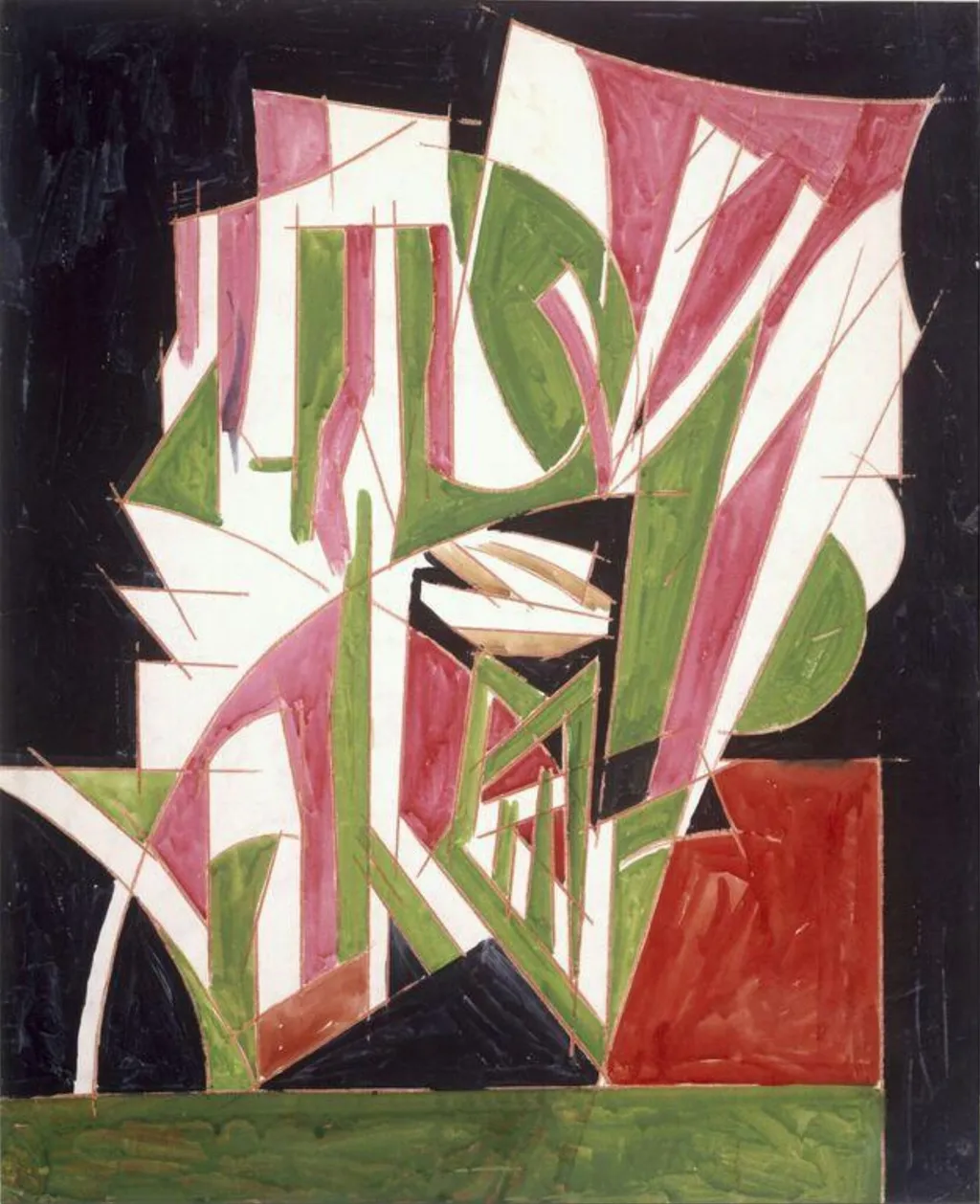
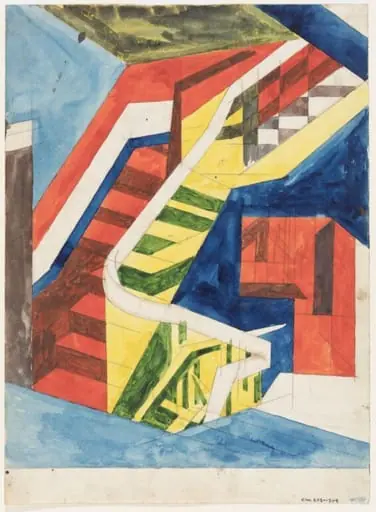
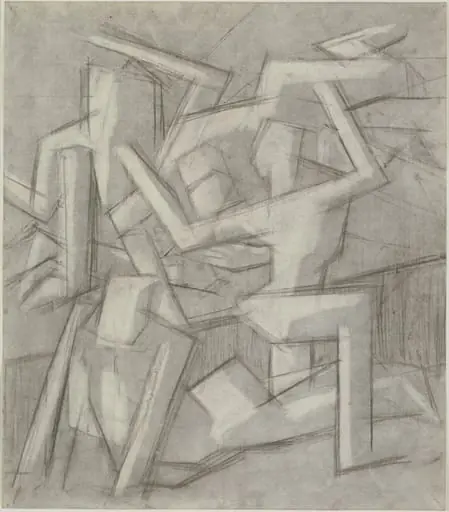
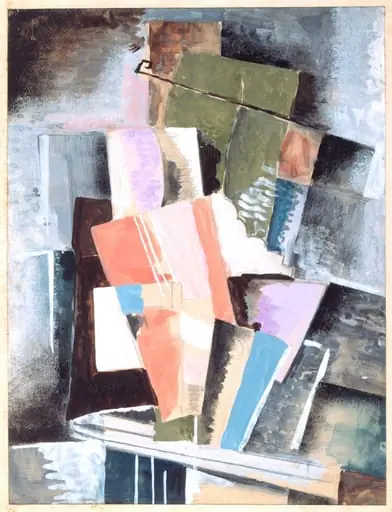
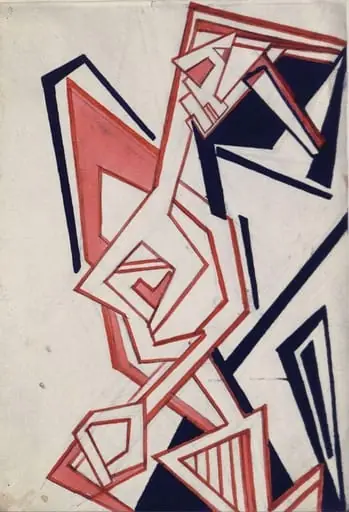
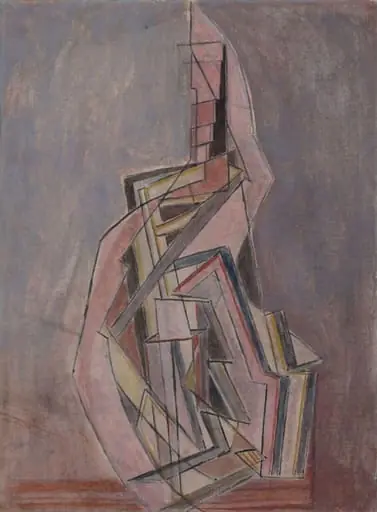
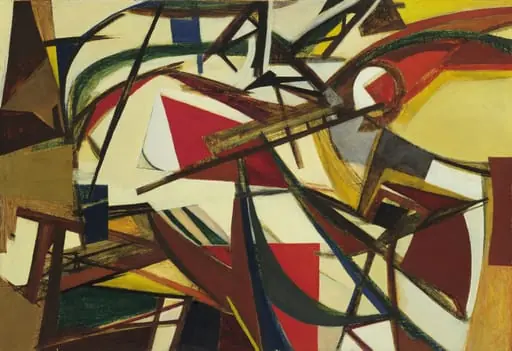
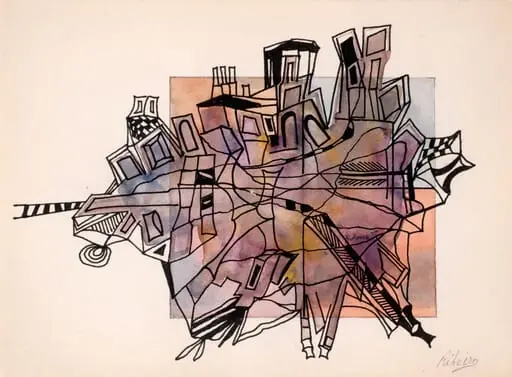
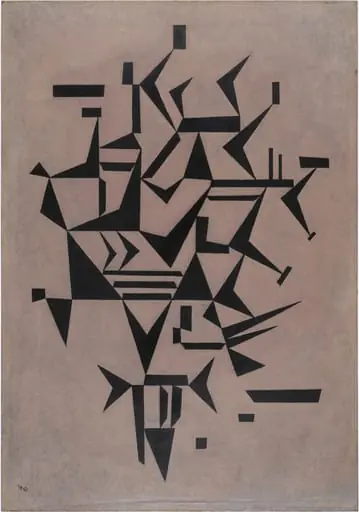
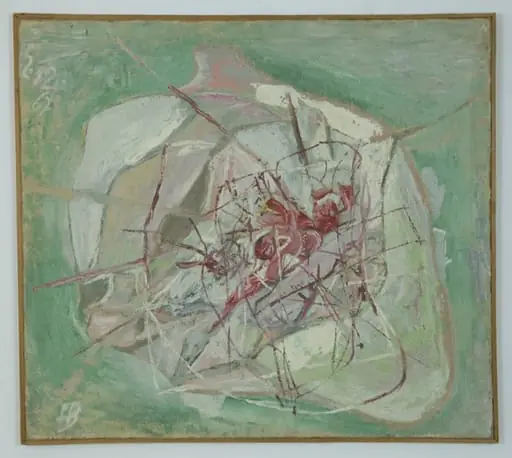
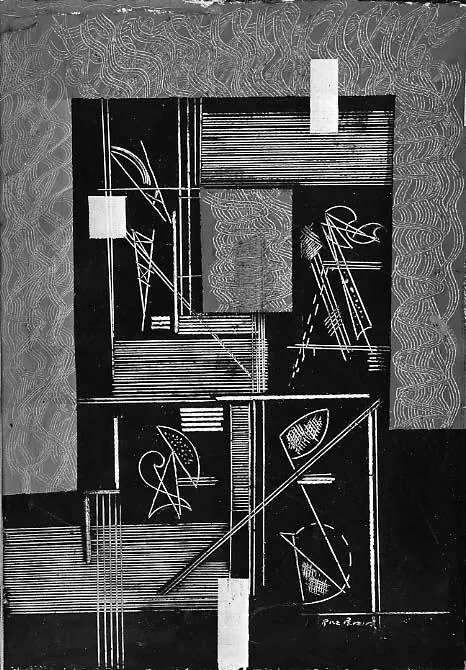
The Dancer is a watercolor work on paper by David Bomberg. It dates from 1913 and is held in the collection of the Victoria and Albert Museum. This watercolour work captures movement through non-representational forms.
About this work
Overview
This watercolour work captures movement through non-representational forms. The composition is built from intersecting planes of saturated colour—red, green, and white—arranged without regard for naturalistic depth. The medium’s fluidity allows pigment to bleed and pool, creating edges that shift between sharp and blurred, reinforcing a sense of dynamic motion over static form.
Subject & Meaning
The subject is implied rather than depicted: a dancer’s motion is suggested through fragmented lines and overlapping shapes. There is no attempt to render anatomy or costume realistically. Instead, the painting conveys rhythm and energy through visual tension, where conflicting forms coexist without resolution, evoking the physicality of performance without literal representation.
Technique & Style
Watercolour is employed with deliberate unpredictability. Areas of intense pigment sit beside washed-out zones, and hard-edged geometric shapes contrast with soft, diffused stains. The artist exploits the medium’s tendency to bleed, allowing colour to interact organically on the paper. This results in a composition that feels both controlled and spontaneous, balancing intention with chance.
History & Provenance
The work originates from a period when European artists were redefining figuration through abstraction. While specific ownership details are not documented, its style aligns with early 20th-century experiments in expressive form, particularly among those influenced by Cubism and Futurism. It reflects a broader shift away from realism toward emotional and kinetic abstraction.
Context
Created amid a wave of modernist inquiry, the piece responds to contemporaneous efforts to translate movement and emotion into non-representational art.
Created amid a wave of modernist inquiry, the piece responds to contemporaneous efforts to translate movement and emotion into non-representational art. Similar approaches appeared in the work of David Bomberg and other Vorticists, who sought to capture the dynamism of modern life through fractured geometry and bold colour. This work participates in that dialogue without adhering to any single movement’s doctrine.
Legacy
The painting stands as an example of watercolour’s capacity for expressive abstraction, challenging assumptions about the medium’s limitations. Its disregard for pictorial clarity and embrace of visual dissonance influenced later artists exploring abstraction in non-oil media. It remains a quiet but distinct voice in the transition from figurative to non-objective art in the early 1900s.
Artist & collection
Artist
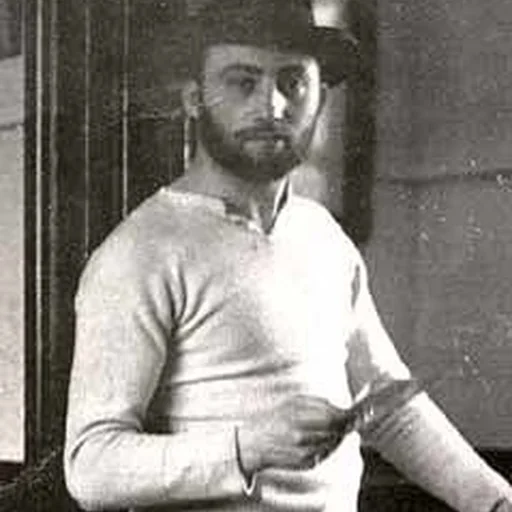
David Garshen Bomberg (5 December 1890 – 19 August 1957) was a British painter, and one of the Whitechapel Boys.