Artwork
Abraham's Sacrifice of Isaac
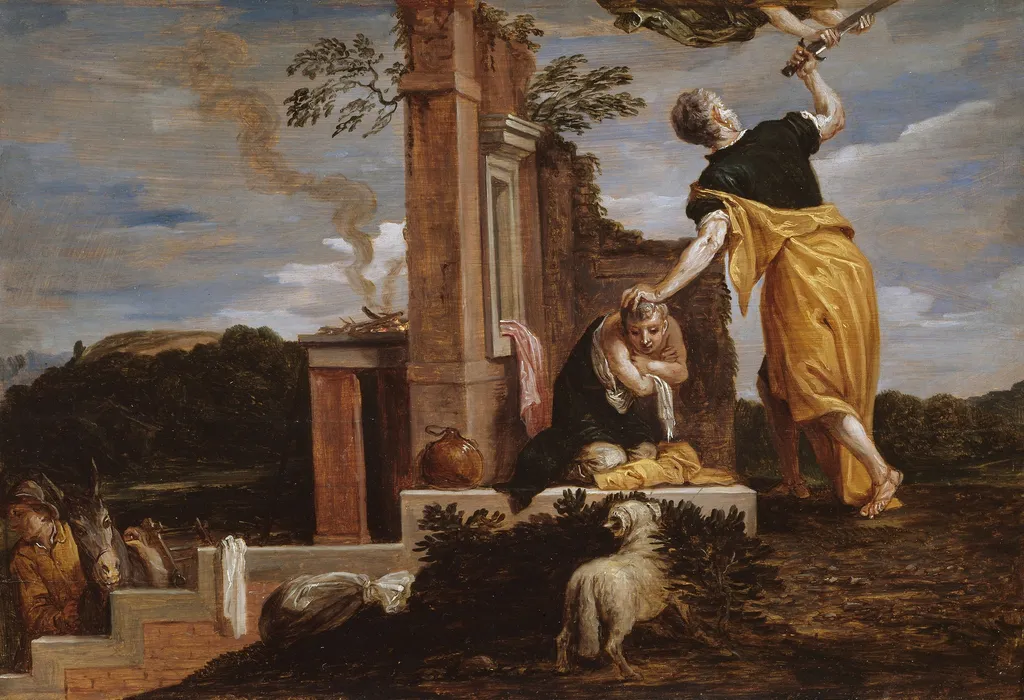
Abraham's Sacrifice of Isaac is an oil painting by the Flemish Baroque painting artist David Teniers the Younger. It dates from 1655 and is held in the collection of the Art Institute of Chicago.
About this work
Overview
David Teniers the Younger's 'Abraham's Sacrifice of Isaac,' executed in 1655, depicts the climactic moment from Genesis 22 where the patriarch prepares to slay his son before being stayed by an angel. The composition centers on Abraham, whose arm is outstretched with a knife, his expression conveying intense anguish and resolve, while the kneeling Isaac looks upward in submission. Teniers renders the scene with the characteristic clarity and textured brushwork of the Flemish Baroque, grounding the biblical narrative in a tangible, earthly setting. Unlike the grand, theatrical interpretations of his contemporaries, Teniers often infused religious subjects with a sense of intimate drama and observed detail, reflecting his versatility across history painting and genre scenes. This work exemplifies his mid-career ability to balance emotional gravity with the precise rendering of figures and landscape that defined his output during the 1650s. The painting serves as a testament to the artist's engagement with scriptural themes, moving beyond mere illustration to explore the psychological weight of the sacrifice.
Subject & Meaning
The work visualizes the moment from Genesis in which Abraham prepares to fulfill God’s command to offer Isaac as a sacrifice, a test of faith that is ultimately averted. The figures’ expressions—Abraham’s strained resolve and Isaac’s fearful yet resigned gaze—convey the moral and theological stakes of obedience, trust, and divine intervention that have shaped Judeo‑Christian thought.
Technique & Style
The composition balances dramatic focal points with a calm, naturalistic setting, reflecting the Flemish Baroque sensibility of narrative clarity.
Teniers employs a restrained palette of earth tones, using chiaroscuro to model the figures against the illuminated foreground. The brushwork is precise in the rendering of the human forms, while the landscape recedes with looser, atmospheric strokes, creating depth. The composition balances dramatic focal points with a calm, naturalistic setting, reflecting the Flemish Baroque sensibility of narrative clarity.
History & Provenance
Created in the mid‑17th century, the painting entered the collection of the Art Institute of Chicago, where it remains on view. Its provenance traces back to private European holdings before being acquired by the museum in the early 20th century, illustrating the work’s continued relevance to both religious and art‑historical audiences.
Own this work as a print
Artist & collection
Artist
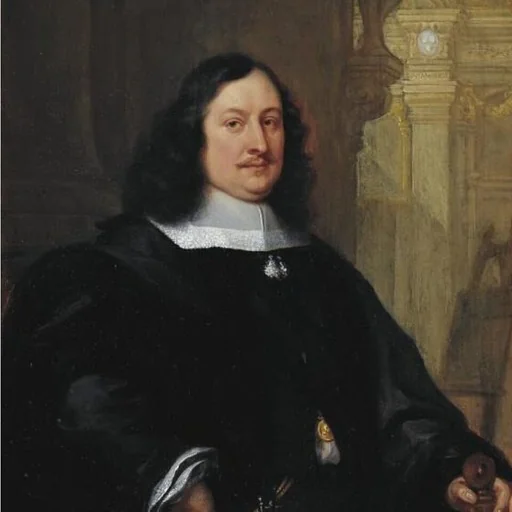
David Teniers the Younger or David Teniers II was a Flemish Baroque painter, printmaker, and artist.