Artwork
Peasants dancing
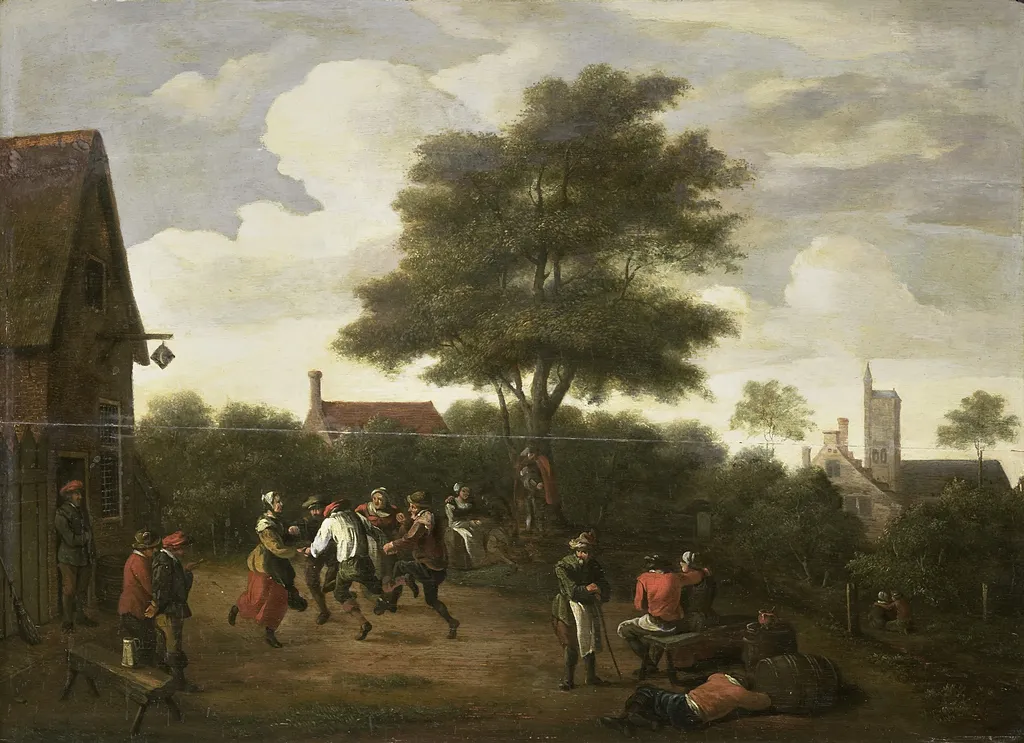
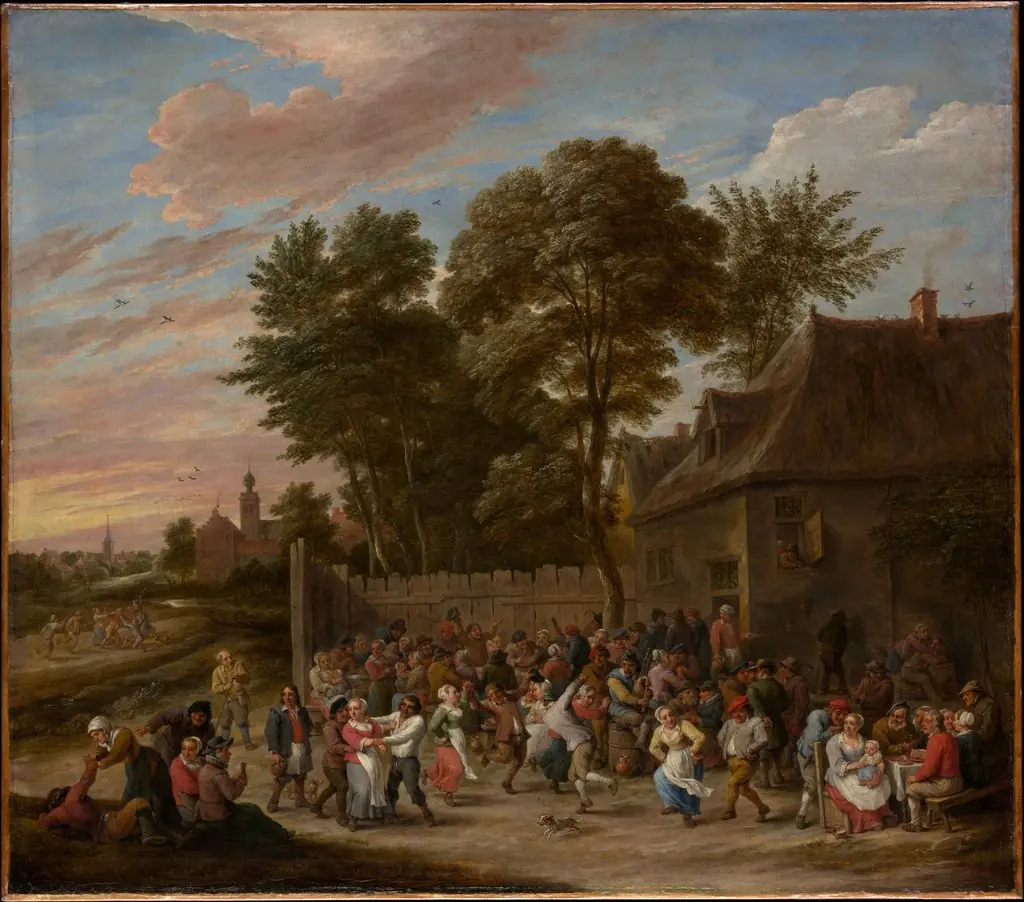
Peasants dancing is an oil painting by the Flemish Baroque painting artist David Teniers the Younger. It dates from 1660 and is held in the collection of the Rijksmuseum.
About this work
Overview
David Teniers the Younger’s oil painting, dated 1660, captures a festive rural gathering. Set beneath a prominent tree, the composition presents villagers in traditional dress engaged in dance, while onlookers observe from benches and barrels. A modest brick structure and a distant church steeple frame the scene, all rendered in warm, earthy tones under a bright sky.
Subject & Meaning
The work illustrates a communal celebration, emphasizing the vitality of peasant life. The central dance conveys collective joy, while the surrounding spectators suggest a shared cultural ritual. The inclusion of everyday architecture and the church hints at the intertwining of secular festivity and religious backdrop typical of 17th‑century Flemish village life.
Technique & Style
Teniers employs a nuanced handling of light, allowing illumination to highlight the dancers’ garments while casting softer shadows on surrounding figures. This chiaroscuro effect clarifies movement and adds depth. The palette of muted ochres and browns, combined with brisk brushwork, reinforces the genre painting’s focus on realistic, lively domestic scenes.
History & Provenance
Created in 1660, the painting entered the collection of the Rijksmuseum in Amsterdam, where it remains on display. Its attribution to Teniers the Younger aligns with his prolific output of genre scenes that documented everyday Flemish customs during the mid‑Baroque period.
Own this work as a print
Artist & collection
Artist
David Teniers the Younger or David Teniers II was a Flemish Baroque painter, printmaker, and artist.