Artwork
The Temptations of Saint Anthony
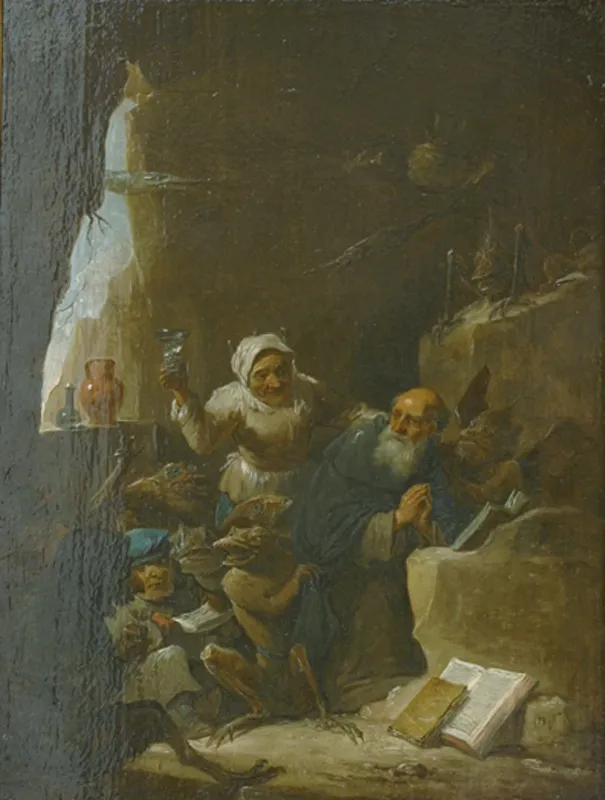
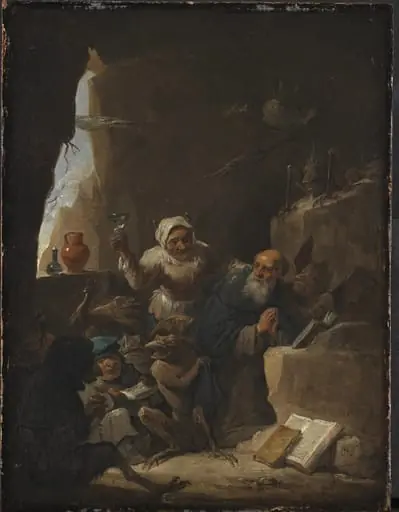
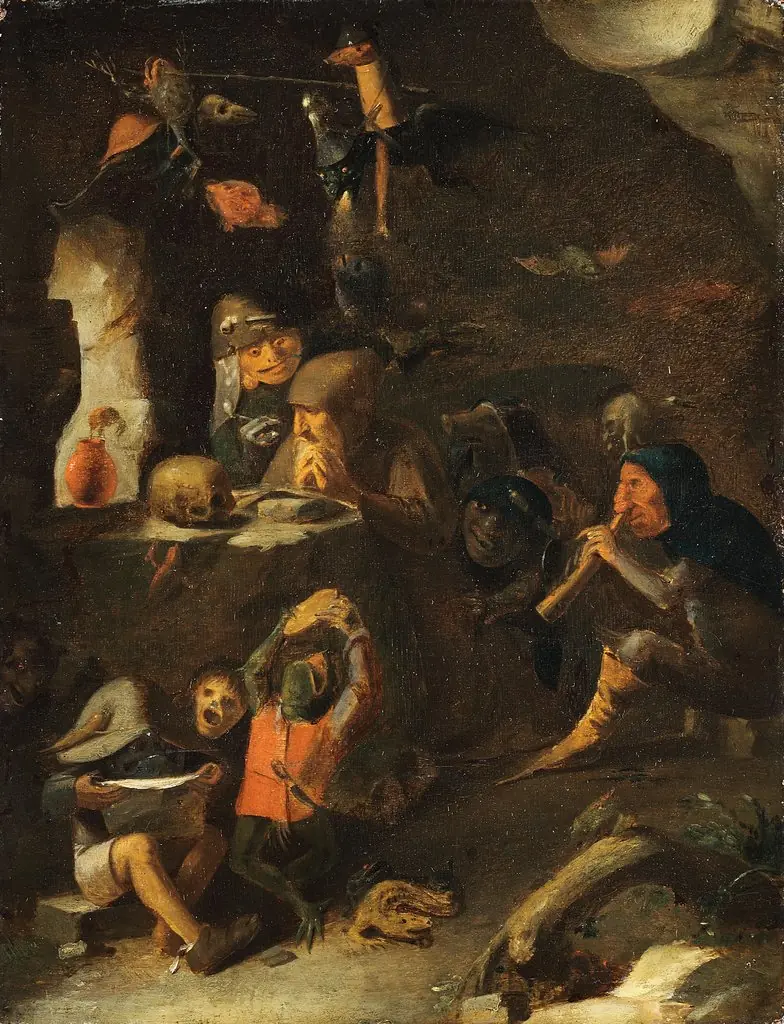
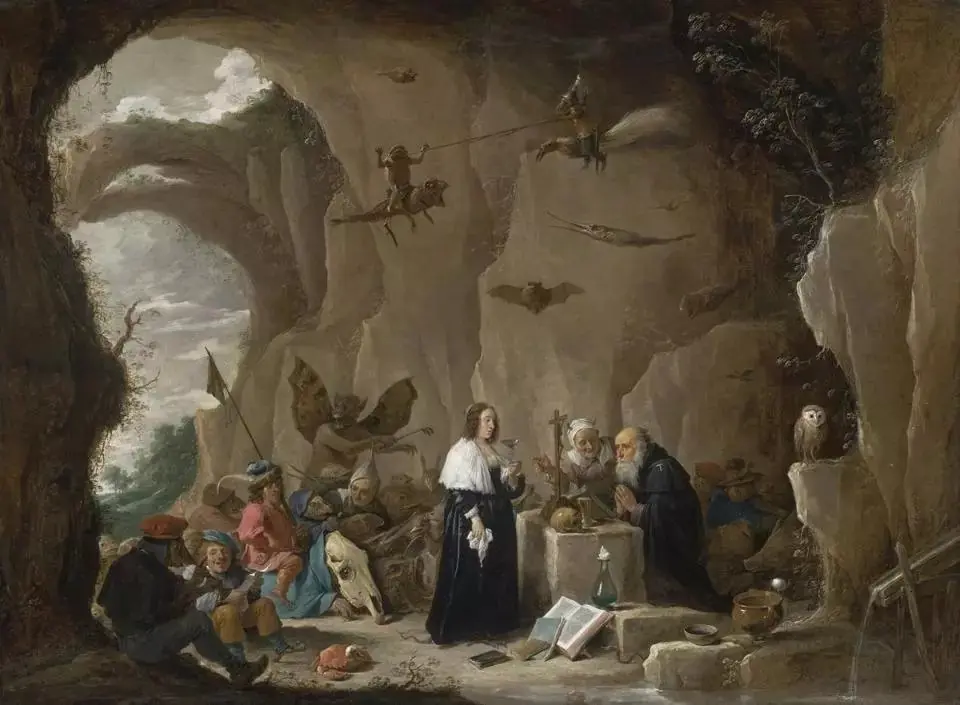
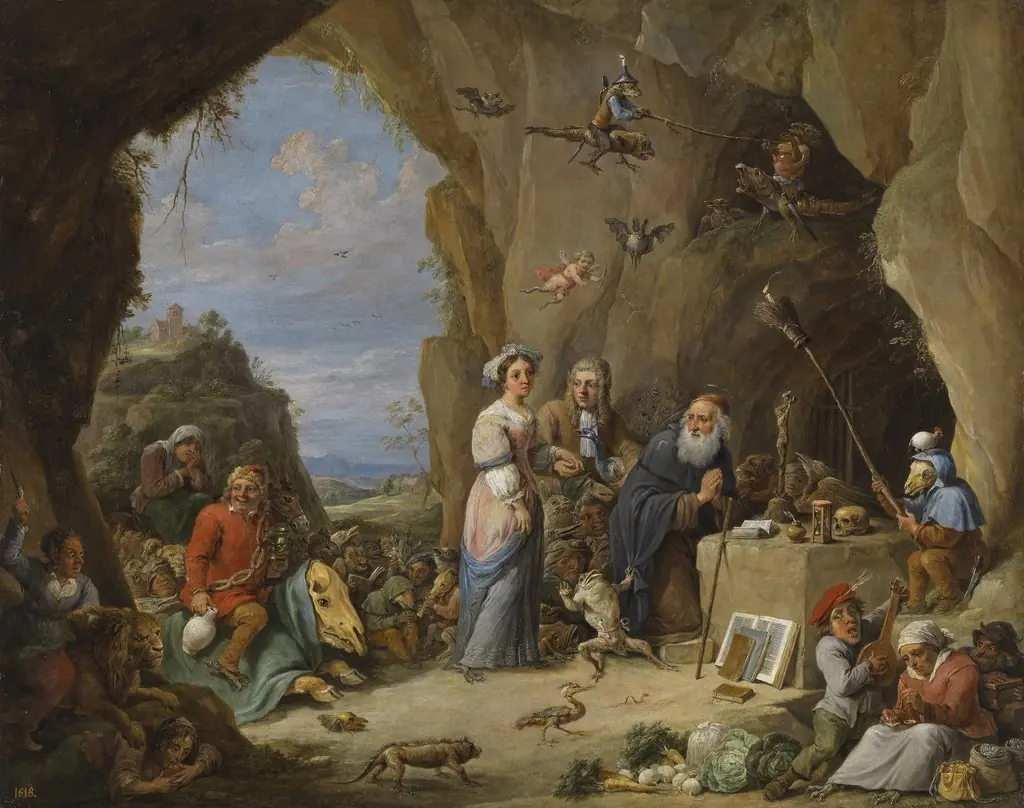
The Temptations of Saint Anthony is an unspecified painting by the Flemish Baroque painting artist David Teniers the Younger. It dates from 1660 and is held in the collection of the Statens Museum for Kunst.
About this work
Overview
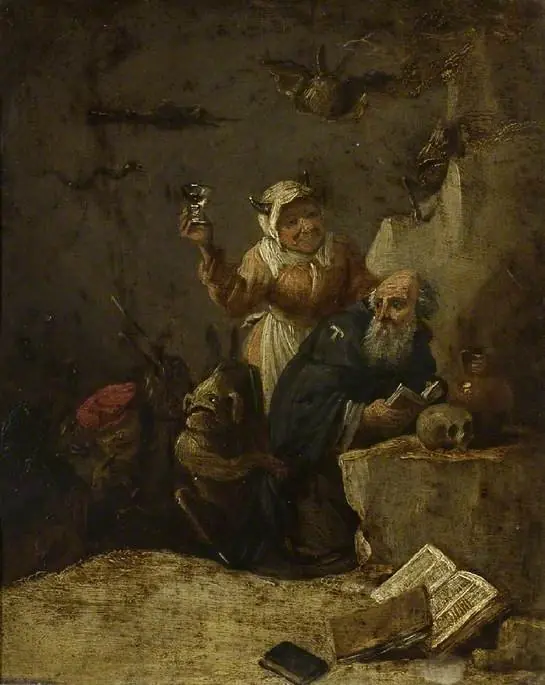
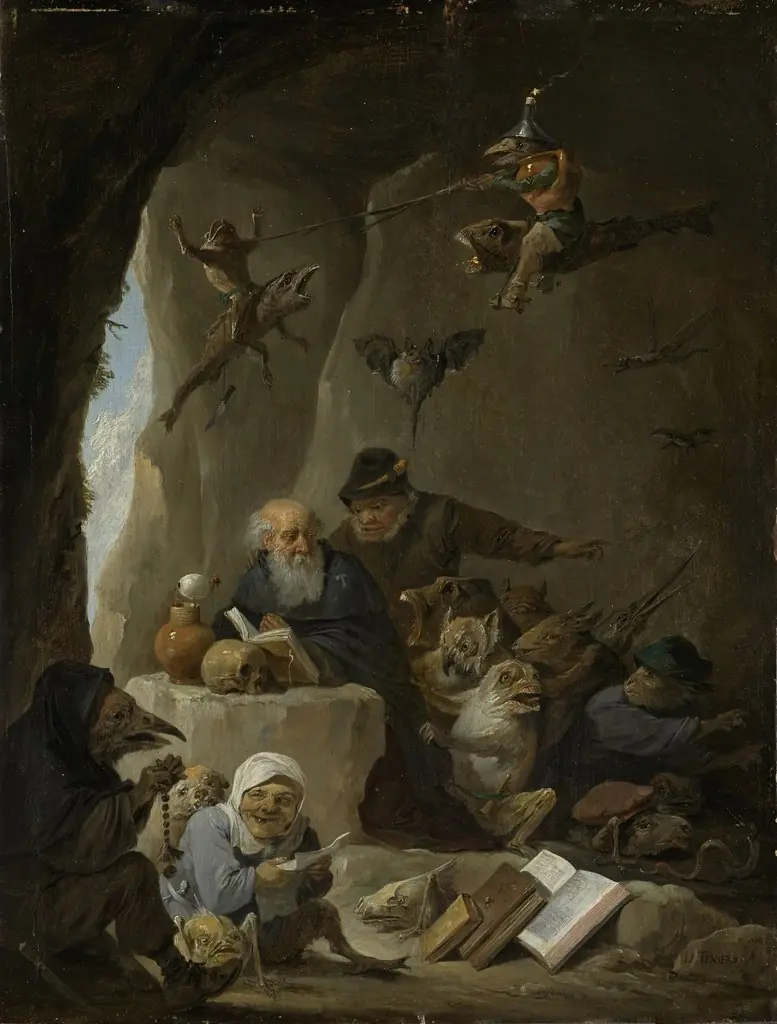
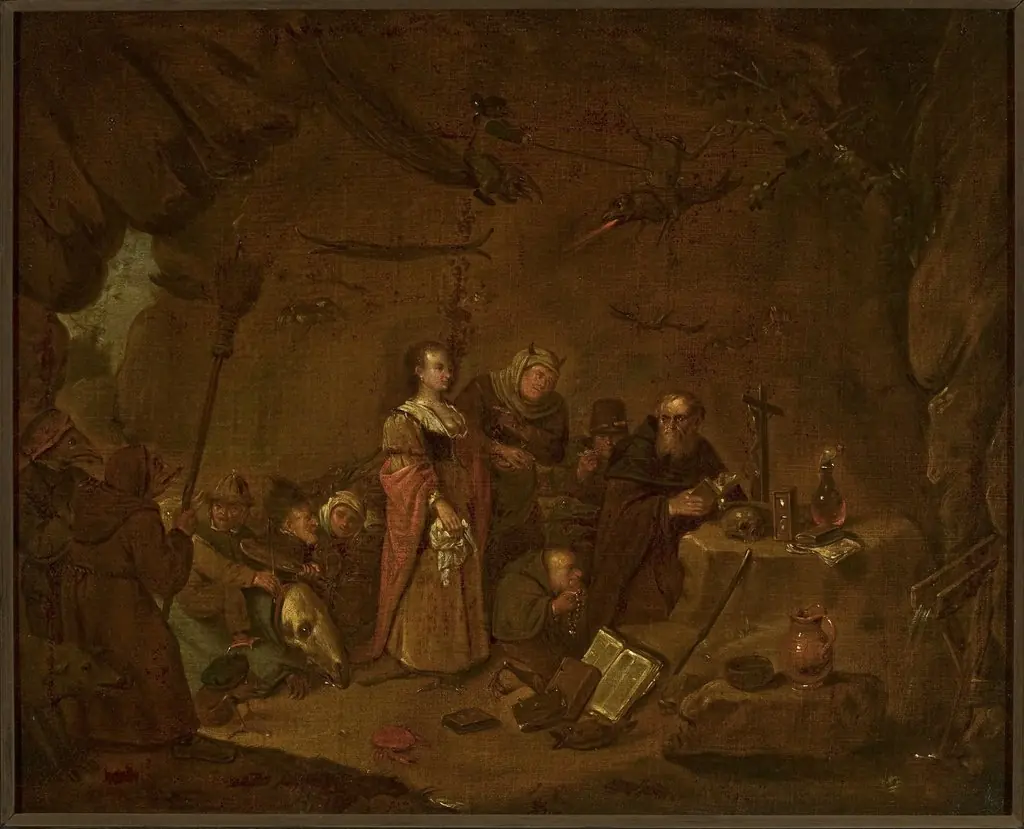
David Teniers the Younger's 'The Temptations of Saint Anthony,' dated 1660, depicts the hermit saint enduring spiritual trials within a dark, cavernous setting.
David Teniers the Younger's 'The Temptations of Saint Anthony,' dated 1660, depicts the hermit saint enduring spiritual trials within a dark, cavernous setting. The composition centers on Saint Anthony, identifiable by his habit, who is shown reading an open book while resisting the encroaching forces of evil. He is accompanied by a figure in a white headscarf holding a lantern, which serves as the primary light source, casting dramatic illumination on the saint and a praying companion while leaving the background in deep shadow. The scene is populated by grotesque demons and surreal apparitions, including a giant disembodied hand and floating sacks, which materialize from the gloom to test the saint's resolve. This work exemplifies Teniers' mastery of the Flemish Baroque tradition, blending religious narrative with the fantastical elements characteristic of his depictions of temptation. Painted during the later phase of his career, the piece reflects his continued interest in the subject of Saint Anthony, a theme he revisited frequently to explore the tension between faith and the chaotic imagery of the demonic. The painting demonstrates Teniers' skill in creating atmospheric depth and his ability to render complex, multi-figure scenes with a sense of immediate drama and psychological intensity.
Subject & Meaning
The work visualises a moment from the hagiography of Anthony the Great, the early Christian hermit famed for confronting demonic temptations. The illuminated figures appear engaged in study, prayer, and innocent curiosity, contrasting with the looming, ambiguous shapes—a massive hand and a floating sack—that hint at the spiritual trials traditionally associated with the saint’s narrative.
Technique & Style
Teniers employs a stark chiaroscuro, using the lantern’s glow to carve out the faces and hands of the central figures against the cavern’s deep shadows. This dramatic light‑and‑dark contrast heightens the sense of tension and mystery, a compositional device common in Baroque religious art to emphasize the interplay between the divine and the demonic.
History & Provenance
Created around 1660, the painting entered the collection of Denmark’s national gallery, the Statens Museum for Kunst, where it remains on display. Its attribution to Teniers the Younger aligns with his later period, reflecting his continued interest in religious subjects and his mastery of atmospheric effects.
Artist & collection
Artist
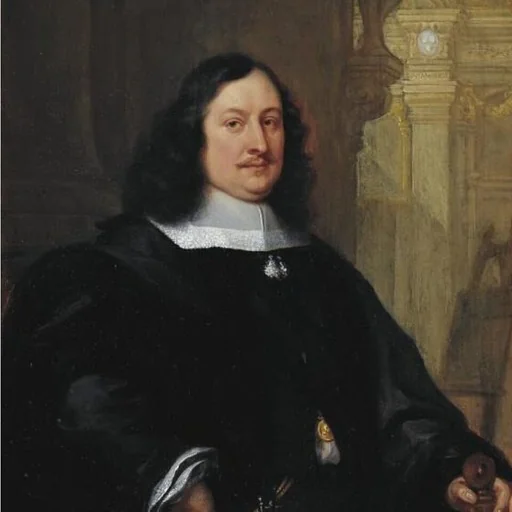
David Teniers the Younger or David Teniers II was a Flemish Baroque painter, printmaker, and artist.