Artwork
The Seamstress
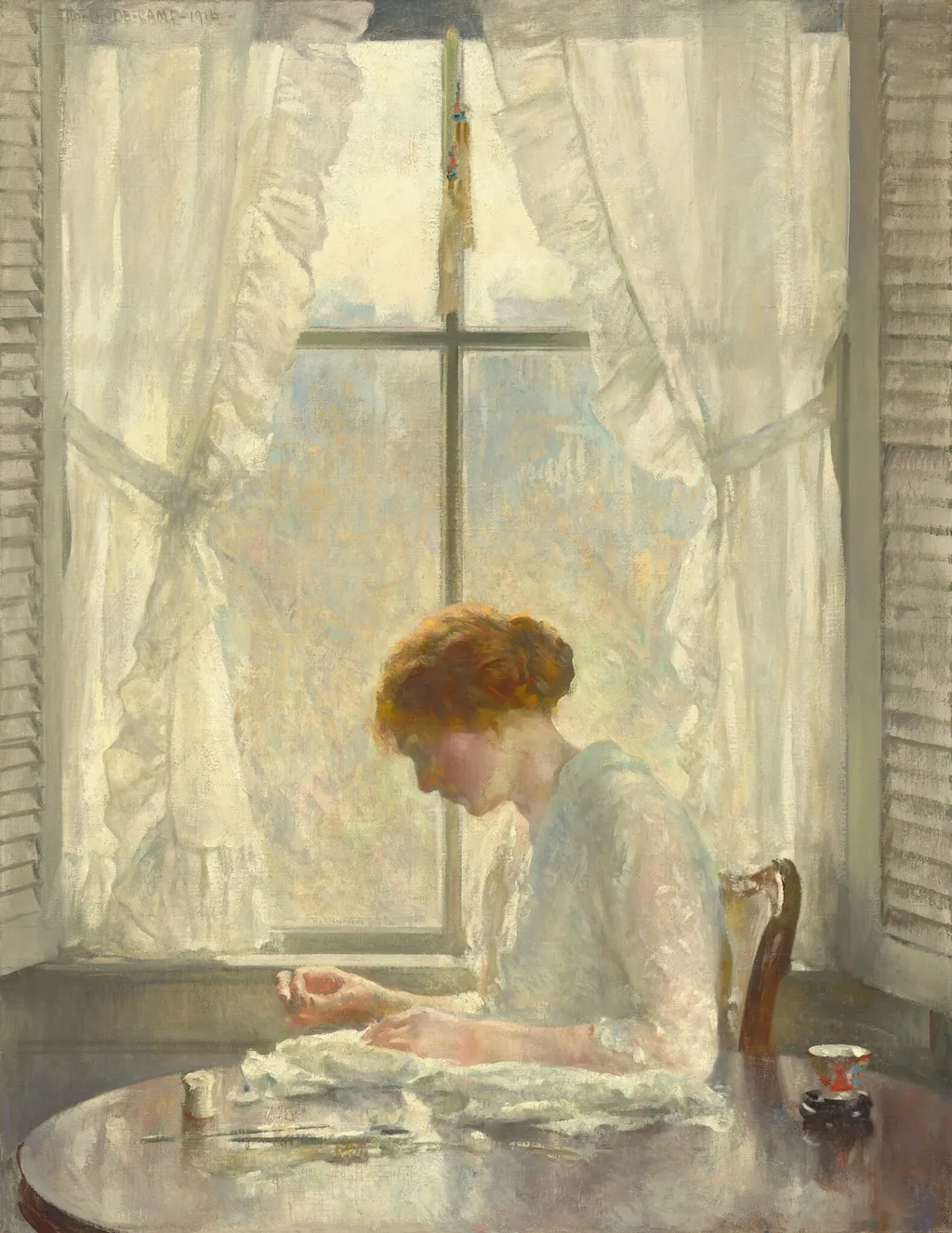
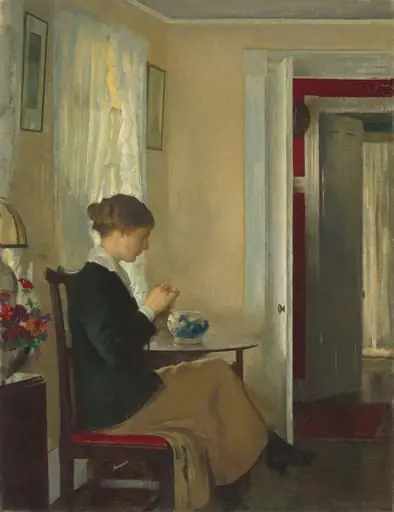
The Seamstress is an oil painting by the American Impressionist artist Joseph Rodefer DeCamp. It dates from 1916 and is held in the collection of the National Gallery of Art.
About this work
Overview
Joseph Rodefer DeCamp’s 1916 oil on canvas, titled The Seamseal, portrays a domestic interior centered on a solitary woman engaged in needlework. The composition is anchored by a window that admits muted daylight, illuminating the figure’s red hair and white dress as she works at a table.
Subject & Meaning
The work captures a quiet moment of everyday labor, emphasizing the concentration and calm of a seamstress at work. The juxtaposition of the bright dress against the subdued surroundings underscores the personal focus of the activity within a modest, perhaps middle‑class, setting.
Technique & Style
DeCamp employs a restrained palette, using soft whites for the curtains and brick tones for the wall, while rendering the figure with delicate brushwork that highlights the texture of fabric and hair. The lighting is diffused, creating subtle chiaroscuro that models the forms without dramatic contrast.
History & Provenance
Painted in 1916, The Seamstress belongs to the later period of DeCamp’s career, when he turned toward intimate interior scenes. The painting has remained in private collections since its creation, with documented exhibition records appearing in early 20th‑century American art shows.
Context
During the early 20th century, American artists increasingly explored domestic subjects, reflecting broader social interest in everyday life and the role of women’s work. DeCamp’s focus on a solitary seamstress aligns with this trend, offering a quiet counterpoint to the era’s more overtly industrial or urban themes.
Own this work as a print
Artist & collection