Artwork
Landscape: Galatsi
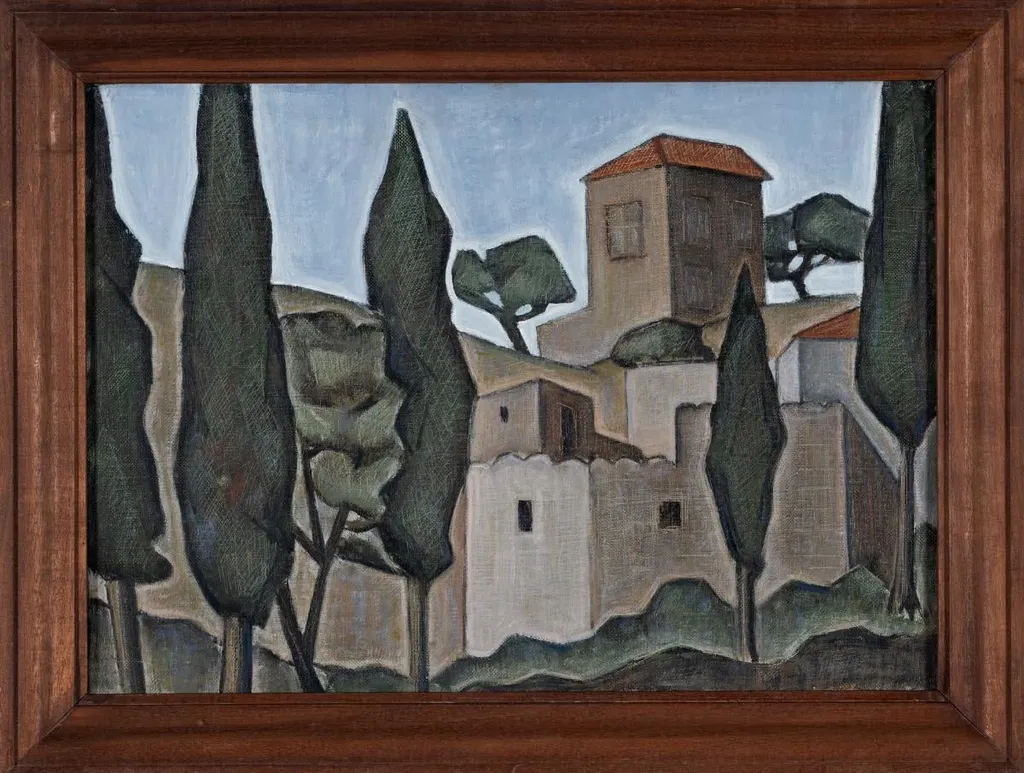
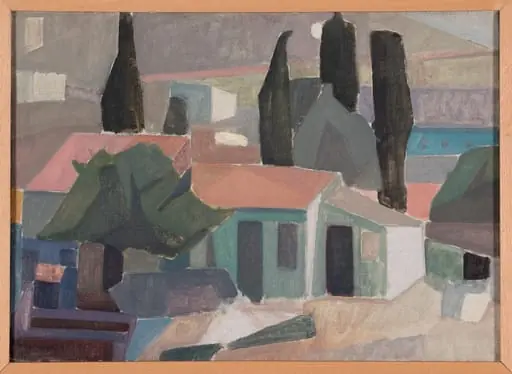
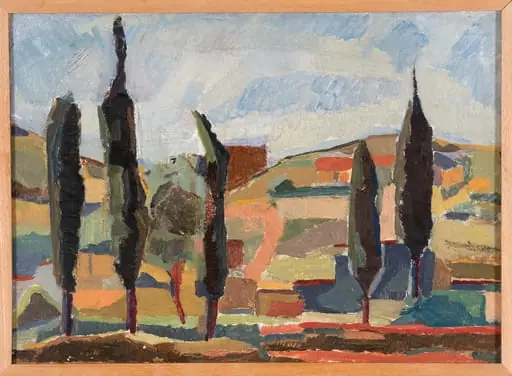
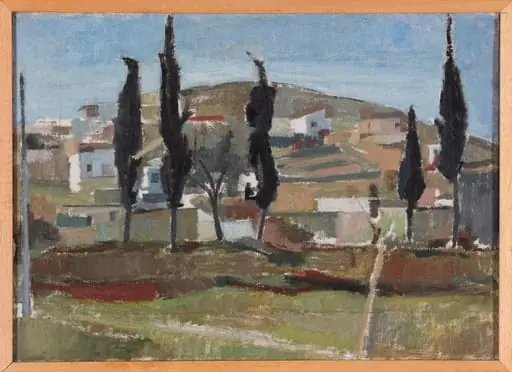
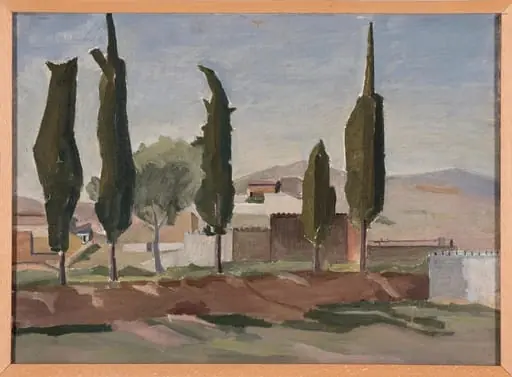
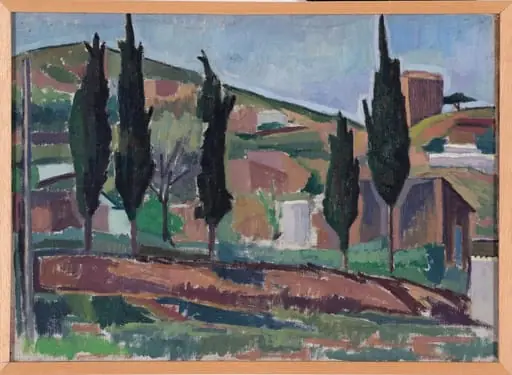
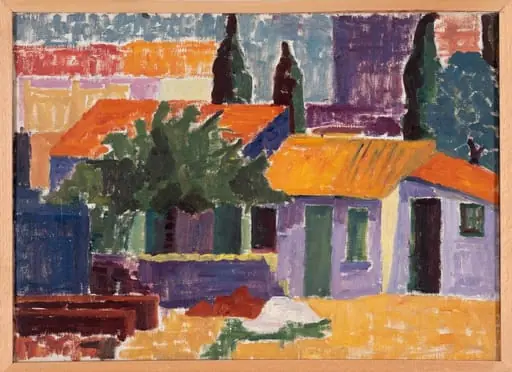
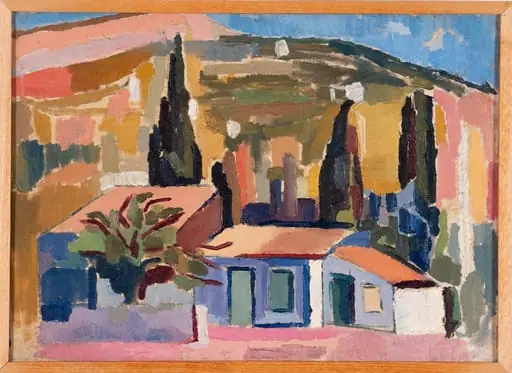
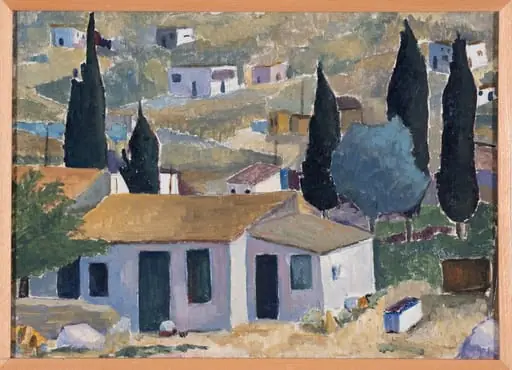
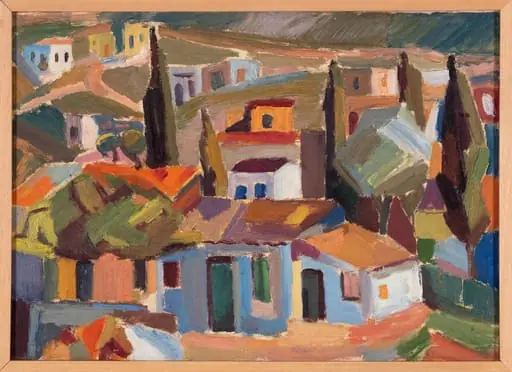
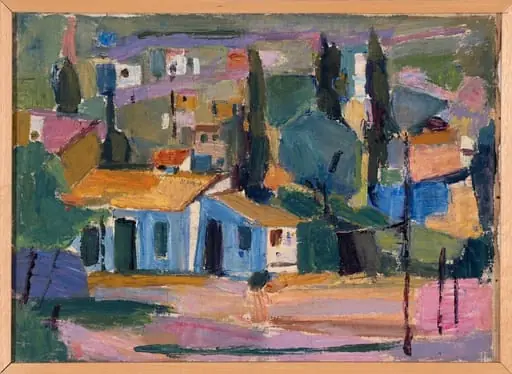
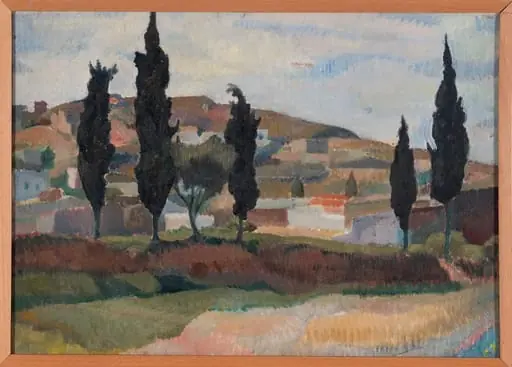
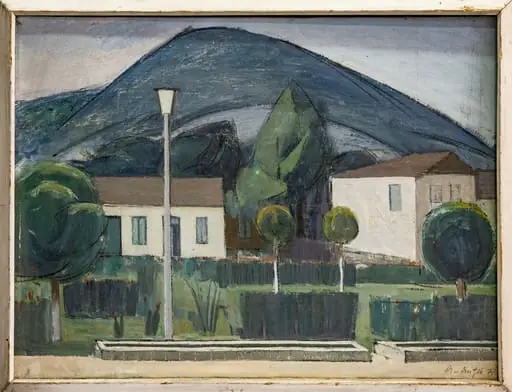
Landscape: Galatsi is an unspecified painting by Decoulakos Ilias. It dates from 1956 and is held in the collection of the Athens School of Fine Arts. Painted in 1956 by Ilias Decoulakos, this landscape depicts the Greek village of Galatsi.
About this work
Overview
Painted in 1956 by Ilias Decoulakos, this landscape depicts the Greek village of Galatsi. Executed in oil, the work captures a quiet, unadorned rural scene. It is part of the collection at the Museum of Ethnography, where it contributes to documentation of mid-20th-century Greek domestic environments. The composition avoids dramatic elements, favoring stillness and restraint.
Subject & Meaning
Simple stone and wood structures with flat roofs suggest everyday life, unembellished by ornament or activity.
The painting presents a modest village nestled between dense, vertical trees. Simple stone and wood structures with flat roofs suggest everyday life, unembellished by ornament or activity. The absence of figures and movement reinforces a sense of solitude. The scene reflects a contemplative observation of rural Greece, emphasizing harmony between architecture and natural surroundings rather than narrative or symbolism.
Technique & Style
Decoulakos employs thick, textured brushwork, particularly in rendering the trees, using impasto to convey depth and tactile presence. The buildings are reduced to geometric forms, their surfaces rendered in muted earth tones—browns, grays, and greens—with subtle warm accents on rooftops. The pale blue sky contrasts gently with the grounded palette, enhancing the painting’s calm, meditative tone.
History & Provenance
Created in 1956, the painting entered the Museum of Ethnography’s collection shortly after its completion. Its acquisition aligns with the institution’s focus on recording vernacular life in Greece during the postwar period. No significant changes in ownership are documented, and it has remained in the museum’s care since its initial acquisition.
Context
In mid-century Greece, many artists turned to rural subjects as national identity was being redefined after years of conflict. Decoulakos’s quiet depiction of Galatsi reflects this trend, avoiding idealization in favor of unembellished observation. The work resonates with broader European postwar realism, where ordinary places became sites of cultural memory and continuity.
Legacy
The painting endures as a quiet record of a specific time and place, valued for its sincerity over stylistic innovation. It contributes to scholarly understanding of Greek regional architecture and landscape perception in the 1950s. Though not widely exhibited, it remains a reference point in studies of postwar Greek painting and ethnographic art.
Artist & collection
Artist
Ilias Decoulakos made two small works in 1956: a quiet oil painting called Landscape: Galatsi and a sharp metal head titled Daughter’s head.