Artwork
Après le Bain II (After the Bath II)
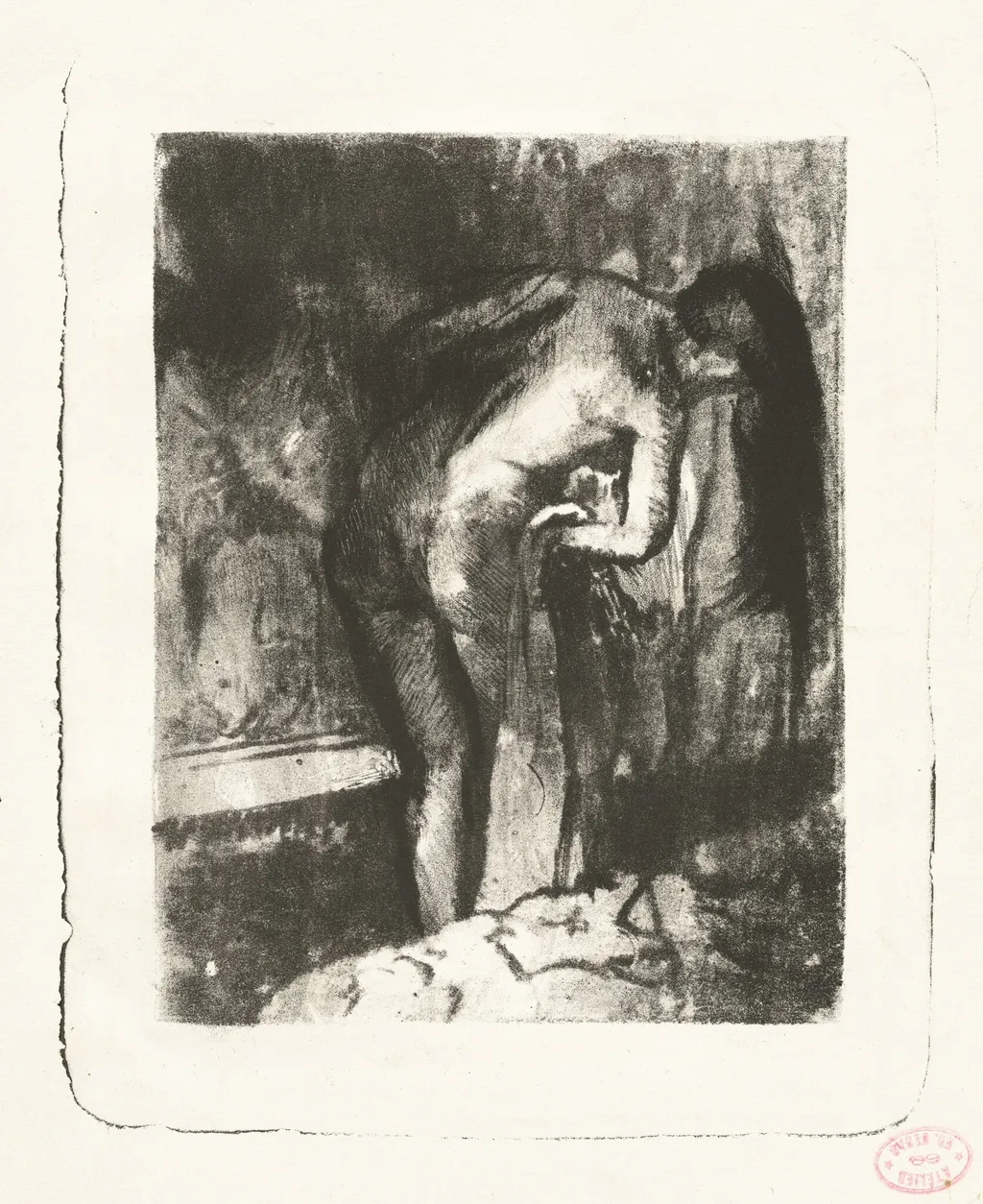
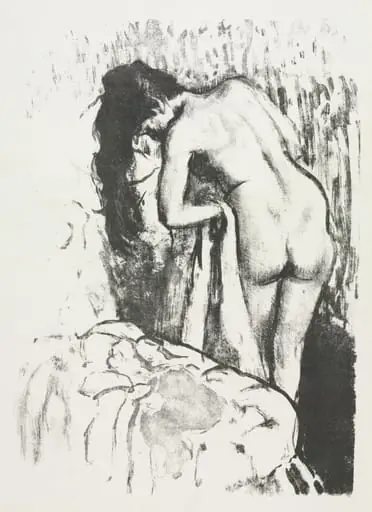
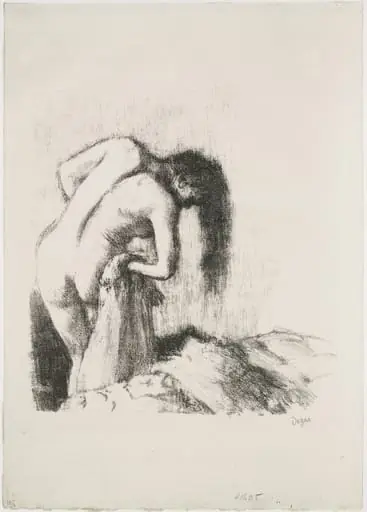
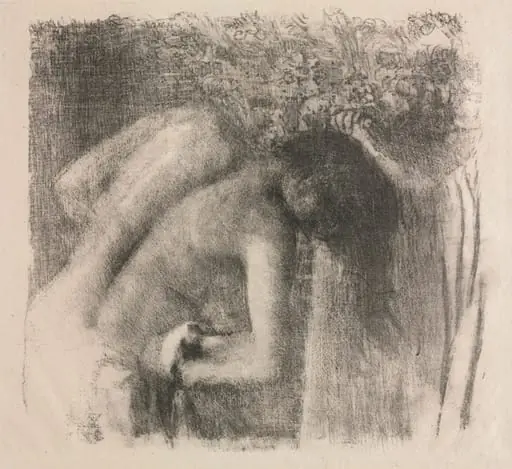
Après le Bain II (After the Bath II) is an ink print by the Impressionist artist Edgar Degas. It dates from 1892 and is held in the collection of the National Gallery of Art.
About this work
Overview
Created in 1892, *Après le Bain II* is a lithograph by Edgar Degas on wove paper, part of a broader exploration of private, unguarded moments.
Created in 1892, *Après le Bain II* is a lithograph by Edgar Degas on wove paper, part of a broader exploration of private, unguarded moments. Though often linked to Impressionism, Degas identified more closely with realism. This print belongs to a series in which he turned away from public performance to examine solitary figures in domestic settings, using printmaking to capture fleeting, intimate gestures with immediacy.
Subject & Meaning
The figure is a woman drying herself after bathing, her back turned to the viewer, engaged in a quiet, private ritual. The setting is sparse—a chair, scattered clothing, and a dim interior suggest a modest, unidealized space. Degas avoids theatricality; the scene’s significance lies in its ordinariness, emphasizing bodily presence and the unobserved rhythms of daily life rather than narrative or symbolism.
Technique & Style
Degas employed lithography to achieve a spontaneous, sketchlike quality. Loose, energetic lines define the towel’s texture, the curve of the back, and the pile of garments, suggesting motion and moisture without detail. The tonal range is restrained, with soft contrasts evoking dim light. This deliberate informality broke from academic conventions, prioritizing perception over polish and embracing the medium’s capacity for immediacy.
History & Provenance
The print was produced during a period when Degas was deeply engaged with printmaking, experimenting with lithography alongside painting and sculpture. It was not widely exhibited in his lifetime but became part of later collections that recognized his contributions to modern print culture. Its survival reflects shifting attitudes toward private subjects and the legitimacy of reproductive techniques in fine art.
Context
In late 19th-century France, depictions of the nude were typically idealized or mythological. Degas’s focus on unadorned, everyday bodies—especially women in private—challenged these norms. His interest in domestic interiors and candid postures aligned with broader cultural shifts toward psychological realism and the observation of modern life, positioning him apart from both academic tradition and Impressionist landscapes.
Legacy
Degas’s *Après le Bain II* contributed to a redefinition of the nude in modern art, shifting emphasis from grandeur to authenticity. Its influence extended to later artists who embraced intimacy and informal composition, particularly in printmaking. The work remains a quiet testament to his belief that art could find depth not in spectacle, but in the unremarkable moments of human existence.
Artist & collection
Artist
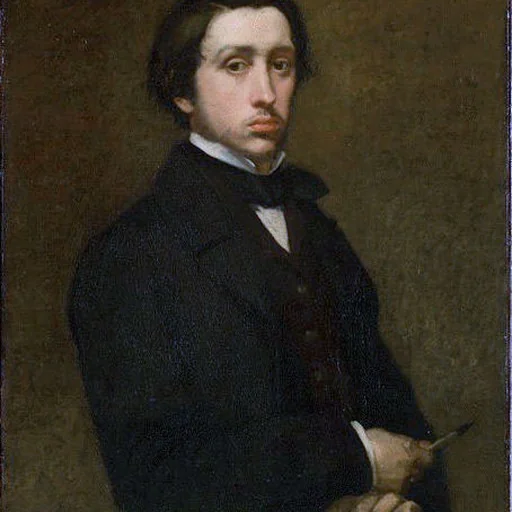
Born Hilaire-Germain-Edgar De Gas on 19 July 1834 in Paris, Edgar Degas came from an affluent banking family with aristocratic roots and spent his childhood among the cultivated circles of the French capital.