Artwork
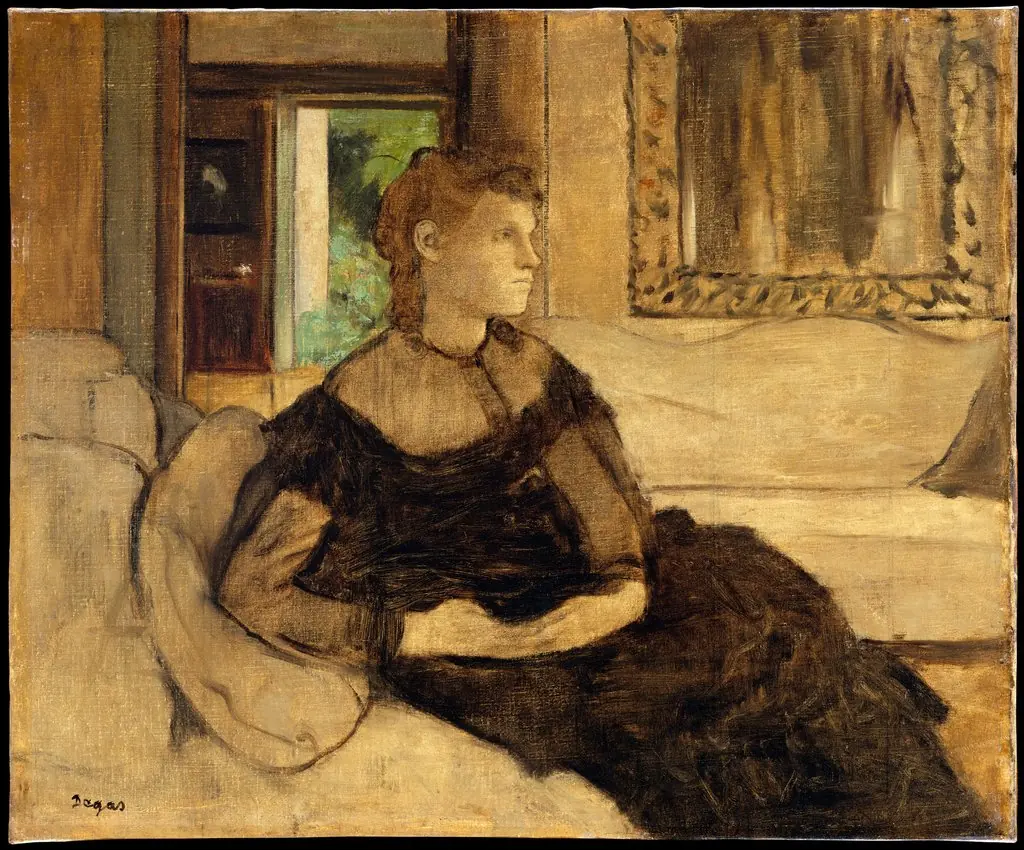
Madame Camus
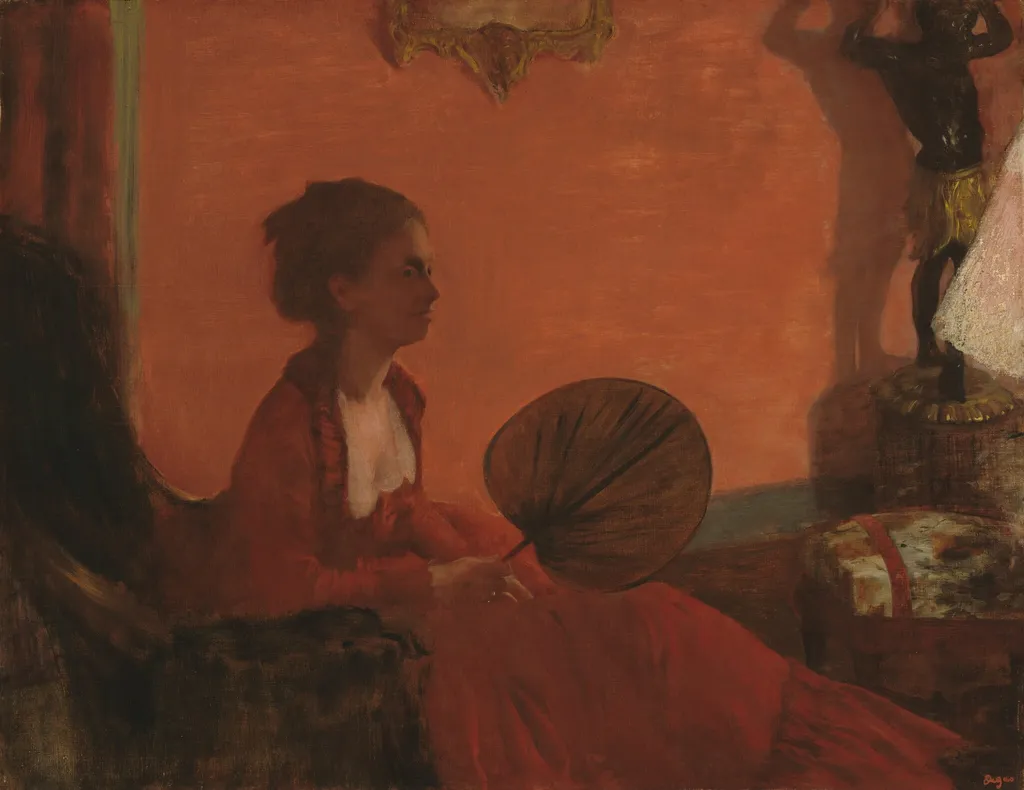
Madame Camus is an oil painting by the Impressionist artist Edgar Degas. It dates from 1870 and is held in the collection of the National Gallery of Art.
About this work
Overview
Created in 1870, *Madame Camus* is an oil painting on canvas by Edgar Degas. Though often linked to Impressionism, Degas identified himself with Realist principles, emphasizing truthful representation of contemporary figures. The portrait presents a solitary woman in a subdued setting, exemplifying his focus on everyday subjects.
Subject & Meaning
The sitter is depicted in profile, turned to the right, dressed in a dark gown trimmed with a white collar. Her hair is gathered back, and she holds a fan in her right hand while her left hand rests calmly on her lap. The composition conveys a sense of quiet introspection, inviting viewers to consider the private moment captured.
Technique & Style
Degas employs a restrained palette dominated by warm, reddish‑brown tones that form the background, creating a gentle contrast with the darker attire of the figure. His handling of light and shade hints at chiaroscuro, modeling the woman's features with subtle gradations that enhance the three‑dimensional presence without overt dramatization.
History & Provenance
Painted during Degas’s early mature period, the work reflects his ongoing interest in portraiture alongside his more famous studies of dancers and urban life. The painting’s ownership trail remains modest, having passed through private collections before entering a public institution where it is now displayed.
Own this work as a print
Artist & collection

Artist
Born Hilaire-Germain-Edgar De Gas on 19 July 1834 in Paris, Edgar Degas came from an affluent banking family with aristocratic roots and spent his childhood among the cultivated circles of the French capital.