Artwork
The Dance Lesson
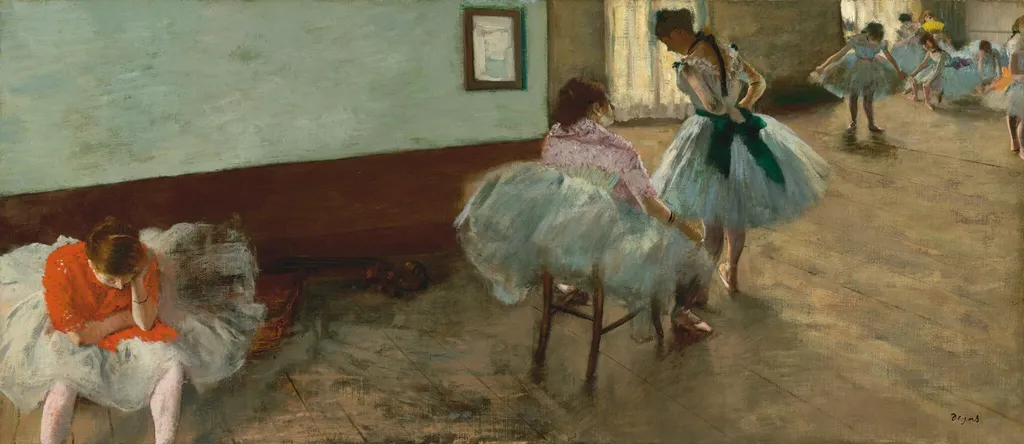
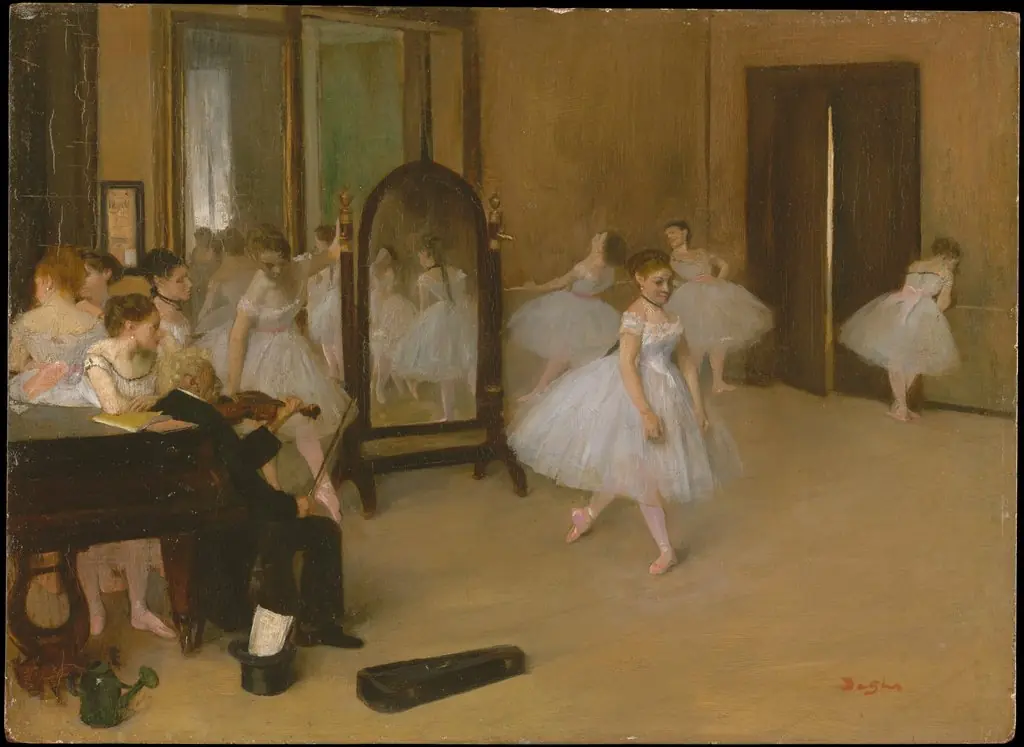
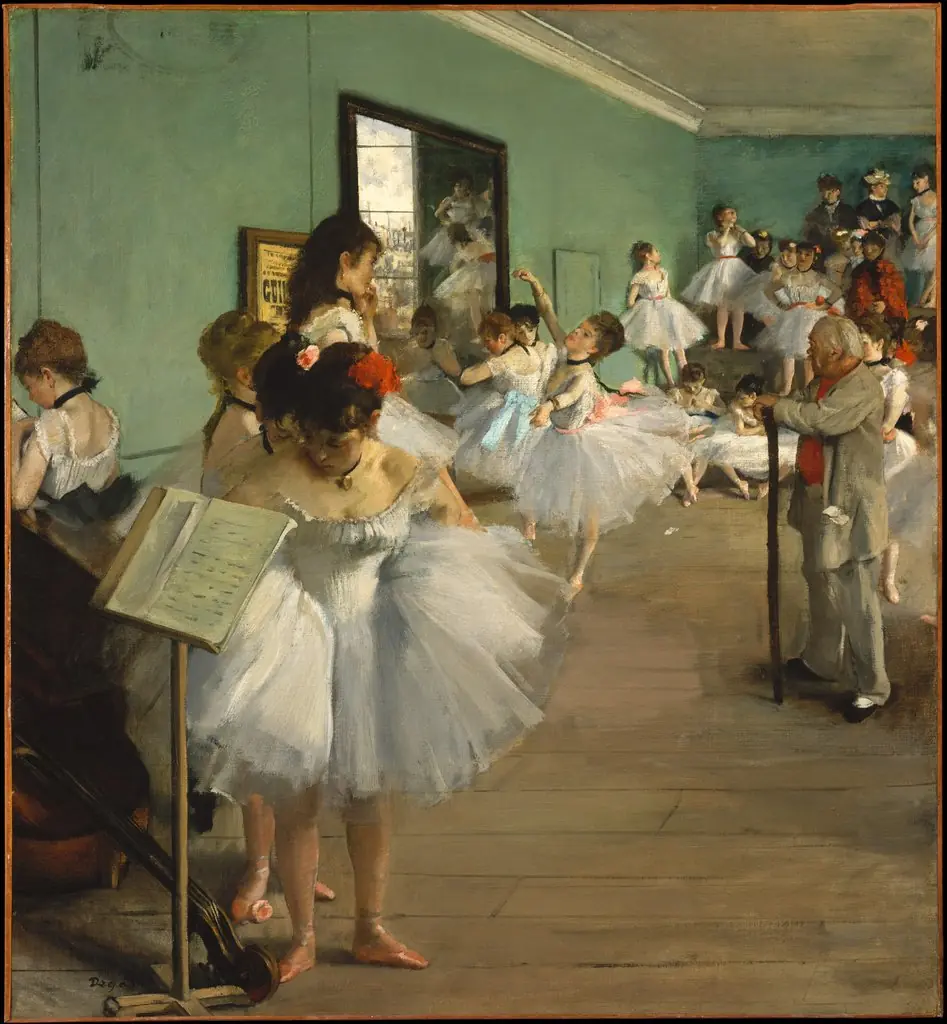
The Dance Lesson is an oil painting by the Impressionist artist Edgar Degas. It dates from 1879 and is held in the collection of the National Gallery of Art.
About this work
Overview
The palette is dominated by soft pinks, creams, and muted grays, with light filtering from an unseen window to illuminate the figures against the plain walls.
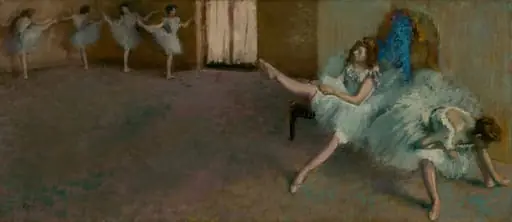
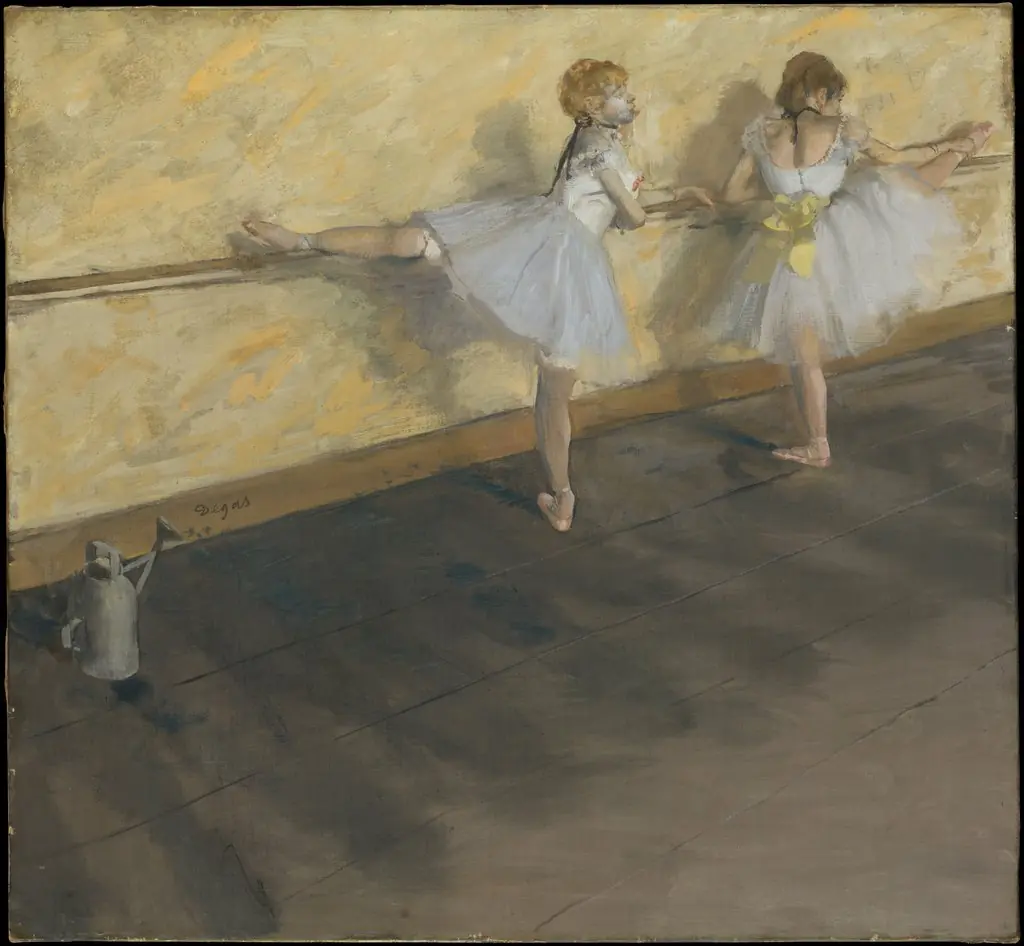
The Dance Lesson, painted by Edgar Degas in 1879, depicts an intimate moment within a Parisian dance studio. The composition centers on a young ballerina in a pink tutu practicing at the barre, her arms extended as an instructor stands behind her, hands placed on the student's shoulders to correct her posture. Degas employs his characteristic asymmetrical framing and elevated viewpoint, cropping the scene to suggest a candid glimpse rather than a staged tableau. The palette is dominated by soft pinks, creams, and muted grays, with light filtering from an unseen window to illuminate the figures against the plain walls. Executed in oil on canvas, the work showcases Degas's mastery of capturing movement and the rigorous discipline of ballet training. Created during the height of his fascination with the subject, this painting reflects his shift from grand narrative scenes to studies of modern life and the private labor behind public performance. It stands as a significant example of his ability to blend Impressionist light and color with a structured, almost photographic observation of human form and interaction.
Subject & Meaning
The work portrays a fleeting interval of training, highlighting the discipline and collaborative effort inherent in ballet. By focusing on the interaction between pupil and teacher, Degas underscores the incremental nature of skill acquisition, suggesting that mastery emerges from repeated, unglamorous exercises rather than only from polished stage appearances.
Technique & Style
Degas applies a restrained palette, allowing the pink of the dancer’s dress to catch a side light that gently illuminates her form against a muted backdrop. His brushwork balances detail with suggestion, rendering the figure’s posture and the studio’s atmosphere with a sense of immediacy while maintaining the loose, observational quality characteristic of his later Impressionist approach.
History & Provenance
Painted during Degas’s mature period, the piece reflects his sustained interest in the world of the Paris Opéra ballet. It entered public collections in the early twentieth century, passing through several private hands before being acquired by a major museum, where it remains part of the permanent display of nineteenth‑century French art.
Artist & collection

Artist
Born Hilaire-Germain-Edgar De Gas on 19 July 1834 in Paris, Edgar Degas came from an affluent banking family with aristocratic roots and spent his childhood among the cultivated circles of the French capital.