Artwork
Woman Viewed from Behind (Visit to a Museum)
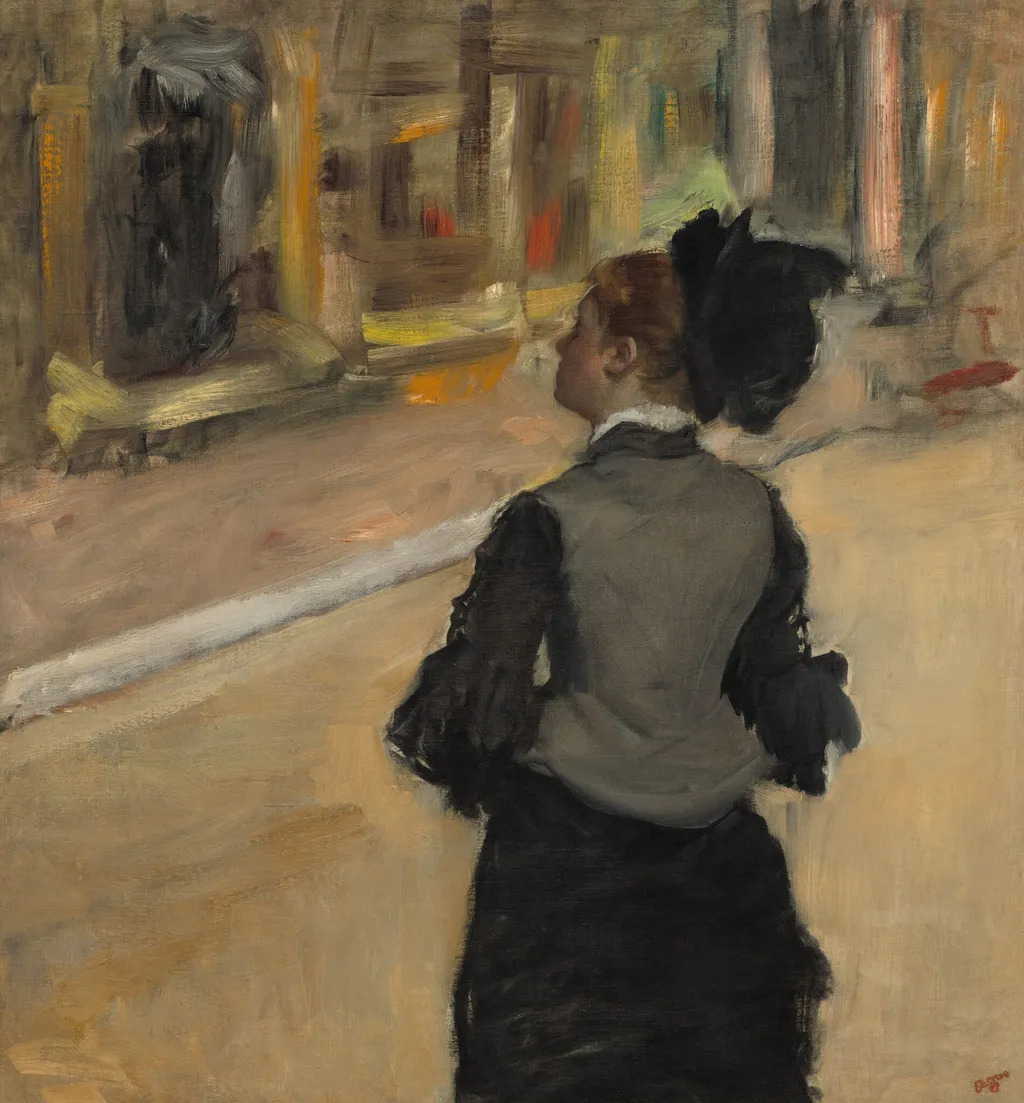
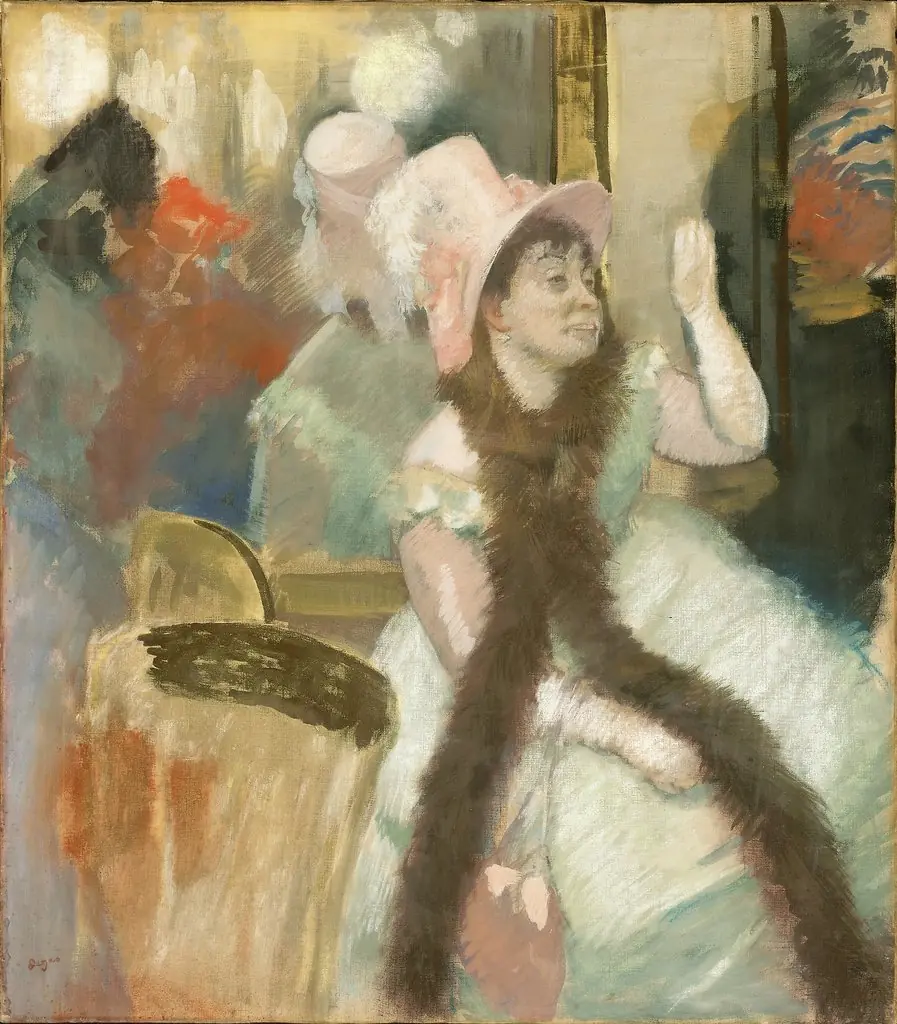
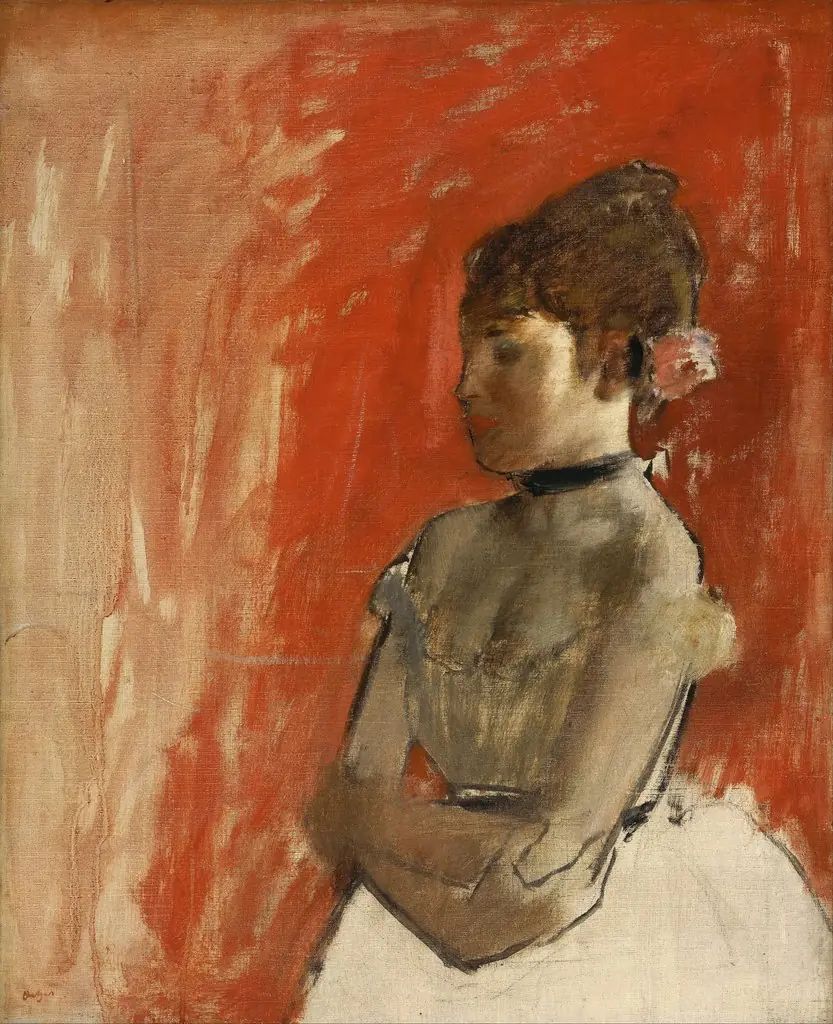
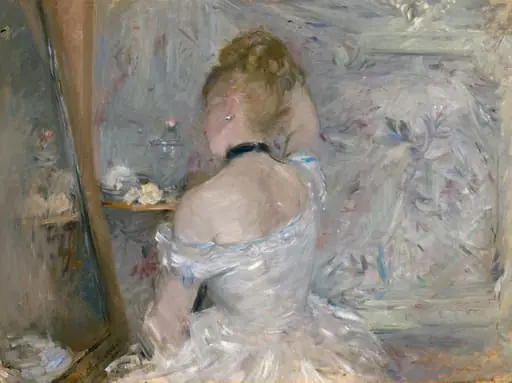
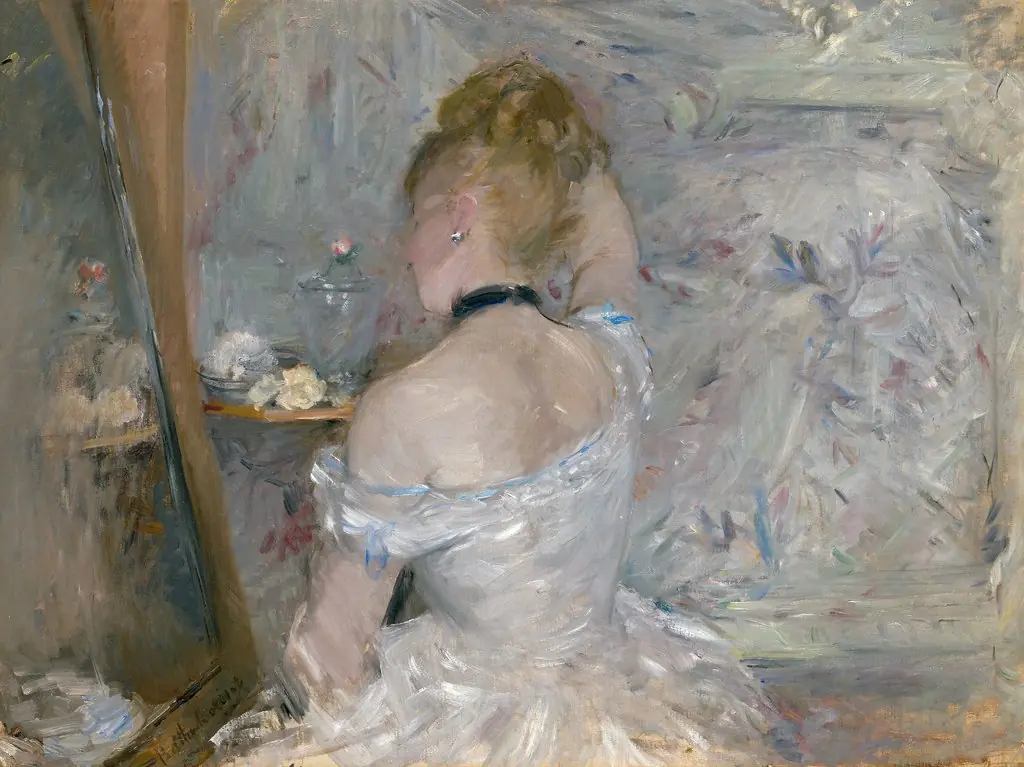
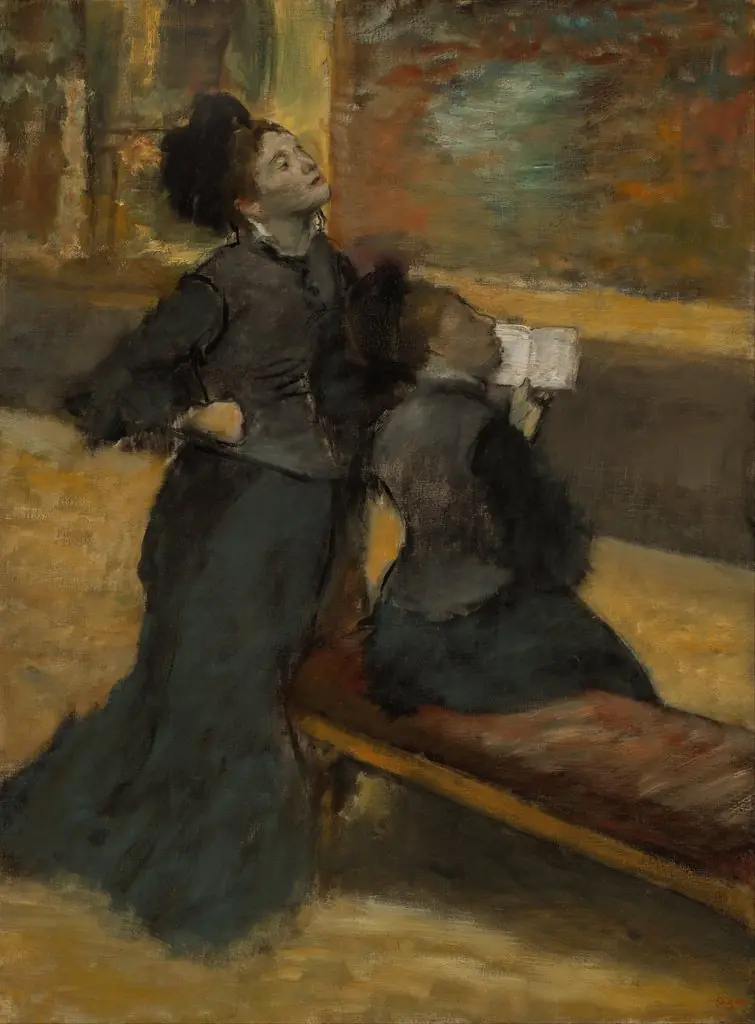
Woman Viewed from Behind (Visit to a Museum) is an oil painting by the Impressionist artist Edgar Degas. It dates from 1882 and is held in the collection of the National Gallery of Art.
About this work
Overview
Woman Viewed from Behind (Visit to a Museum) is an oil on canvas painting created by French artist Edgar Degas around 1882. Characteristic of his interest in everyday life, the work depicts a genre scene distinct from his more common depictions of dancers.
Subject & Meaning
The painting portrays a woman viewed from behind, intently examining an unspecified exhibit in a museum or gallery setting. Her dark attire contrasts with the muted, warm-toned background, suggesting a focus on the solitude of the viewer's experience.
Technique & Style
Executed in loose, quick brushstrokes, particularly evident in the blurry background of yellows, browns, and hints of red, the painting reflects Degas' technical skill and his prioritization of capturing the overall atmosphere over precise details.
History & Provenance
Created circa 1882, the painting aligns with Degas' broader oeuvre, which, despite associations with Impressionism, he preferred to categorize under realism, highlighting his unique blend of observational detail and expressive technique.
Context
While often linked to Impressionism, Degas' preference for 'realist' underscores his distinctive approach. This work, with its everyday subject matter, situates itself within the broader 19th-century French movement exploring modern life, yet with Degas' characteristic nuanced detachment.
Legacy
As part of Degas' non-dance themed works, *Woman Viewed from Behind* contributes to the artist's legacy of capturing modern life's intimate moments, influencing subsequent artists in their portrayal of solitude within public spaces.
Own this work as a print
Artist & collection
Artist
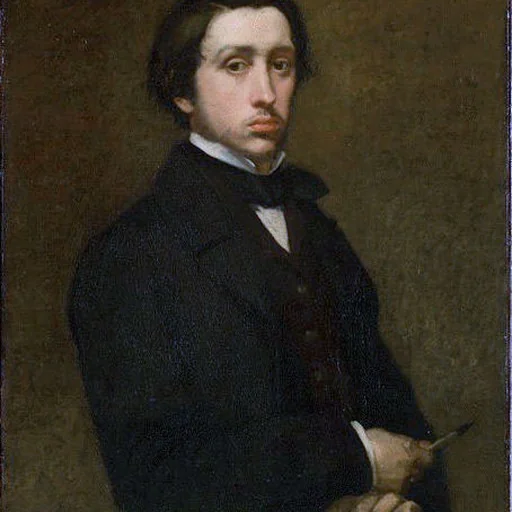
Born Hilaire-Germain-Edgar De Gas on 19 July 1834 in Paris, Edgar Degas came from an affluent banking family with aristocratic roots and spent his childhood among the cultivated circles of the French capital.