Artwork
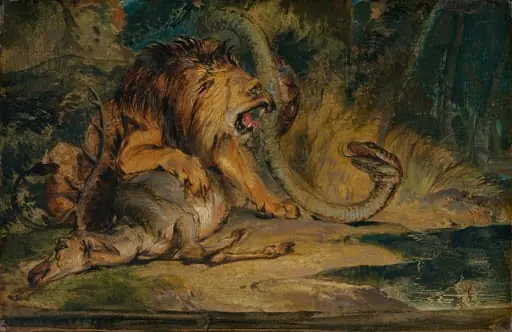
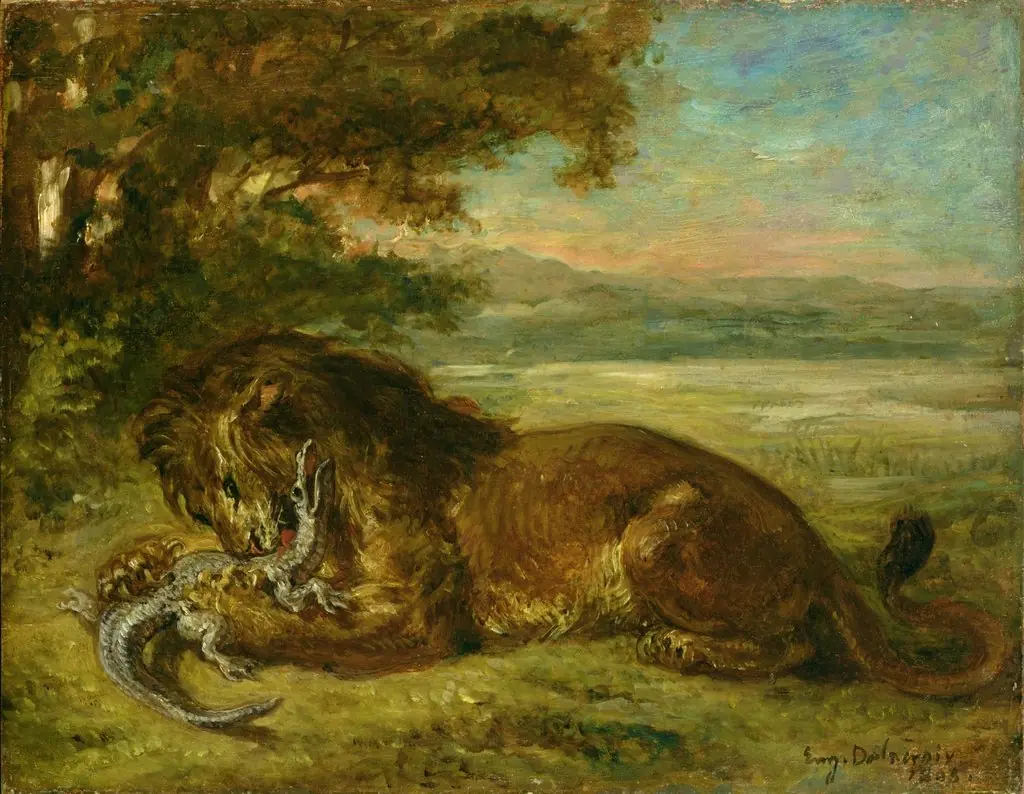
Tiger and Snake
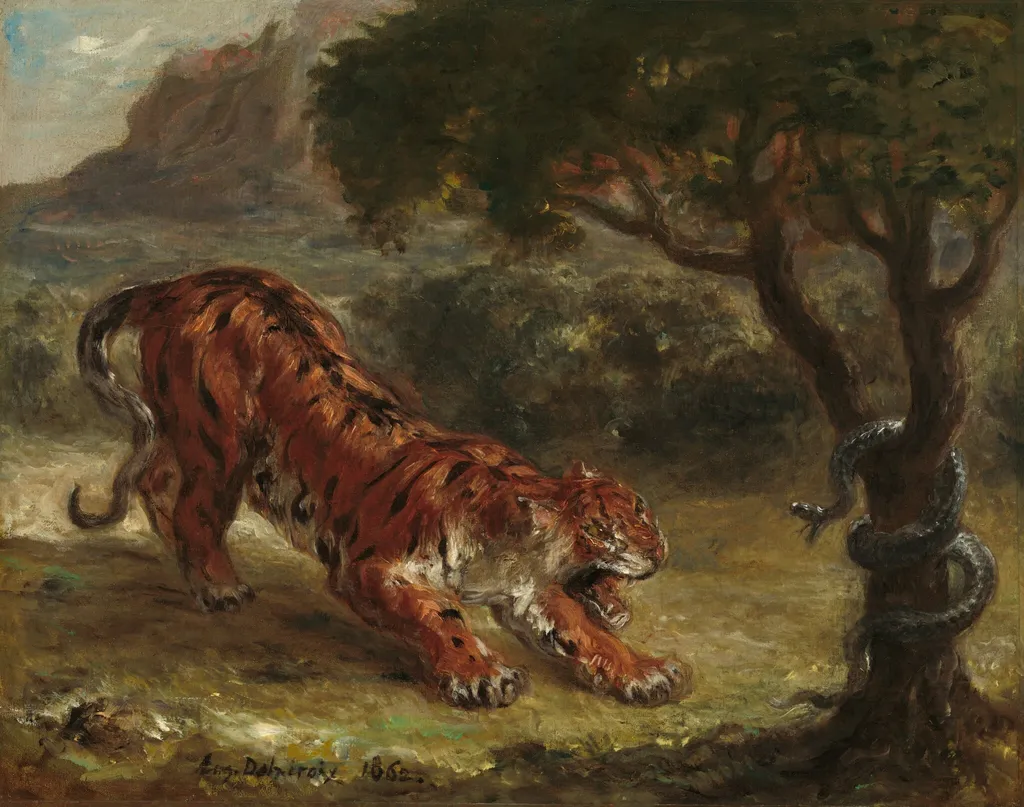
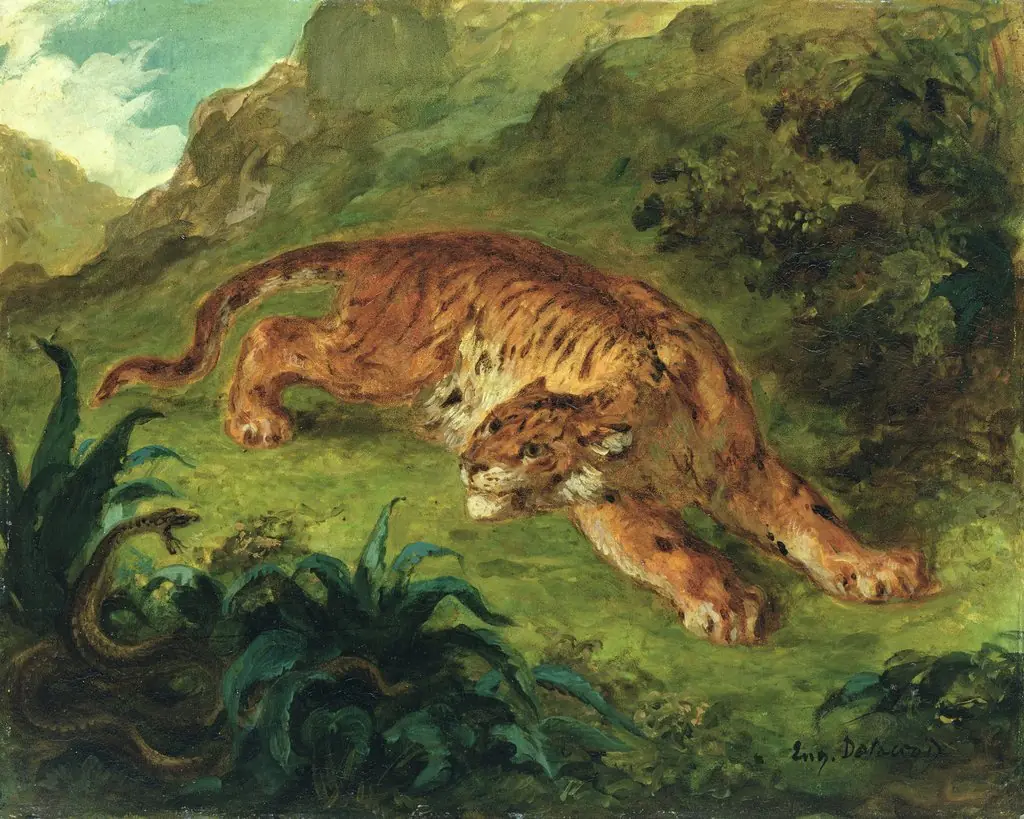
Tiger and Snake is an oil painting by the Impressionist artist Eugène Delacroix. It dates from 1862 and is held in the collection of the National Gallery of Art.
About this work
Overview
Tiger and Snake is an 1862 oil on canvas painting by Eugène Delacroix, exemplifying the French Romantic school's emphasis on expressive emotion and movement.
Subject & Meaning
The painting captures a tense, dramatic encounter between a tiger and a snake in a natural setting, embodying the Romantic era's fascination with intense, emotional subjects.
Technique & Style
Delacroix's characteristic use of vivid, expressive colors defines the piece: warm oranges and browns for the tiger, dark muted tones for the snake, set against a lush, foliage-rich background. The composition reflects influences from Rubens and Venetian Renaissance artists.
History & Provenance
Created in 1862, the painting's provenance is not detailed here, but its style aligns with Delacroix's later works, which continued to explore the expressive potential of color and motion.
Context
Within Delacroix's oeuvre, Tiger and Snake sits alongside other works that prioritize emotional intensity and the sublime, distinguishing the Romantic movement from the Neoclassicism prevalent at the time.
Legacy
While not singled out as a seminal work, Tiger and Snake contributes to Delacroix's broader influence on the development of European Romantic and subsequent art movements, particularly in the emphasis on color and dynamic composition.
Own this work as a print
Artist & collection
Artist
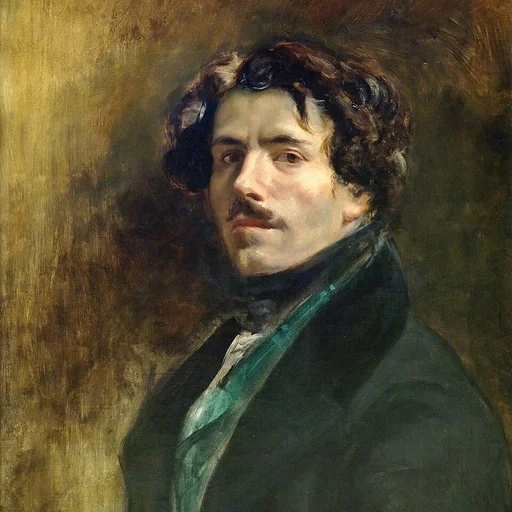
Ferdinand Victor Eugène Delacroix ( DEL-ə-krwah, -KRWAH; French: ; 26 April 1798 – 13 August 1863) was a French Romantic artist who was regarded as the leader of the French Romantic school.