Artwork
Vercingétorix
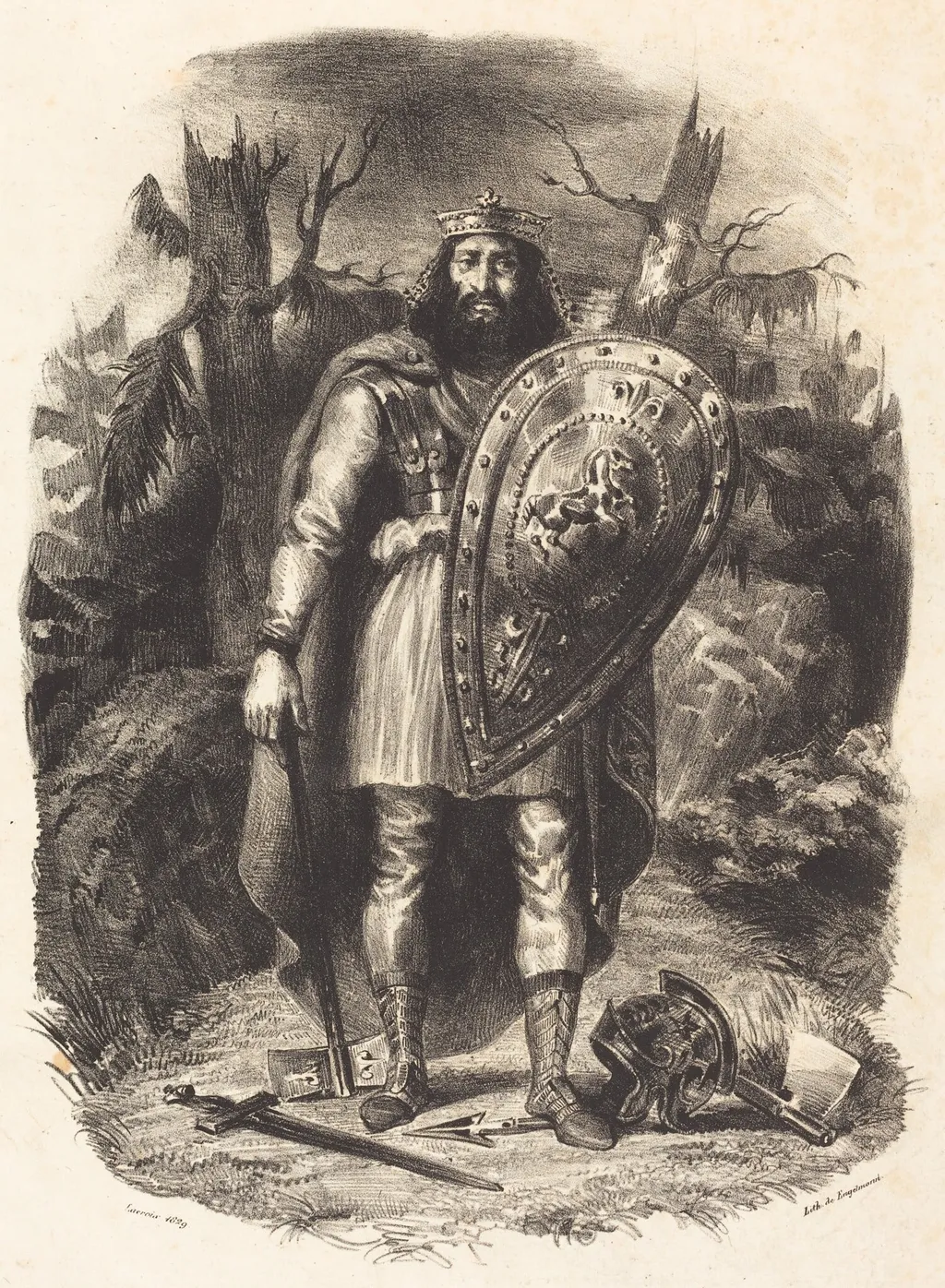
Vercingétorix is an ink print by the Romanticist artist Eugène Delacroix. It dates from 1829 and is held in the collection of the National Gallery of Art.
About this work
Overview
Eugène Delacroix’s lithograph *Vercingétorix* dates from 1829, placing it among the artist’s earliest printed works. Executed in the lithographic medium, the image presents a solitary figure rendered in a bold, gestural pose that conveys resolve. The print exemplifies Delacroix’s interest in historic subjects and his willingness to explore new methods of image reproduction.
Subject & Meaning
The central figure is the Gallic chieftain Vercingetorix, celebrated for his resistance against Roman conquest in the first century BCE. Delacroix emphasizes the leader’s determination through a commanding stance and period costume, inviting viewers to contemplate themes of heroism, national identity, and the tension between freedom and subjugation that resonated in post‑revolutionary France.
Technique & Style
Created by drawing directly onto a limestone surface, the lithograph employs the chemical principle of oil‑and‑water repulsion to transfer the image onto paper. Delacroix’s handling of line and tonal contrast reflects the influence of Baroque masters such as Rubens and the coloristic vigor of Venetian painting, diverging from the strict linearity favored by contemporary Neoclassicists.
History & Provenance
Produced during Delacroix’s formative years, the print predates his celebrated oil paintings and marks an early foray into the reproducible arts. While specific ownership records are sparse, the work circulated among collectors of the period, illustrating the growing popularity of lithography as a means to disseminate Romantic imagery beyond the confines of the studio.
Artist & collection
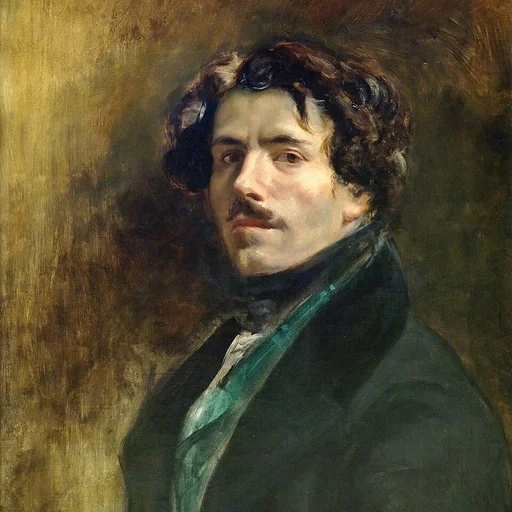
Artist
Ferdinand Victor Eugène Delacroix ( DEL-ə-krwah, -KRWAH; French: ; 26 April 1798 – 13 August 1863) was a French Romantic artist who was regarded as the leader of the French Romantic school.