Artwork
Harlech Castle
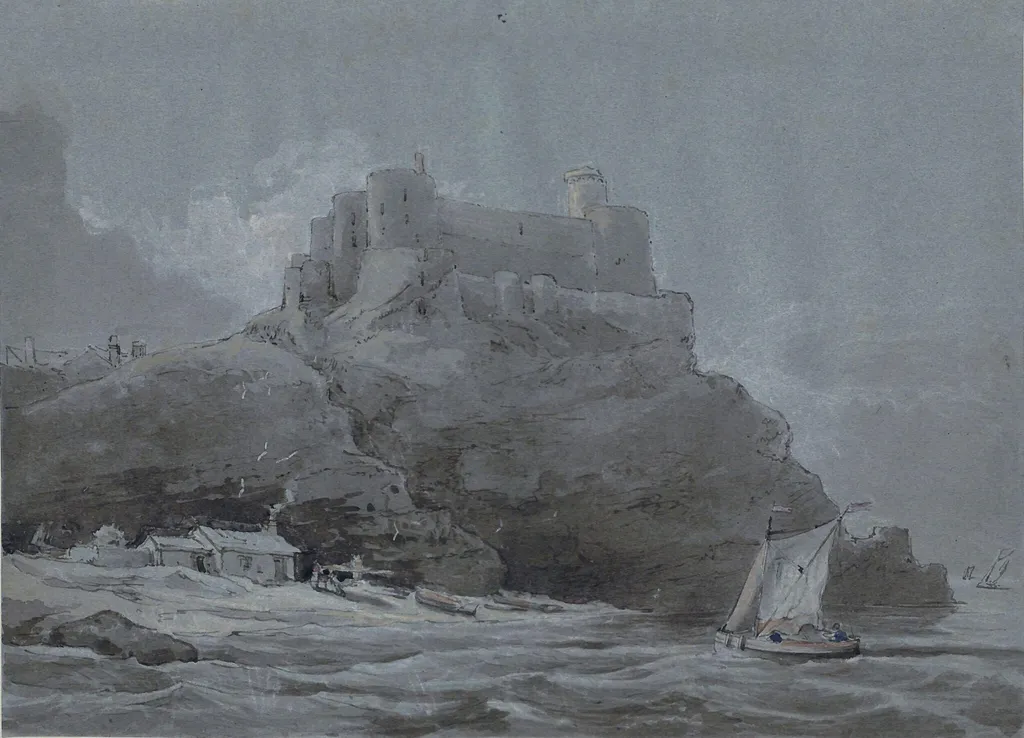
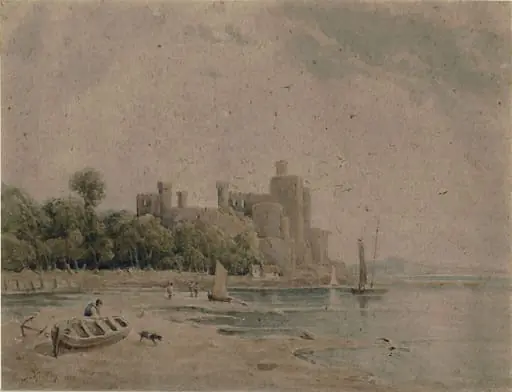
Harlech Castle is a watercolor work on paper by the British Romanticist artist William Alfred Delamotte. It dates from 1800 and is held in the collection of the Victoria and Albert Museum.
About this work
Overview
William Alfred Delamotte’s watercolour presents a view of Harlech Castle perched atop a rugged cliff on the Welsh coast. The composition balances the imposing stone fortress with the surrounding landscape, including a small settlement near the shoreline and two modest boats on choppy water. The sky is rendered in a muted, pale hue, giving the scene a tranquil yet atmospheric quality.
Subject & Meaning
The painting captures Harlech Castle as a symbol of medieval fortification, emphasizing its dominance over the sea and the nearby village. By situating the castle high above the water, Delamotte highlights the strategic importance of the site while also evoking a sense of isolation and endurance against the elements.
Technique & Style
Delamotte employs a restrained palette of grayish tones to model light and shadow across the stone walls and cliff face. Soft washes convey the texture of the rock and the movement of the waves, while delicate brushwork defines the distant sky. The overall effect is one of subtle atmospheric perspective, typical of early 19th‑century British watercolour practice.
History & Provenance
Created by the English artist William Alfred Delamotte (1775–1857), the work forms part of his series of topographical studies of British landmarks. It entered the collection of the Victoria and Albert Museum, where it is held as an example of the period’s interest in documenting historic architecture through watercolour.
Artist & collection