Artwork
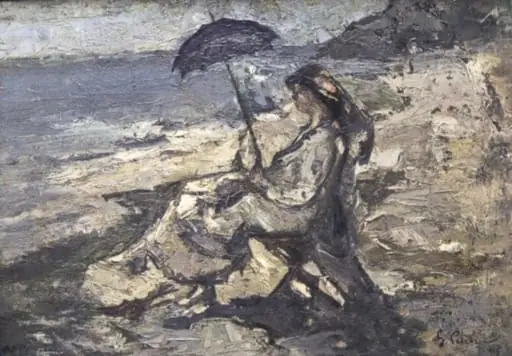
Femeie pe plajă
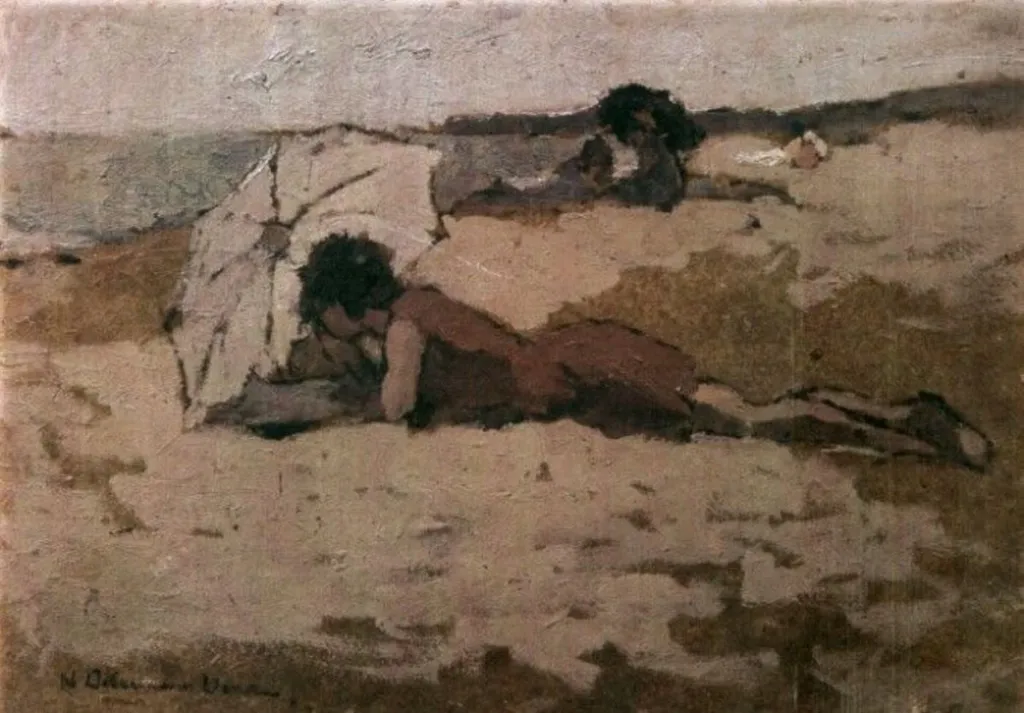
Femeie pe plajă is an unspecified painting by Dona Niculina Delavrancea. It is held in the collection of the National Museum of Art of Romania.
About this work
Overview
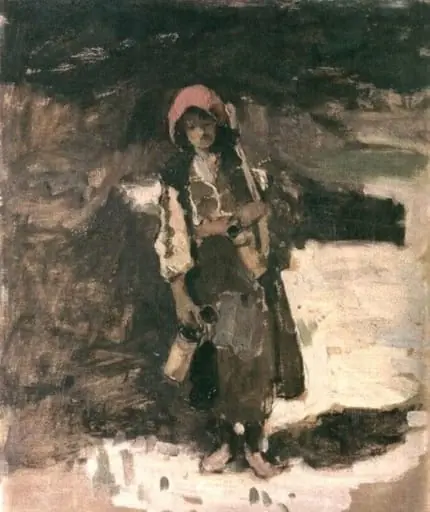
The painting depicts a solitary woman reclining on a sandy shore, her posture relaxed and her gaze seemingly lost in the quiet of the moment.
The painting depicts a solitary woman reclining on a sandy shore, her posture relaxed and her gaze seemingly lost in the quiet of the moment. Dressed in a simple brown dress with dark hair falling loosely, she is framed by a sparse coastal landscape of rocks and distant water. The composition emphasizes stillness, with minimal detail and soft transitions between elements, reinforcing a mood of tranquil solitude.
Subject & Meaning
The figure’s unposed, natural reclination suggests an intimate moment of rest, free from narrative or symbolic urgency. Her presence evokes a quiet communion with nature rather than a staged scene. The absence of other figures or activity draws focus to her inner calm, inviting contemplation of personal solitude rather than social or cultural commentary.
Technique & Style
The artist employs muted earth tones and gentle brushwork to blend the woman’s form with the beach and sea. Shadows are softened, and edges are blurred, avoiding sharp definition. This approach minimizes contrast and texture, favoring atmospheric harmony. The brushstrokes are deliberate yet unobtrusive, supporting the overall sense of serenity without drawing attention to technique itself.
History & Provenance
The work is attributed to Delavrancea, Dona Niculina (Nuni Dona), a Romanian artist active in the early 20th century. Little public documentation exists regarding its creation date or early ownership. It remains within private collections, with no record of public exhibition or critical reception during the artist’s lifetime, contributing to its understated historical profile.
Context
Created during a period when Romanian art increasingly turned to domestic and natural themes, the painting reflects a broader shift away from grand historical subjects toward intimate, everyday moments. While not part of a known movement, its quiet realism aligns with regional tendencies to portray rural and coastal life with emotional restraint and observational honesty.
Legacy
The painting has not entered mainstream art historical discourse, remaining largely unknown outside specialized circles. Its significance lies in its quiet consistency with the personal, introspective mode practiced by a generation of Romanian women artists who depicted private life with subtlety. It endures as a modest but resonant example of understated visual poetry.
Artist & collection
Artist
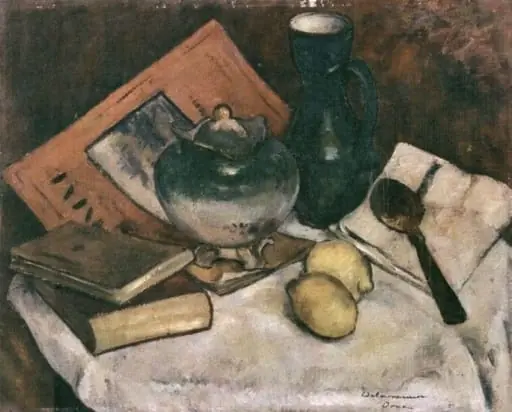
Dona Niculina Delavrancea painted still lifes and scenes from everyday life, often with Rumanians at work or bright flowers on a table.