Artwork
Untitled
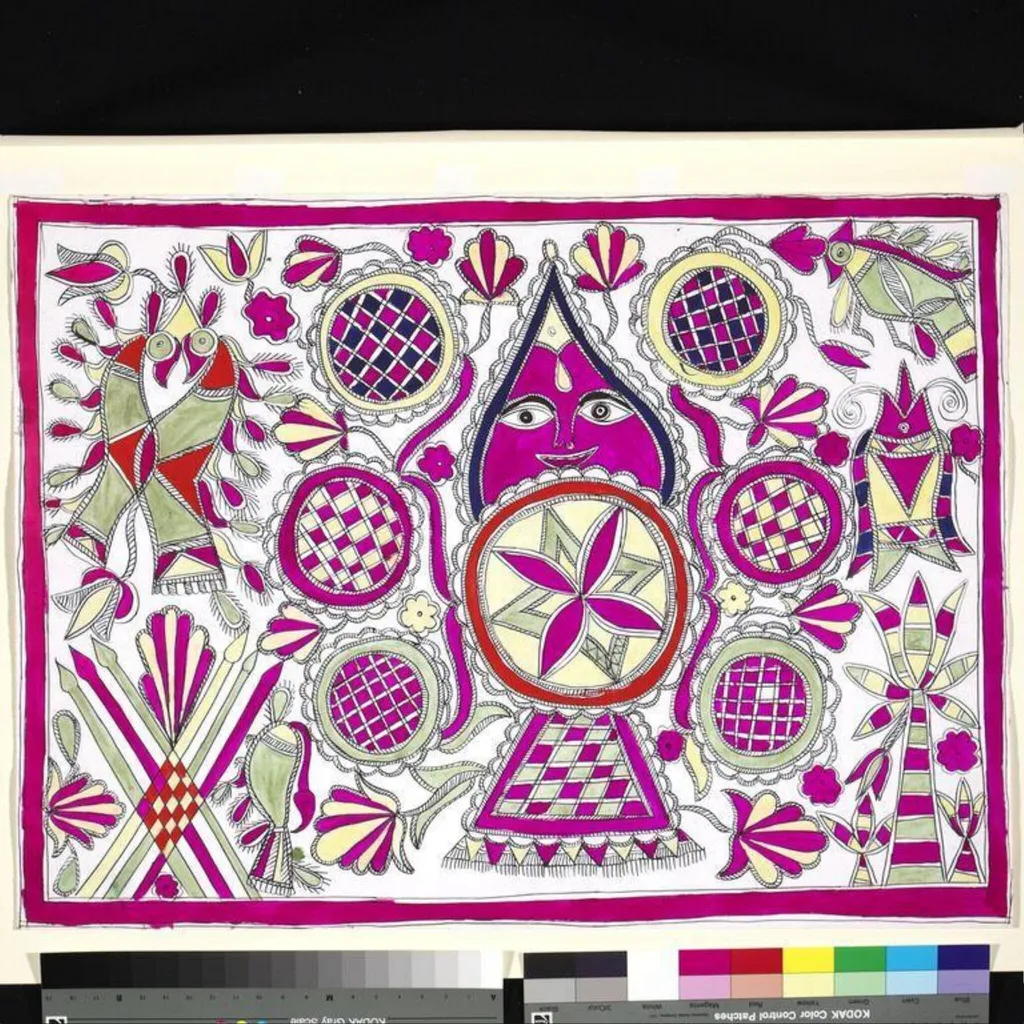
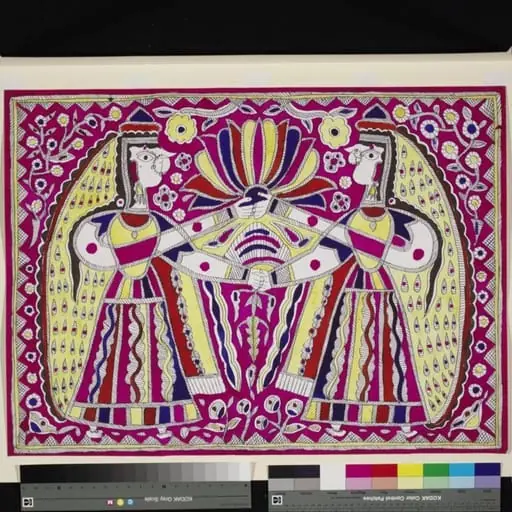
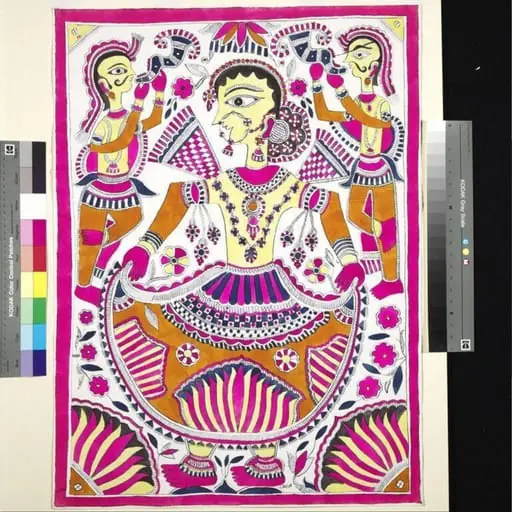
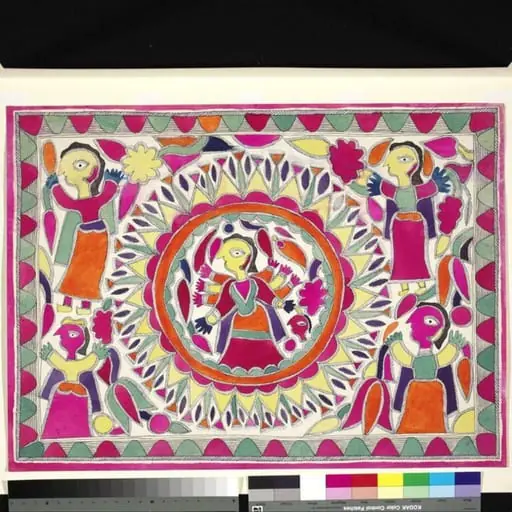
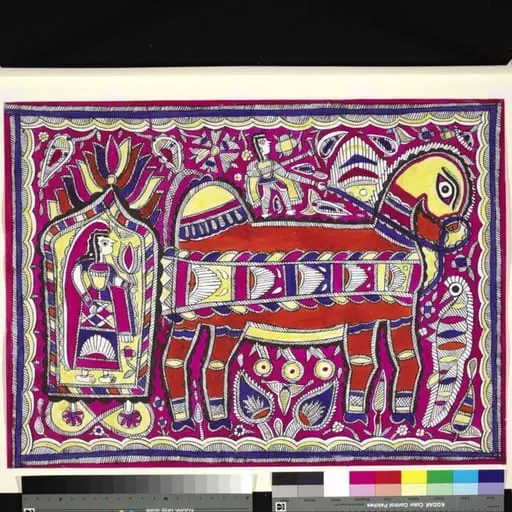
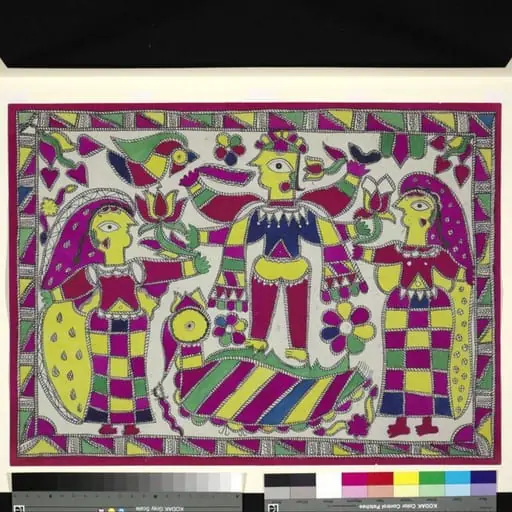
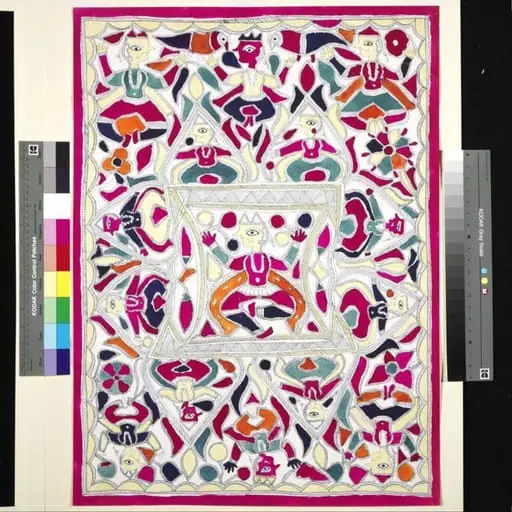
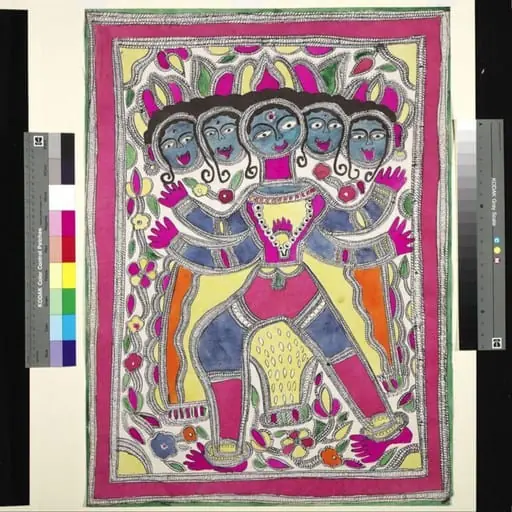
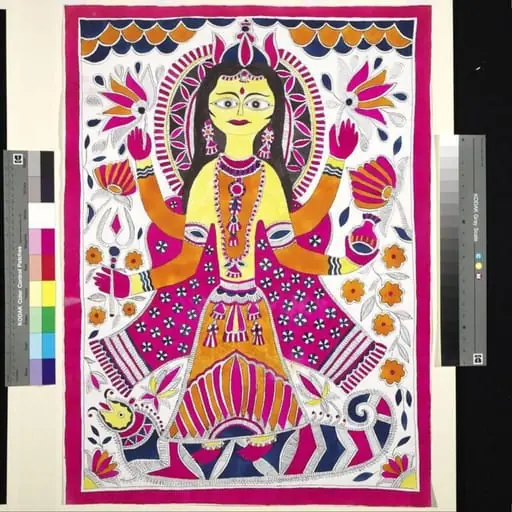
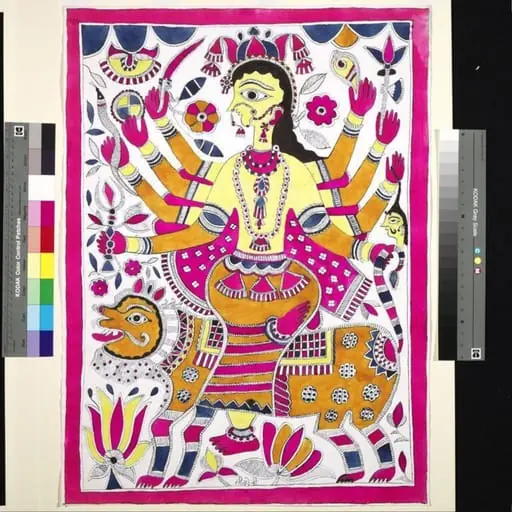
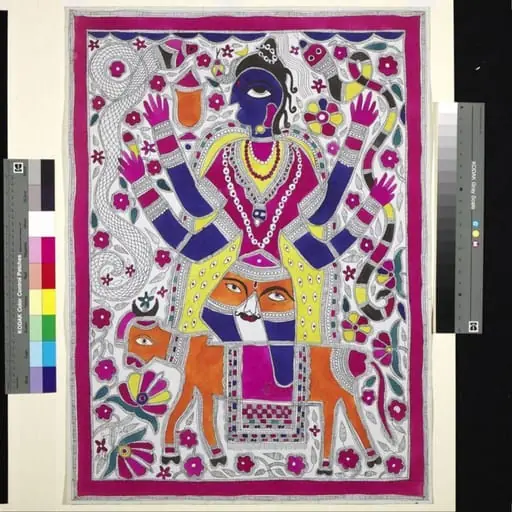
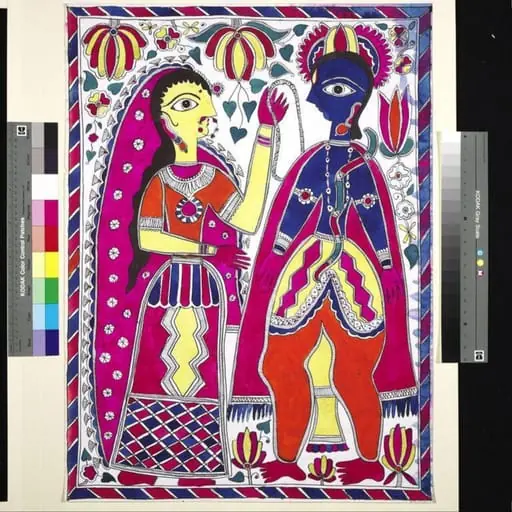
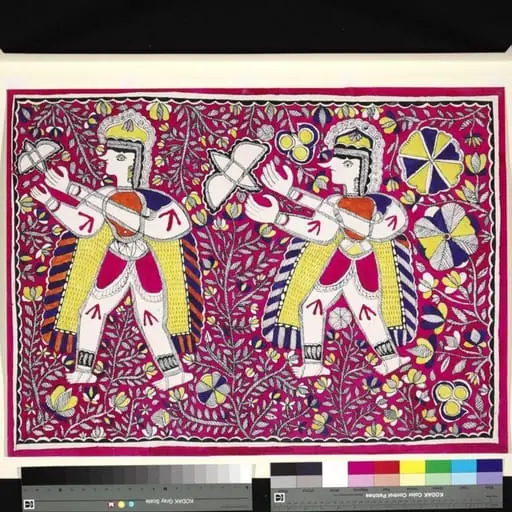
Untitled is a paint painting by Ukha Devi. It dates from 13 and is held in the collection of the Victoria and Albert Museum. This painting is a contemporary example of Madhubani art, created on paper by Devi Ukha using ink and natural pigments.
About this work
Overview
This painting is a contemporary example of Madhubani art, created on paper by Devi Ukha using ink and natural pigments.
This painting is a contemporary example of Madhubani art, created on paper by Devi Ukha using ink and natural pigments. It presents a dense, symmetrical composition rooted in the Mithila region’s visual language. Unlike traditional wall murals, this piece reflects the medium’s transition to portable formats after the 1960s, enabling broader circulation and preservation outside its original ritual context.
Subject & Meaning
The central face, framed by a red circle, may symbolize a deity or ancestral presence, common in ceremonial Madhubani works. Surrounding elements—peacocks, floral patterns, and geometric roundels—carry associations with fertility, abundance, and cosmic order. These motifs, traditionally invoked during weddings, transform the surface into a visual prayer for prosperity, even as the work now functions as a secular artifact.
Technique & Style
The artist employs flat, unmodulated colors bounded by bold, continuous outlines, rejecting perspective and shading. Patterns are meticulously rendered in repeating shapes—triangles, circles, and checkered fields—creating rhythmic visual harmony. The composition fills every space, echoing textile designs and mural traditions, with no empty areas, reinforcing the cultural value of fullness as a sign of abundance.
History & Provenance
Madhubani painting originated in northern Bihar as a domestic ritual art practiced by women of specific castes. Its public recognition began after the 1934 earthquake, when colonial administrator W.G. Archer documented the murals. By the 1960s, economic pressures led artists to transfer the imagery to paper for sale, shifting its purpose from sacred decoration to commercial craft, a transition that preserved the tradition while altering its context.
Context
This work emerges from a matrilineal artistic lineage in rural Mithila, where painting was historically tied to life-cycle rituals, especially weddings. The shift to paper in the late 20th century allowed these designs to reach urban markets and international collections. While the imagery retains symbolic meaning, its display in museums and galleries now frames it as cultural heritage rather than ritual object.
Legacy
Devi Ukha’s work exemplifies how Madhubani painting evolved from localized practice into a nationally recognized folk art. Its adoption on paper enabled economic agency for women artists and preserved visual traditions otherwise vulnerable to cultural erosion. Today, the style influences contemporary Indian art and design, sustaining ancestral motifs while adapting to new materials and audiences.
Artist & collection
Artist
Ukha Devi’s lone painting in this set, Untitled (13 August 1973, Painting), is a flat, figurative canvas that feels like a snapshot from a private album.