Artwork
Kitchen Scene with the Supper in Emmaus
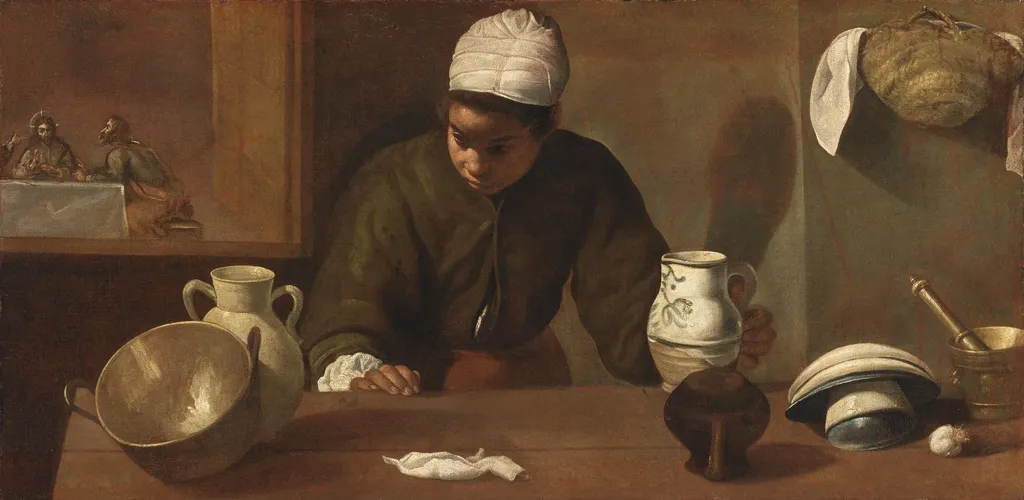
Kitchen Scene with the Supper in Emmaus is an oil painting by the Early Baroque Italian artist Diego Velázquez. It dates from 1618 and is held in the collection of the National Gallery of Ireland.
About this work
Overview
Diego Velázquez’s oil painting, dated 1618, presents a domestic interior that doubles as a biblical tableau. The canvas, titled Kitchen Scene with the Supper in Emmaus, merges a quotidian kitchen setting with the narrative of the disciples’ meal in Emmaus, and today it belongs to the collection of the National Gallery of Ireland.
Subject & Meaning
At the centre stands a woman in a dark dress and white head covering, engaged in kneading dough on a wooden table crowded with pots, a pitcher and a mortar. Behind her, a modest shelf holds a small statue and a painted pair of figures, alluding to the hidden religious episode of the Supper at Emmaus within an everyday scene.
Technique & Style
Velázquez employs a pronounced chiaroscuro, allowing the woman’s illuminated face to emerge from the surrounding gloom. The contrast of light and shadow not only models the forms of the kitchen objects but also guides the viewer’s eye toward the subtle iconography on the shelf, demonstrating the artist’s skill in integrating narrative and realism.
History & Provenance
Created early in Velázquez’s career, the work has remained in public ownership, eventually entering the National Gallery of Ireland’s holdings. Its provenance traces a path from 17th‑century Spanish collections to its present museum setting, where it continues to be displayed as an example of the painter’s early synthesis of genre and religious themes.
Artist & collection
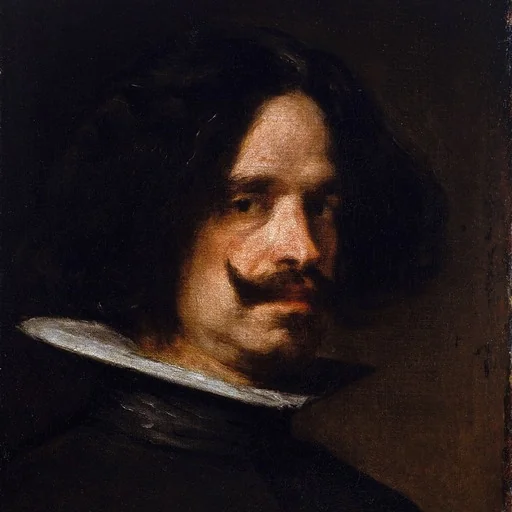
Artist
Diego Rodríguez de Silva y Velázquez was a Spanish Baroque painter, the leading artist in the court of King Philip IV of Spain and Portugal, and of the Spanish Golden Age.