Artwork
Menippus
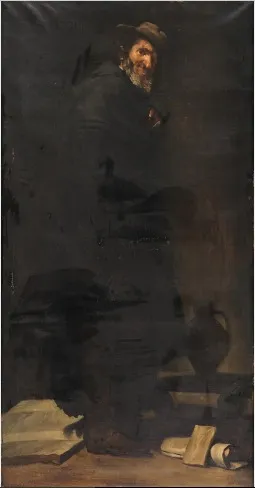
Menippus is an oil painting by the Realist artist Diego Velázquez. It is held in the collection of the National Gallery of Ireland.
About this work
Overview
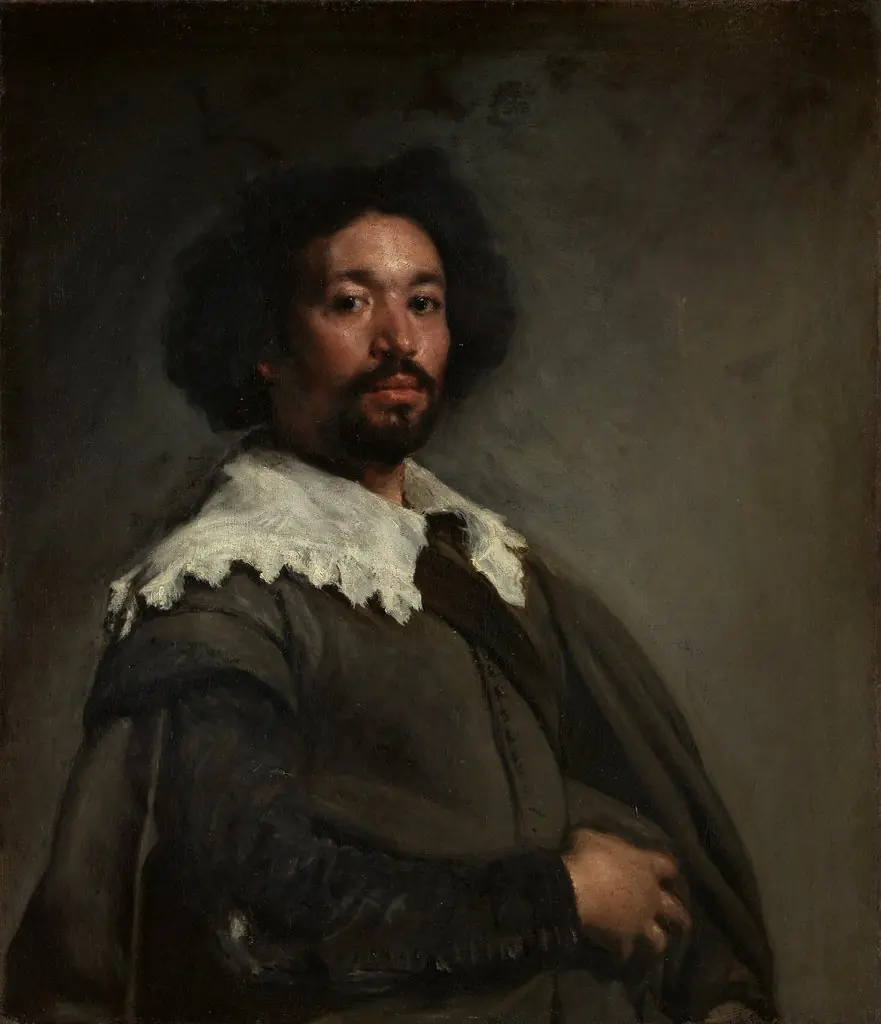
The portrait presents a solitary male figure in a dim interior, rendered with restrained tonality and careful attention to light.
Painted in 1869, Menippus is an oil on canvas work by Diego Velázquez, currently housed in the National Gallery of Ireland. The portrait presents a solitary male figure in a dim interior, rendered with restrained tonality and careful attention to light. Though the title references a Cynic philosopher, the sitter’s identity remains unconfirmed, and the painting stands as a study in psychological presence rather than historical narrative.
Subject & Meaning
The figure, clad in a dark robe and wide-brimmed hat, gazes into the distance with a quiet intensity. His posture and expression suggest introspection, evoking the tradition of philosophical portraiture. While the name Menippus alludes to a Hellenistic thinker known for satire and skepticism, the painting offers no overt symbols or textual clues. The ambiguity invites interpretation, emphasizing inner life over external identity.
Technique & Style
Velázquez employs chiaroscuro to model the figure’s form, with soft light glancing across the face and hands while the background recedes into deep brown shadows. Brushwork varies: the robe is rendered in smooth, blended strokes, contrasting with the textured, almost granular background. This tactile contrast enhances spatial depth and focuses attention on the subject’s contemplative demeanor.
History & Provenance
The painting entered the National Gallery of Ireland’s collection in the late 19th century, acquired from a private European source. Its attribution to Velázquez has been consistently upheld by curators, though its date—1869—raises questions, as the artist died in 1660. This discrepancy suggests either a misdating or a later copy, though stylistic analysis supports its origin in the 17th century.
Context
During the mid-17th century, Spanish painters frequently depicted scholars and philosophers in intimate, half-length portraits, often using monochrome palettes and dramatic lighting. Velázquez’s approach here aligns with this tradition, reflecting broader cultural interest in intellectual figures. Yet the absence of books, scrolls, or other attributes distinguishes this work as a psychological study rather than a conventional allegory.
Legacy
Menippus remains a quiet example of Velázquez’s late portraiture, valued for its emotional restraint and technical precision. Though less known than his court portraits, it contributes to understanding his range beyond royal commissions. Scholars note its influence on 19th-century realist painters who sought to capture inner states through subtle lighting and minimal composition.
Artist & collection
Artist
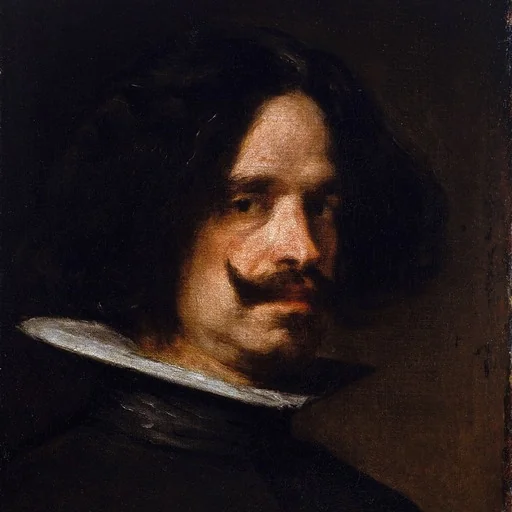
Diego Rodríguez de Silva y Velázquez was a Spanish Baroque painter, the leading artist in the court of King Philip IV of Spain and Portugal, and of the Spanish Golden Age.