Artwork
Άτιτλο
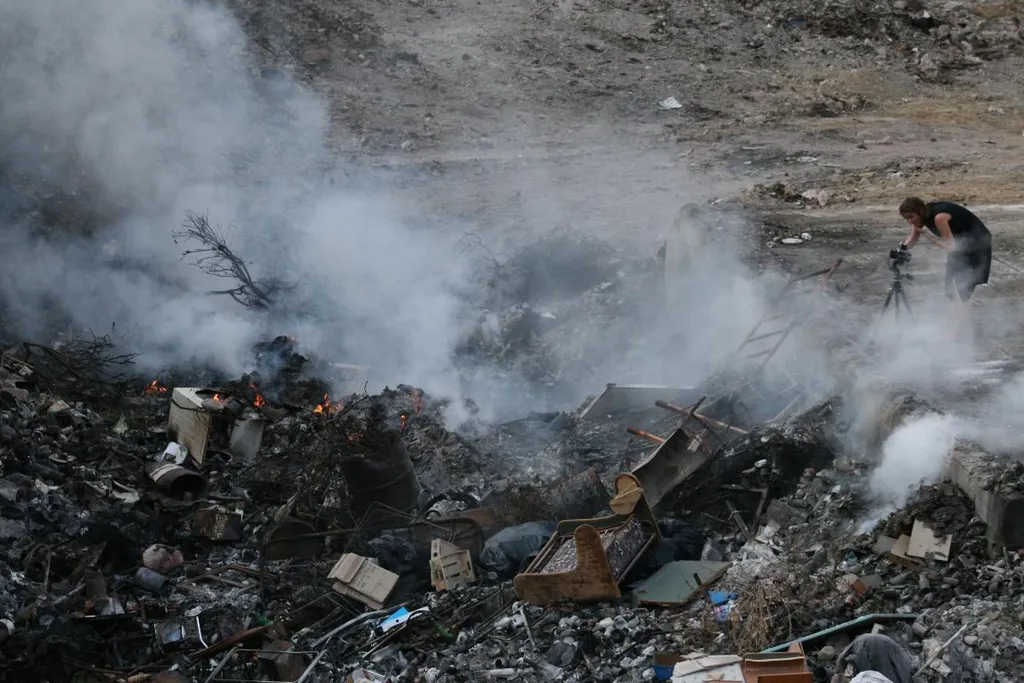
Άτιτλο is a photography by DIMITRA GIANAKOU. It dates from 2007 and is held in the collection of the Athens School of Fine Arts.
About this work
Overview
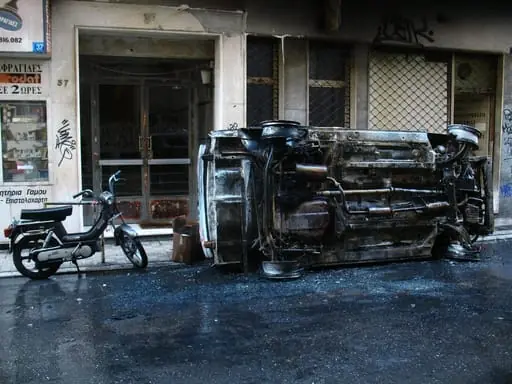
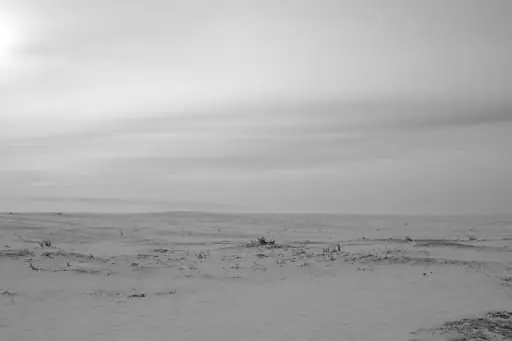
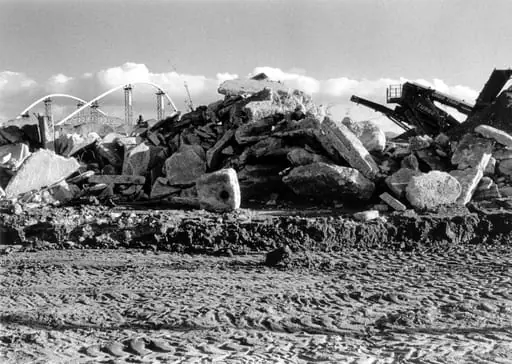
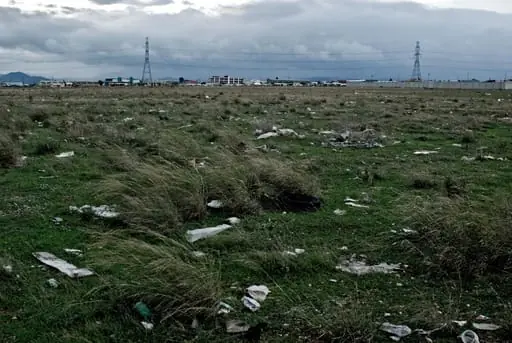
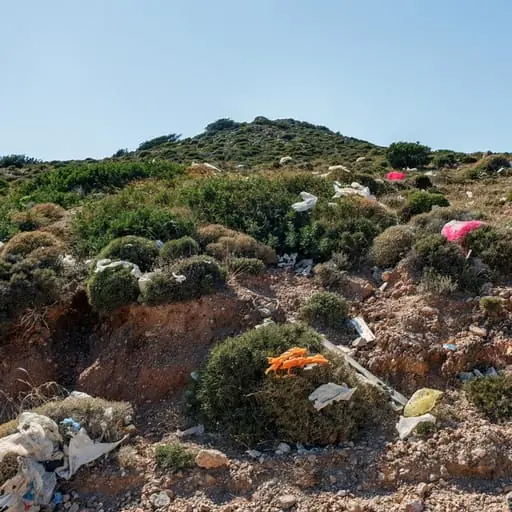
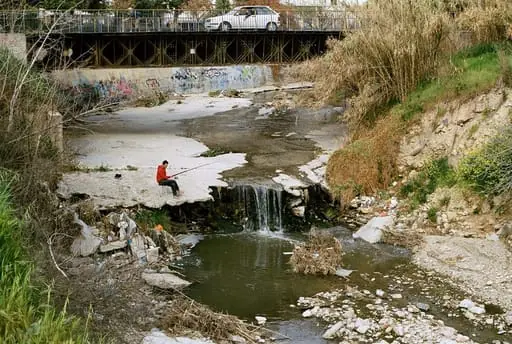
This photograph captures a neglected stretch of land at the edge of an urban area, where human waste has accumulated without regulation or cleanup. The scene is devoid of human presence, emphasizing the quiet persistence of refuse. It presents no dramatic action, only the slow, unremarkable decay of discarded materials in a liminal space between city and countryside.
Subject & Meaning
The image focuses on the aftermath of urban consumption: plastic fragments, corroded metal, and shattered glass scattered across dry earth.
The image focuses on the aftermath of urban consumption: plastic fragments, corroded metal, and shattered glass scattered across dry earth. A narrow, contaminated waterway winds through the debris, suggesting both the flow of waste and the erosion of natural boundaries. The composition avoids sentimentality, instead inviting reflection on the invisible consequences of urban expansion and disposal practices.
Technique & Style
The photograph is rendered in a straightforward, documentary style. The lighting is even and unadorned, with no dramatic shadows or filters. The camera remains at eye level, creating a sense of immersion without intrusion. The framing is deliberate but unembellished, allowing the accumulation of refuse to speak for itself through repetition and texture rather than symbolic arrangement.
History & Provenance
The work is part of a series by Dimitra Gianakou, taken during fieldwork in peri-urban zones of Greece. It was produced as part of an ongoing visual investigation into environmental neglect in areas undergoing rapid, unregulated development. The photograph has been exhibited in regional art spaces focused on ecological and social geography, but remains largely outside mainstream institutional collections.
Context
This image emerges from a broader pattern of informal waste disposal in regions where municipal services fail to keep pace with population growth. The site reflects a common condition in Mediterranean peripheries, where land use is ambiguous and oversight minimal. The photograph does not depict an exceptional case, but rather a widespread, overlooked reality of post-industrial landscapes.
Legacy
Gianakou’s work contributes to a growing visual archive of environmental marginalization, offering a quiet counterpoint to sensationalized depictions of ecological crisis. Her images are referenced in academic discussions on urban ecology and visual anthropology, particularly in studies examining how photography can document systemic neglect without resorting to spectacle or moralizing.
Artist & collection
Artist