Artwork
Merry Company
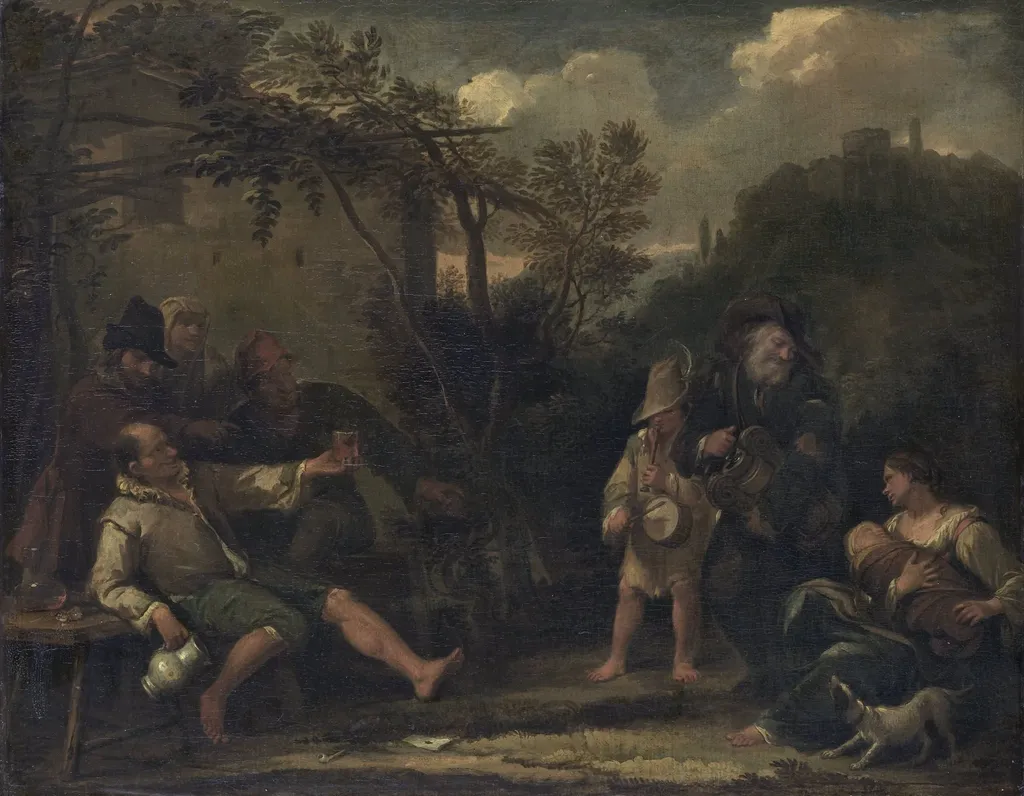
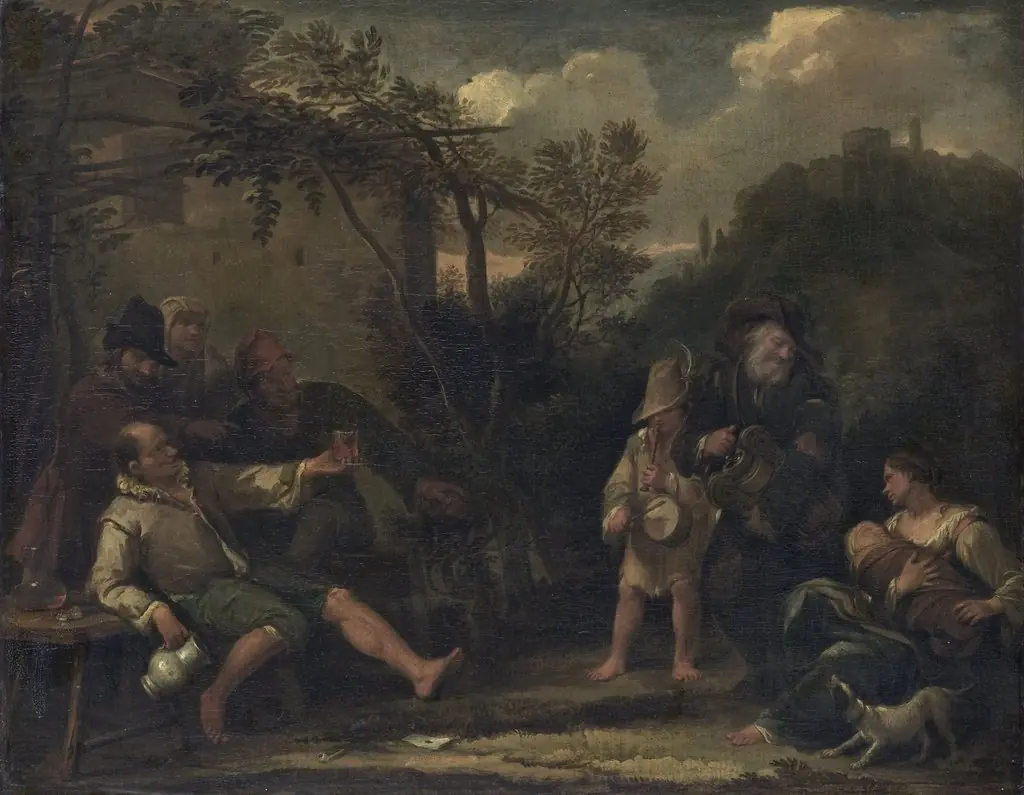
Merry Company is an unspecified painting by the Baroque artist Dirck Helmbreker. It dates from 1688 and is held in the collection of the Rijksmuseum.
About this work
Overview
The work, titled Merry Company, presents a casual gathering on the terrace of an inn at dusk. A group of figures occupies the foreground: men seated at a table, one raising a glass; an elderly musician plucking a lyre; a young boy blowing a flute; a woman cradling a child; and a dog barking nearby. The composition captures a moment of ordinary leisure rather than a staged narrative.
Subject & Meaning
The raised glass suggests toast or celebration, while the music performed by the older man and the child hints at shared cultural practices.
The painting foregrounds everyday social interaction, emphasizing conviviality and familial care. The raised glass suggests toast or celebration, while the music performed by the older man and the child hints at shared cultural practices. The presence of the mother with her infant and the attentive dog adds a domestic dimension, underscoring the blend of public tavern life with private familial bonds.
Technique & Style
Executed with rapid, loosely applied brushstrokes, the surface resembles a sketch rather than a polished finish. This approach conveys immediacy and movement, preserving the spontaneity of the scene. The palette is warm and subdued, appropriate to the evening setting, while the handling of light and shadow remains suggestive, allowing forms to emerge without meticulous detail.
Context
The painting aligns with the broader Baroque interest in genre scenes that depict ordinary people engaged in daily activities. By focusing on a tavern terrace, the artist joins a tradition of works that explore social interaction in public spaces, reflecting contemporary attitudes toward leisure and community in the period’s visual culture.
Own this work as a print
Artist & collection
Artist
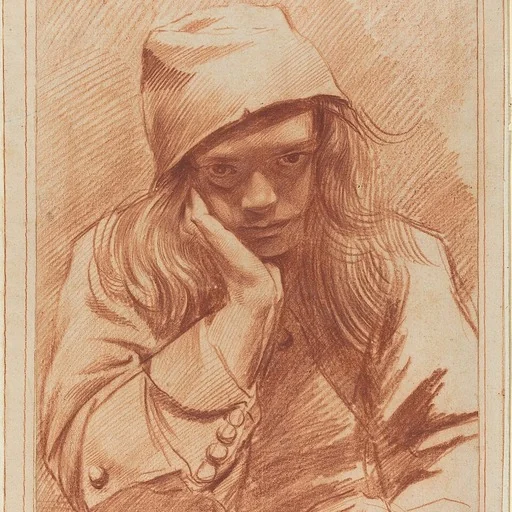
Dirck Helmbreker, Theodor Helmbreeker, or Teodoro Elembrech (1633–1696) was a Dutch Golden Age painter of Italianate landscapes.