Artwork
Appearance of the Christ Child to Saint Anthony of Padua
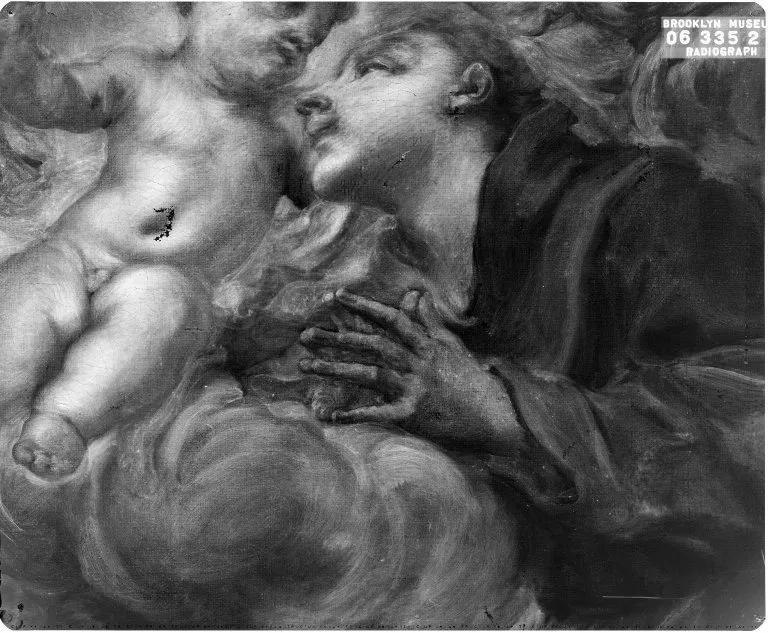
Appearance of the Christ Child to Saint Anthony of Padua is an oil painting by the Early Baroque Italian artist Domenico Piola. It dates from 1694 and is held in the collection of the Brooklyn Museum.
About this work
Overview
Created in 1694 by Domenico Piola, a prominent Genoese Baroque painter, *Appearance of the Christ Child to Saint Anthony of Padua* is an oil painting depicting a pivotal religious moment. Characteristic of early Baroque Italian art, it is now part of the Brooklyn Museum's collection.
Subject & Meaning
The painting captures a sacred encounter between the Christ Child and Saint Anthony of Padua. Compositionally, the Christ Child, naked and on the left, reaches out towards Saint Anthony, who, robed and on the right, gazes at the infant, conveying a sense of divine connection.
Technique & Style
Piola employs a distinctive Baroque style, with the figures seemingly suspended in mid-air against a dark, contrasting background that enhances their visibility. The work showcases meticulous detail, evident in the intricate folds of the saint's robe and the Christ Child's finely rendered fingers.
History & Provenance
Originally created for a religious or private commission, the painting's early history is not detailed here. It is known to have entered the Brooklyn Museum's collection, where it remains as part of its Baroque holdings.
Context
As a leading Genoese artist of his time, Piola's work reflects the Baroque's emphasis on emotional intensity and dramatic lighting, common in 17th-century Italian religious art. This piece aligns with his known output for churches and collectors.
Artist & collection
Artist
Domenico Piola (1627 – 8 April 1703) was a Genoese painter of the Baroque period.

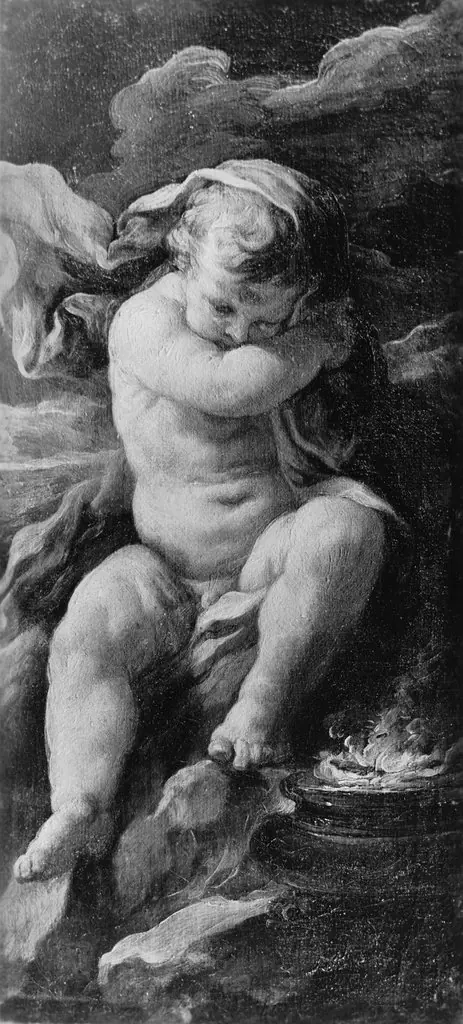 Allegory of Winter
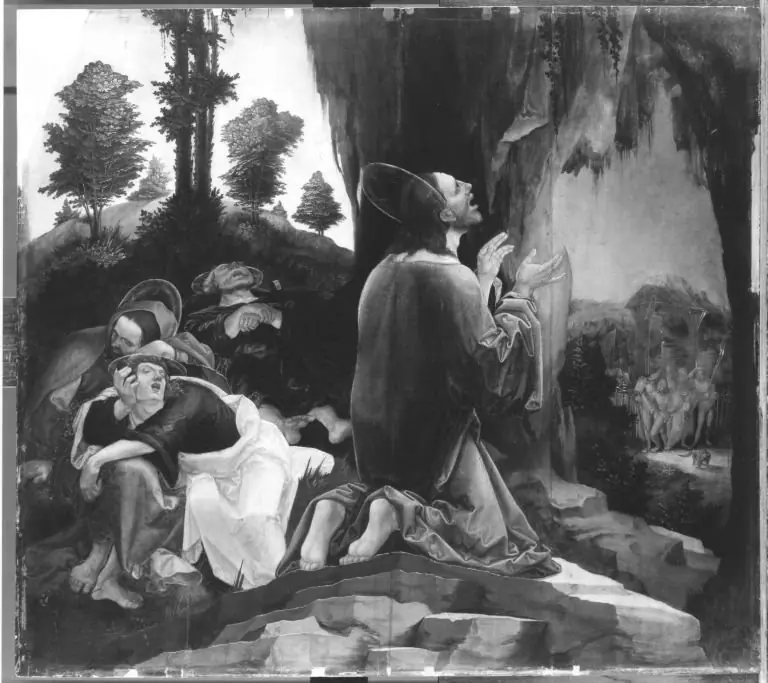 Christus am Ölberg
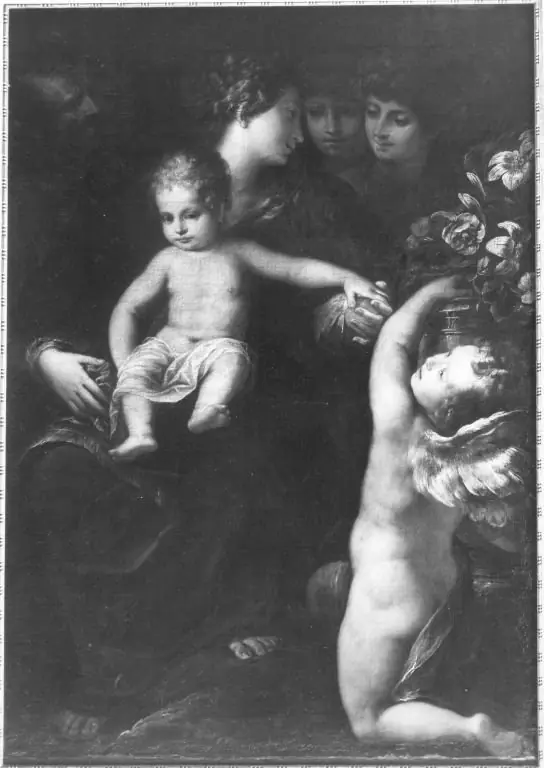 Heilige Familie mit Engel
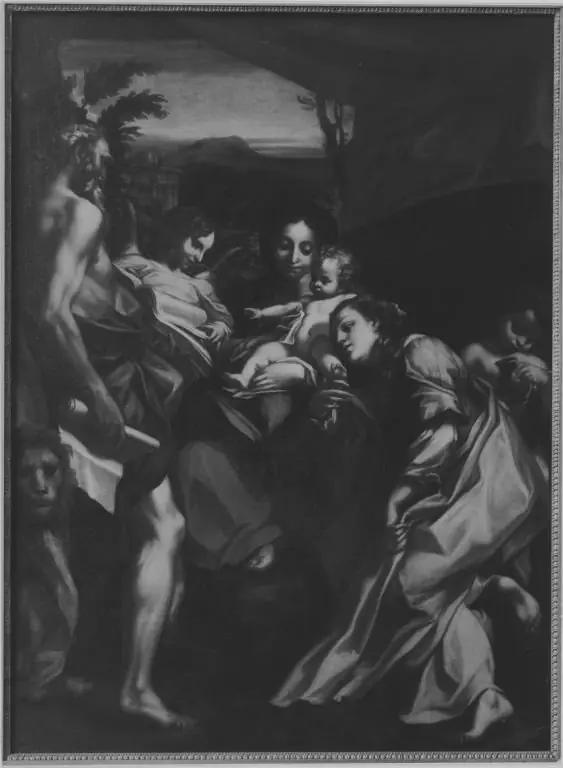 Madonna del S. Gerolamo (Maria mit Kind, hll. Maria Magdalena, Hieronymus und Engeln)
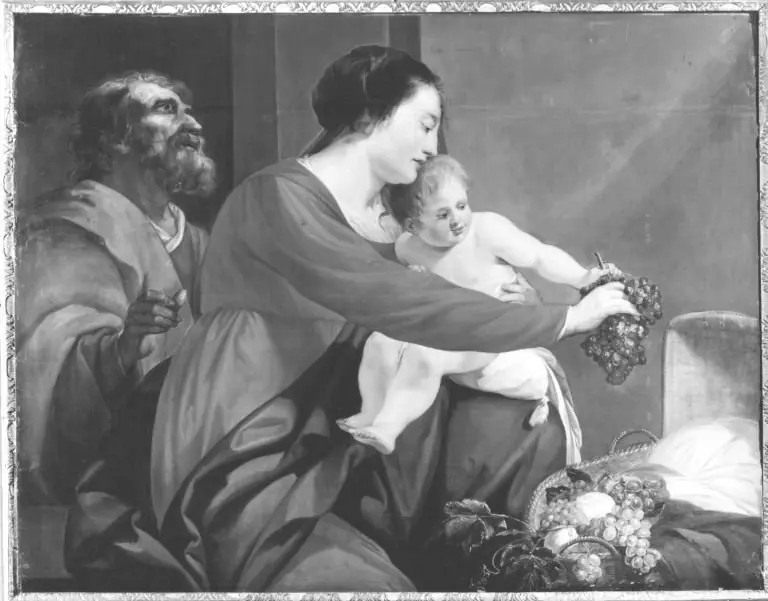 The Holy Family
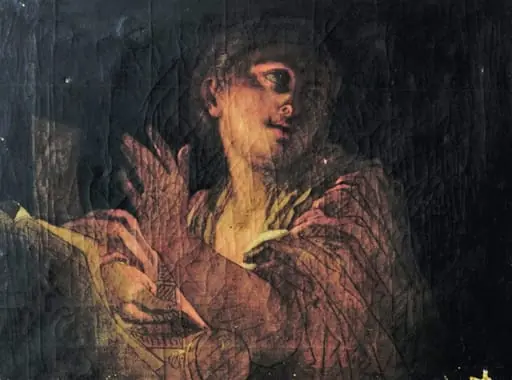 Efect de lumină
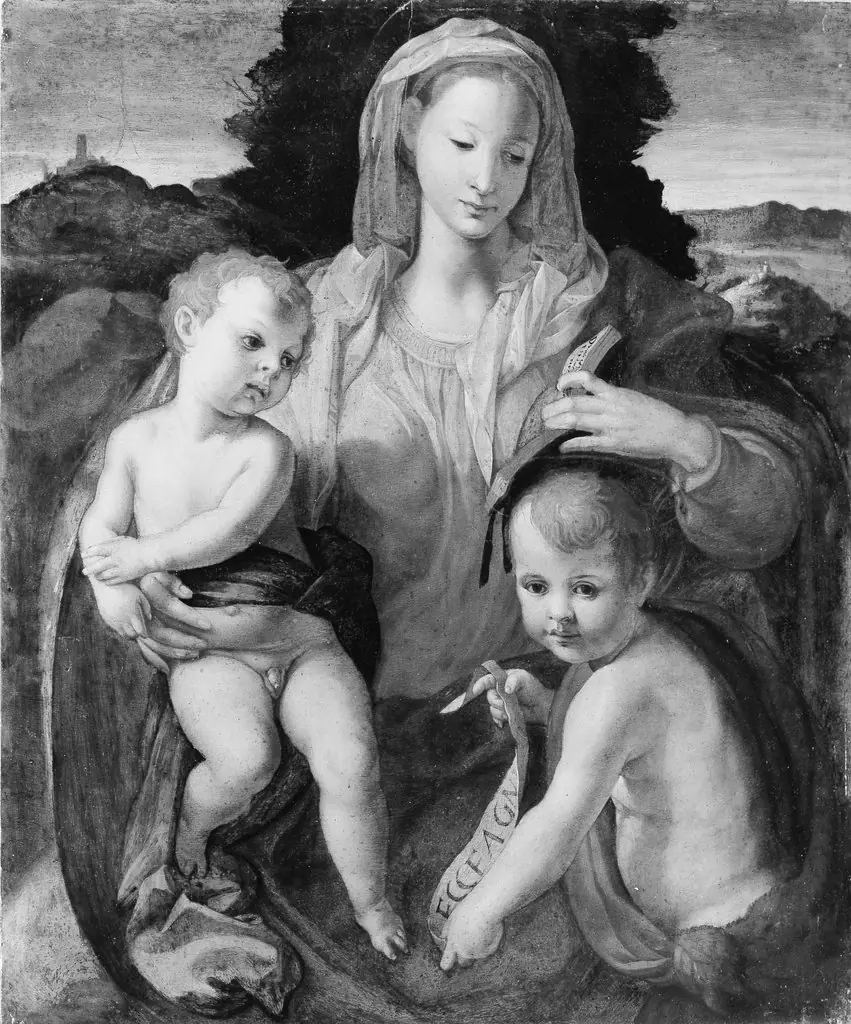 Madonna and Child with the Young Saint John the Baptist
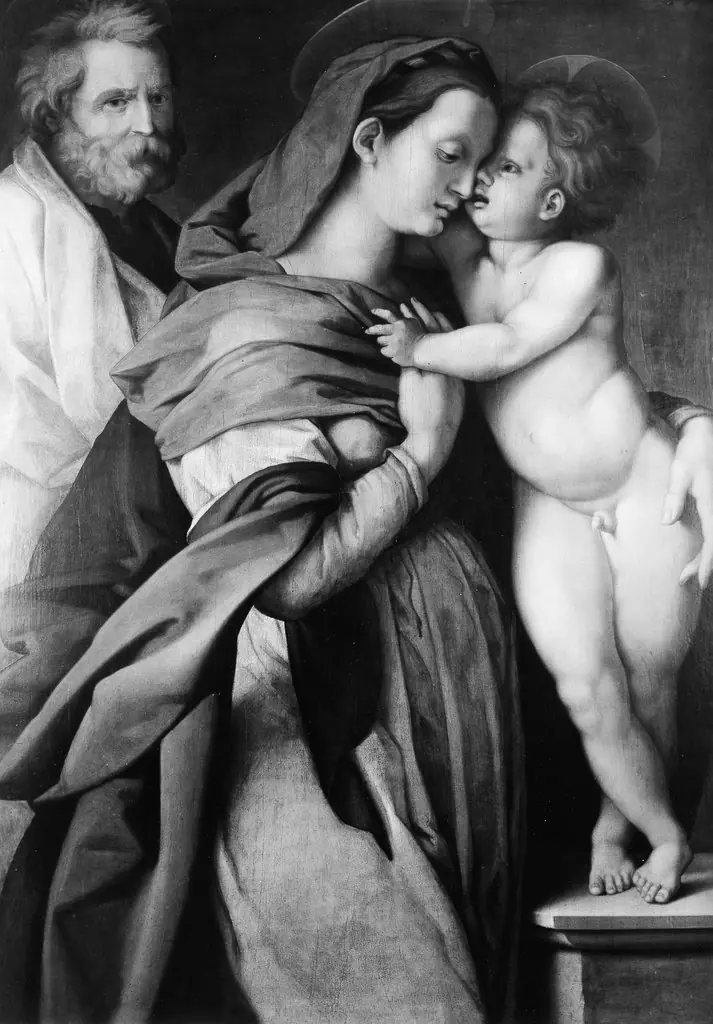 Holy Family
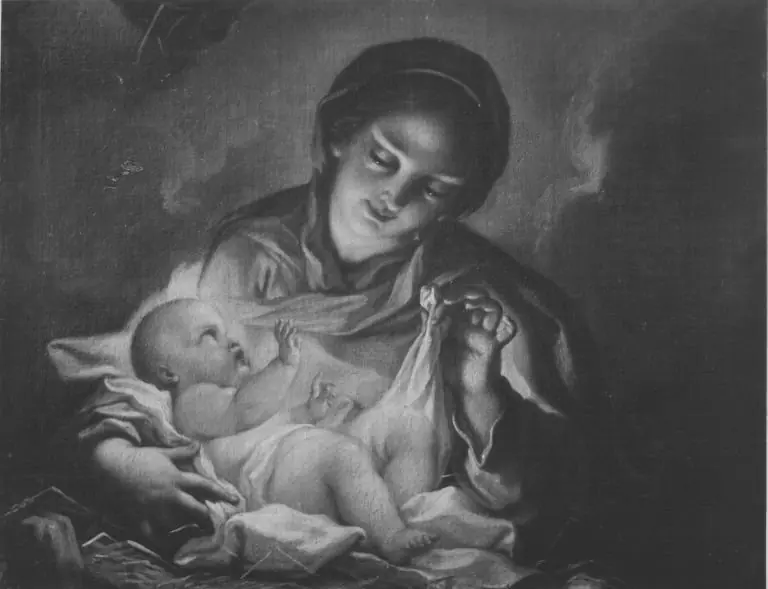 Maria mit dem Kinde
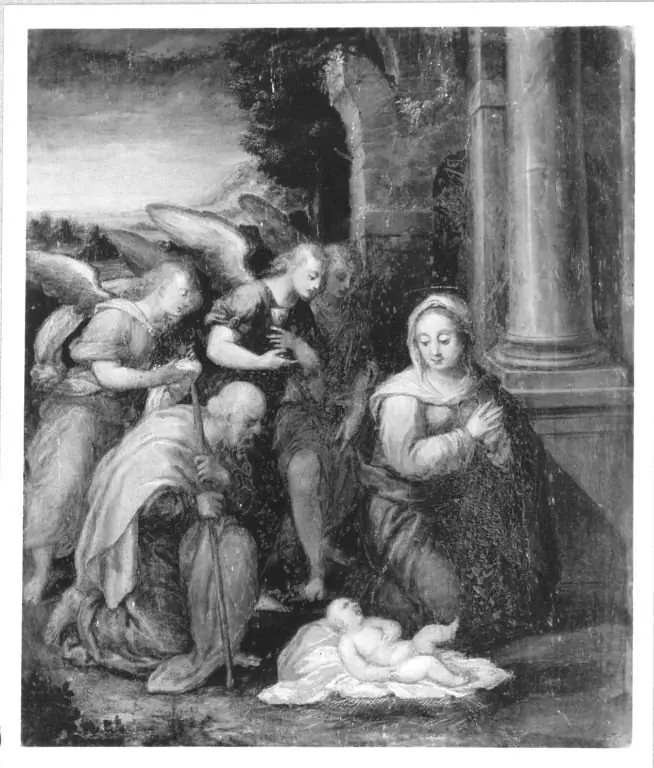 Geburt Christi
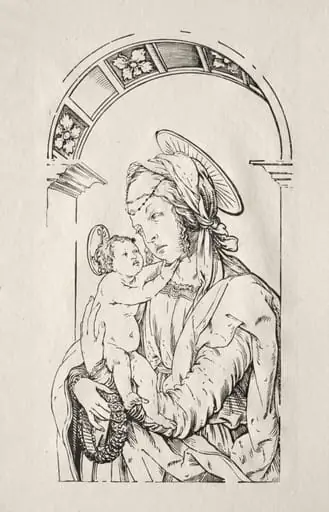 The Virgin with the Child under an arch
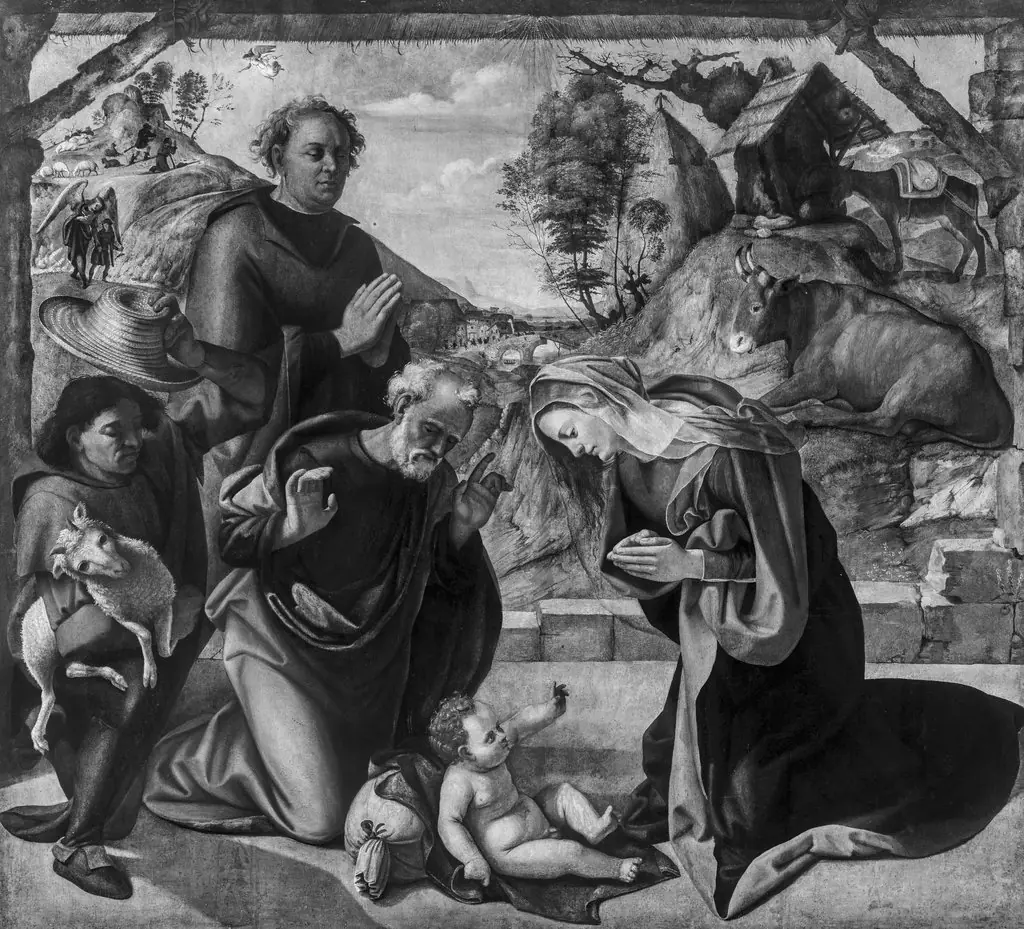 Adoration of the Christ Child