Artwork
Fish (Still Life)
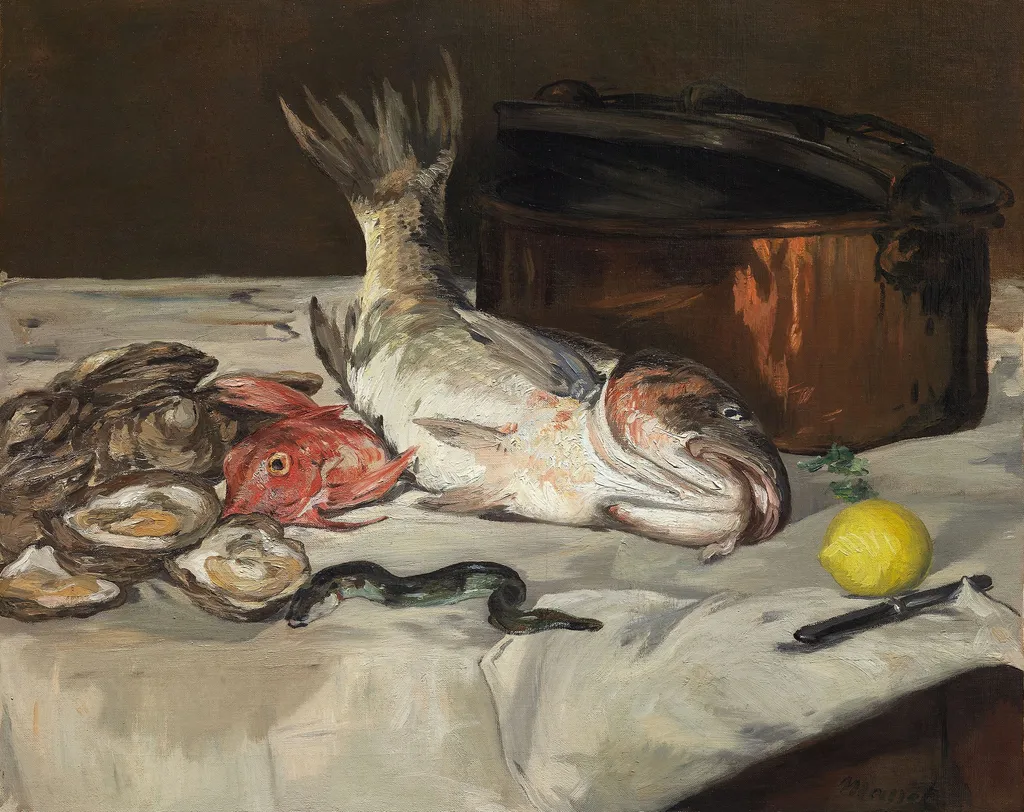
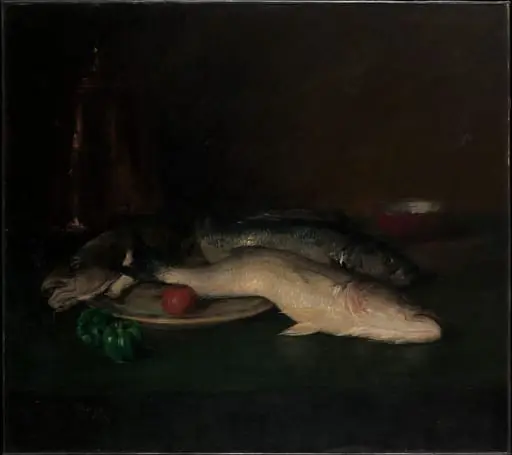
Fish (Still Life) is an oil painting by the Realist artist Edouard Manet. It dates from 1864 and is held in the collection of the Art Institute of Chicago.
About this work
Overview
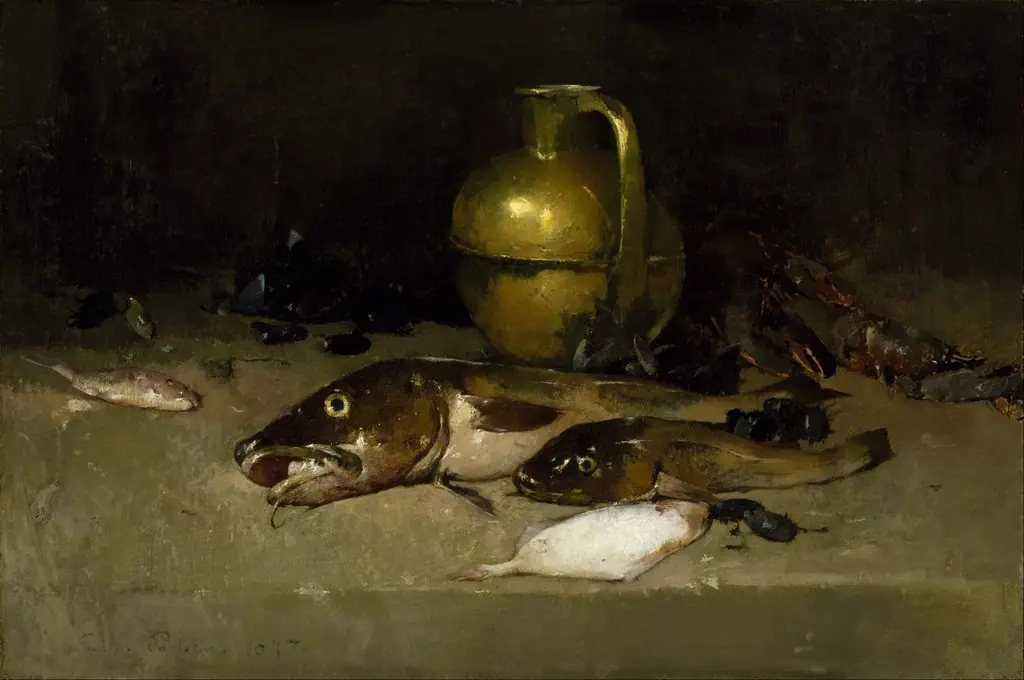
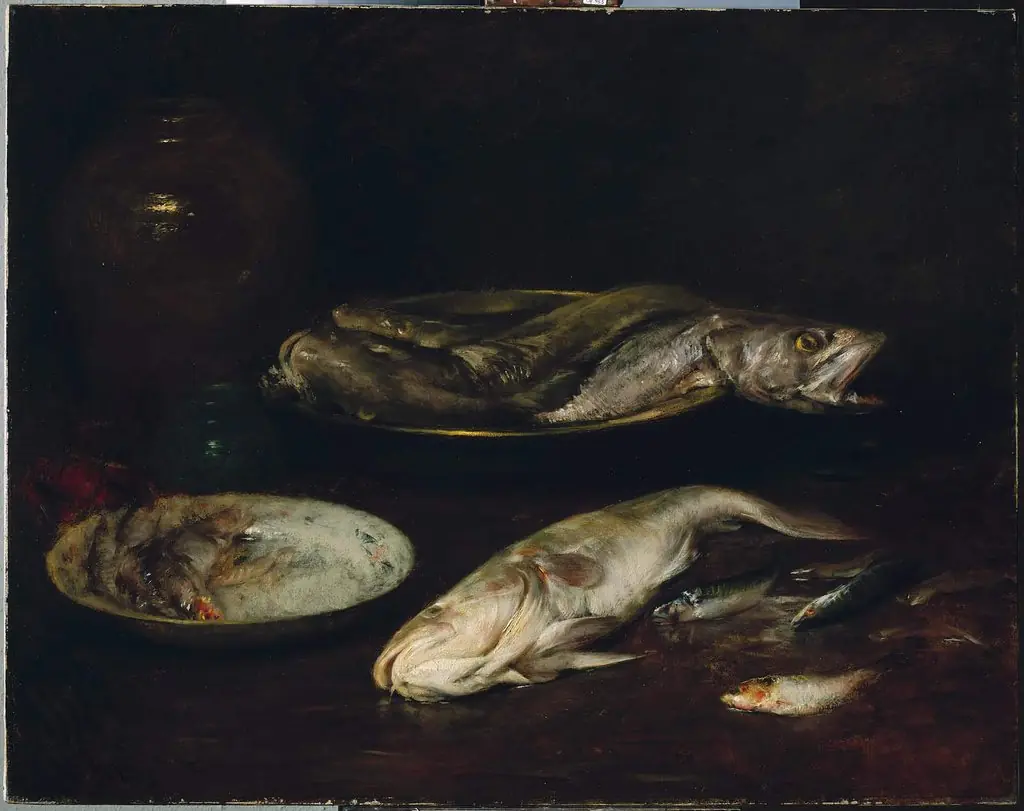
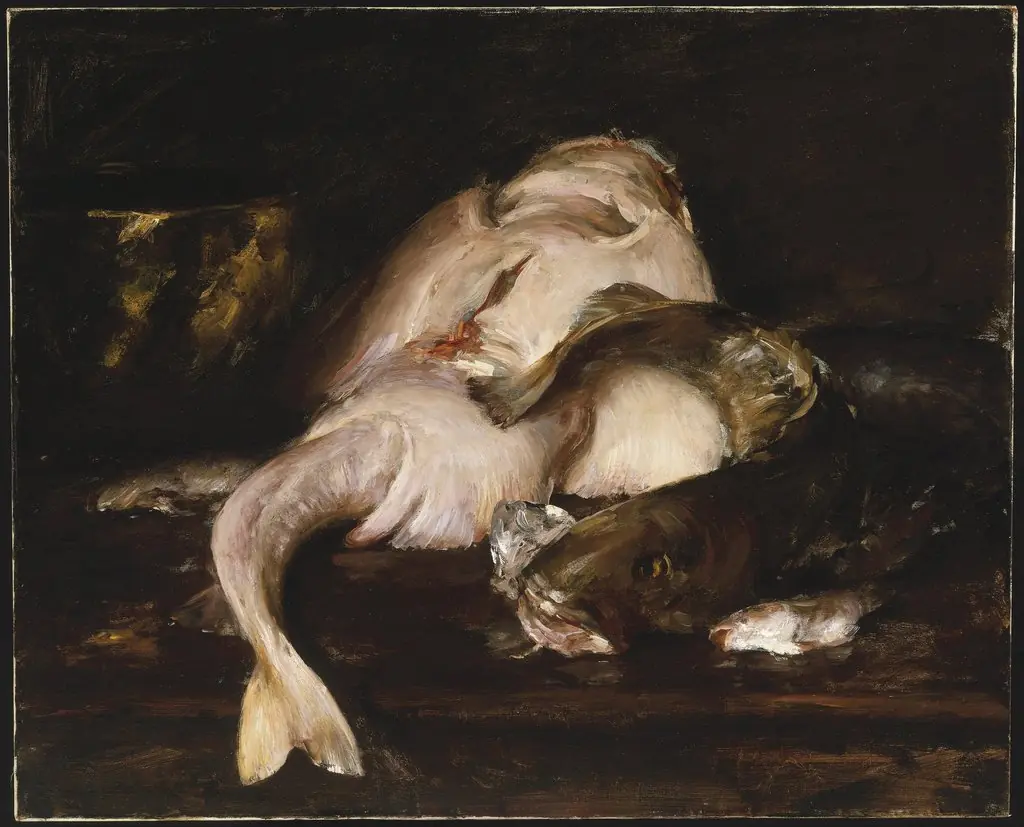
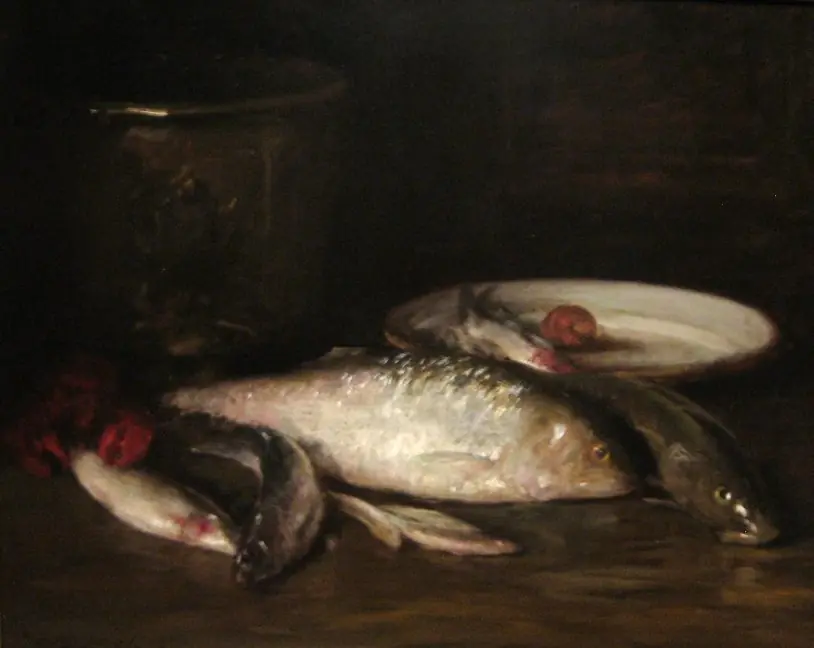
The composition is deliberately unadorned, featuring a whole fish, oysters, a crimson fish, a lemon, and a copper vessel.
Painted in 1864, Fish (Still Life) is an oil on canvas work by Édouard Manet that presents a modest arrangement of seafood and kitchen objects on a darkened table. The composition is deliberately unadorned, featuring a whole fish, oysters, a crimson fish, a lemon, and a copper vessel. Manet’s approach rejects idealized detail in favor of immediate visual impression, aligning with emerging modern sensibilities in mid-19th-century French painting.
Subject & Meaning
The subject is a humble still life drawn from everyday French domestic life. The fish and oysters suggest a market purchase, while the lemon and copper pot hint at culinary preparation. There is no narrative or symbolic layer beyond the physical presence of these items. Manet’s focus on ordinary objects without moral or allegorical intent reflects a shift toward realism grounded in observation rather than tradition.
Technique & Style
Manet employed rapid, visible brushwork and thick applications of paint, particularly on the lemon and fish, creating a tactile surface that captures light dynamically. Colors are applied with minimal blending, preserving their intensity. The dark background and sharp contrasts draw attention to the illuminated forms, while blurred edges and unfinished passages reject academic polish, emphasizing perception over precision.
History & Provenance
Completed in 1864, the painting remained in Manet’s possession until his death. It entered the collection of the Art Institute of Chicago in 1922 through the Helen Birch Bartlett Memorial Collection. Its early reception was mixed due to its unconventional handling, but it later gained recognition as a pivotal example of Manet’s departure from academic norms and his influence on modern still life.
Context
Painted during a period of artistic upheaval in France, Fish (Still Life) emerged alongside other works challenging the Salon’s preference for historical or mythological subjects. Manet’s focus on transient, mundane scenes aligned with the growing interest in modern life. His technique anticipated Impressionist concerns with light and immediacy, even as he avoided plein air painting and retained studio control.
Legacy
The painting contributed to the redefinition of still life as a vehicle for formal experimentation rather than moral or decorative intent. Its loose handling and emphasis on sensory experience influenced later artists, including the Impressionists and early modernists. Fish (Still Life) stands as a quiet but significant step in the transition from traditional composition to modern visual language.
Own this work as a print
Artist & collection

Artist
Édouard Manet didn’t have much time to make his mark—he died at 51—but he used every year.