Artwork
Jesus Mocked by the Soldiers
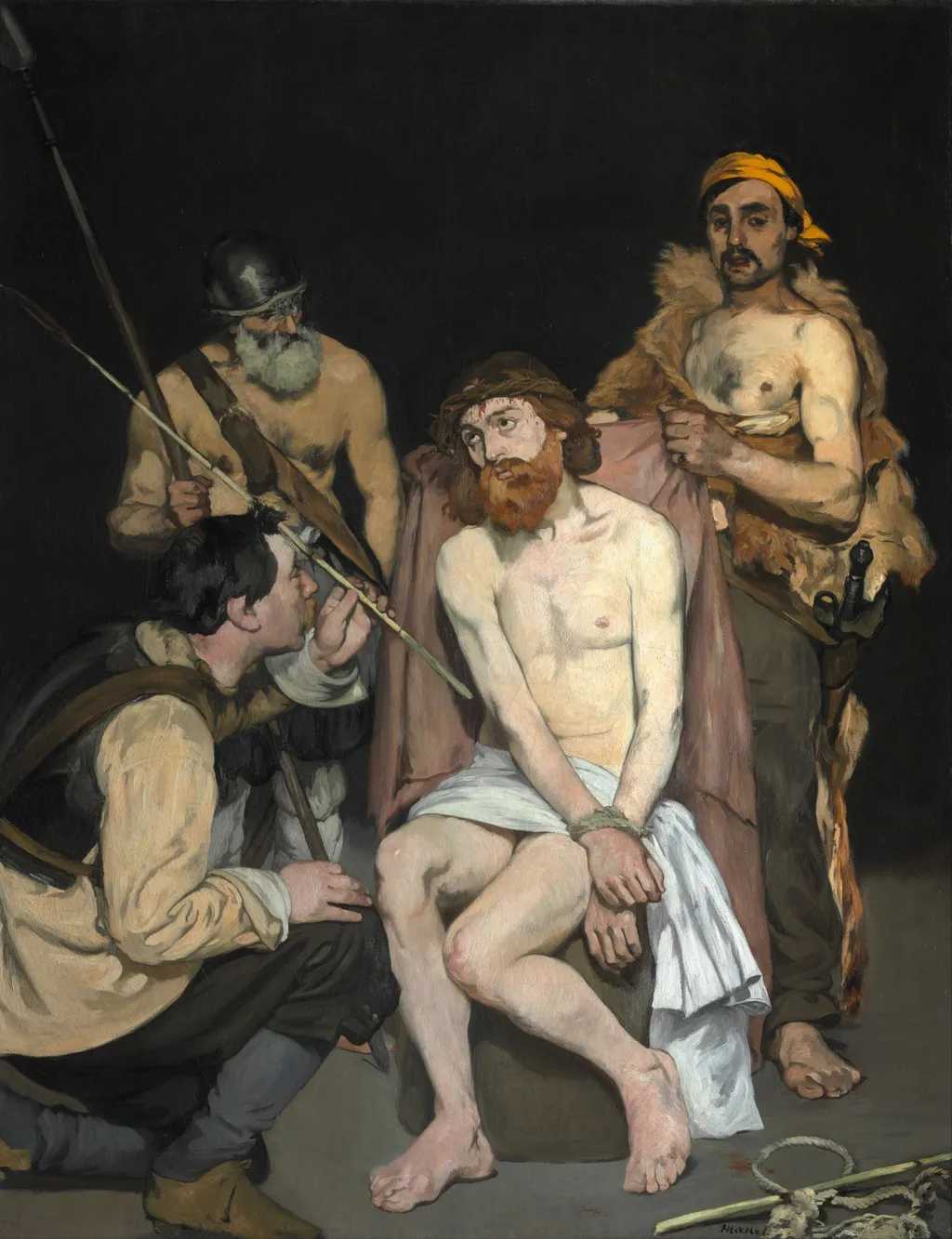
Jesus Mocked by the Soldiers is an oil painting by the Realist artist Edouard Manet. It dates from 1865 and is held in the collection of the Art Institute of Chicago. Painted in 1865, this oil on canvas by Édouard Manet marks his final engagement with religious subject matter.
About this work
Overview
The painting entered the Art Institute of Chicago in 1925 through the bequest of James Deering, a Chicago industrialist and collector.
Painted in 1865, this oil on canvas by Édouard Manet marks his final engagement with religious subject matter. Depicting Christ at the moment of mockery, the work diverges sharply from traditional devotional imagery. Its stark composition and unidealized figures drew immediate criticism for their perceived brutality and lack of academic polish. The painting entered the Art Institute of Chicago in 1925 through the bequest of James Deering, a Chicago industrialist and collector.
Subject & Meaning
The scene portrays Christ, bound and crowned with thorns, surrounded by rough, anonymous soldiers. One holds a reed as a mock scepter, another wipes his mouth as if disgusted or amused. The figure’s weary expression and pale, smooth skin contrast with the coarse textures of his tormentors, emphasizing isolation and suffering. Rather than glorifying martyrdom, Manet presents a human moment of degradation, stripping away theological grandeur for psychological immediacy.
Technique & Style
Manet employs a muted palette and sharp chiaroscuro to isolate the central figure against a dark, undefined background. The smooth rendering of Christ’s skin contrasts with the rough, almost sketchy handling of the soldiers’ garments and features. Brushwork is direct and unembellished, rejecting the polished finish expected in academic history painting. This deliberate visual tension underscores the work’s emotional gravity and modern sensibility.
History & Provenance
Manet valued the painting at 15,000 francs in his 1872 inventory, indicating its personal significance despite public hostility. It remained in private hands until James Deering bequeathed it to the Art Institute of Chicago in 1925. The work’s reception was sharply negative upon exhibition, with critics condemning its rawness and perceived indecency. Its journey from scorned object to institutional fixture reflects shifting attitudes toward modern art in the 20th century.
Context
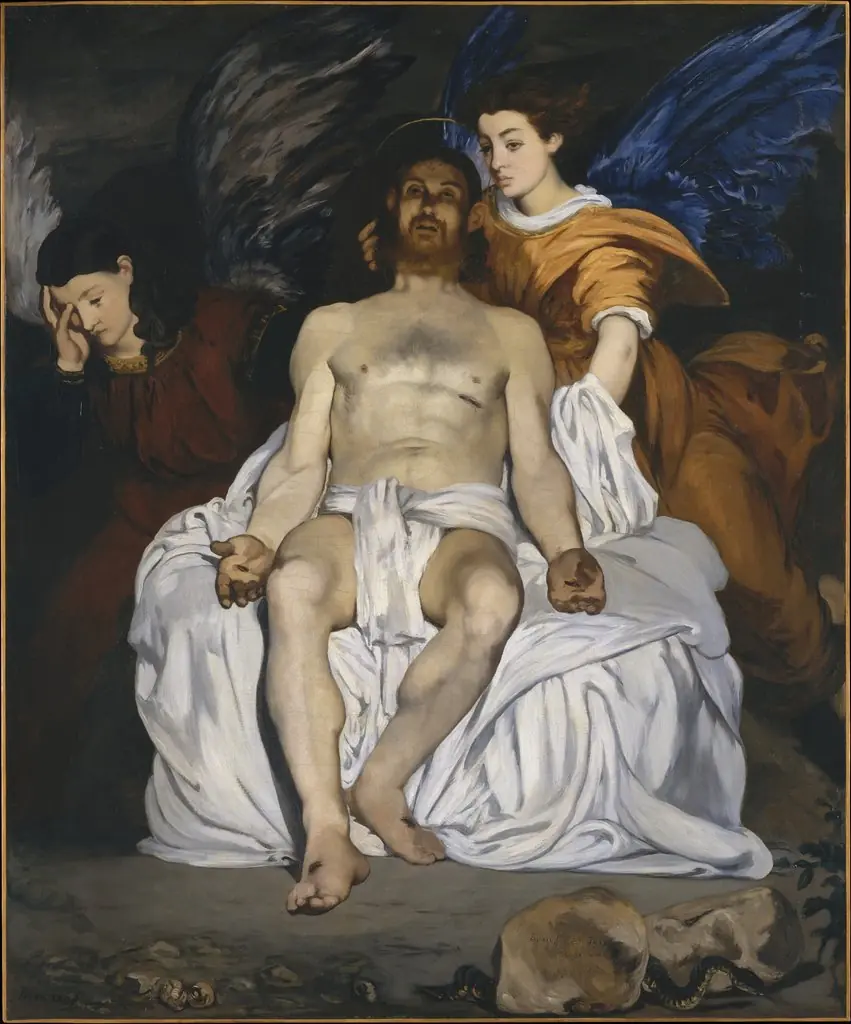
Created during a period when Manet was challenging academic norms, this painting followed his controversial The Dead Christ with Angels (1864). Critics from publications like Le Charivari and L'Éclipse ridiculed it as vulgar and blasphemous. Influences from Van Dyck, Titian, Velázquez, and Dutch genre painters were noted by contemporaries and later scholars, yet Manet synthesized these sources into a distinctly modern, unsentimental vision that defied religious iconographic conventions.
Legacy
Though initially dismissed, the painting became a touchstone for later reassessments of Manet’s role in redefining religious imagery. Its unflinching realism and emotional detachment prefigured modernist approaches to sacred subjects. Art historians now recognize it as a pivotal moment in the secularization of religious themes in 19th-century painting, where spiritual narrative gives way to human vulnerability rendered with unvarnished honesty.
Own this work as a print
Artist & collection

Artist
Édouard Manet didn’t have much time to make his mark—he died at 51—but he used every year.