Artwork
Maria met kind
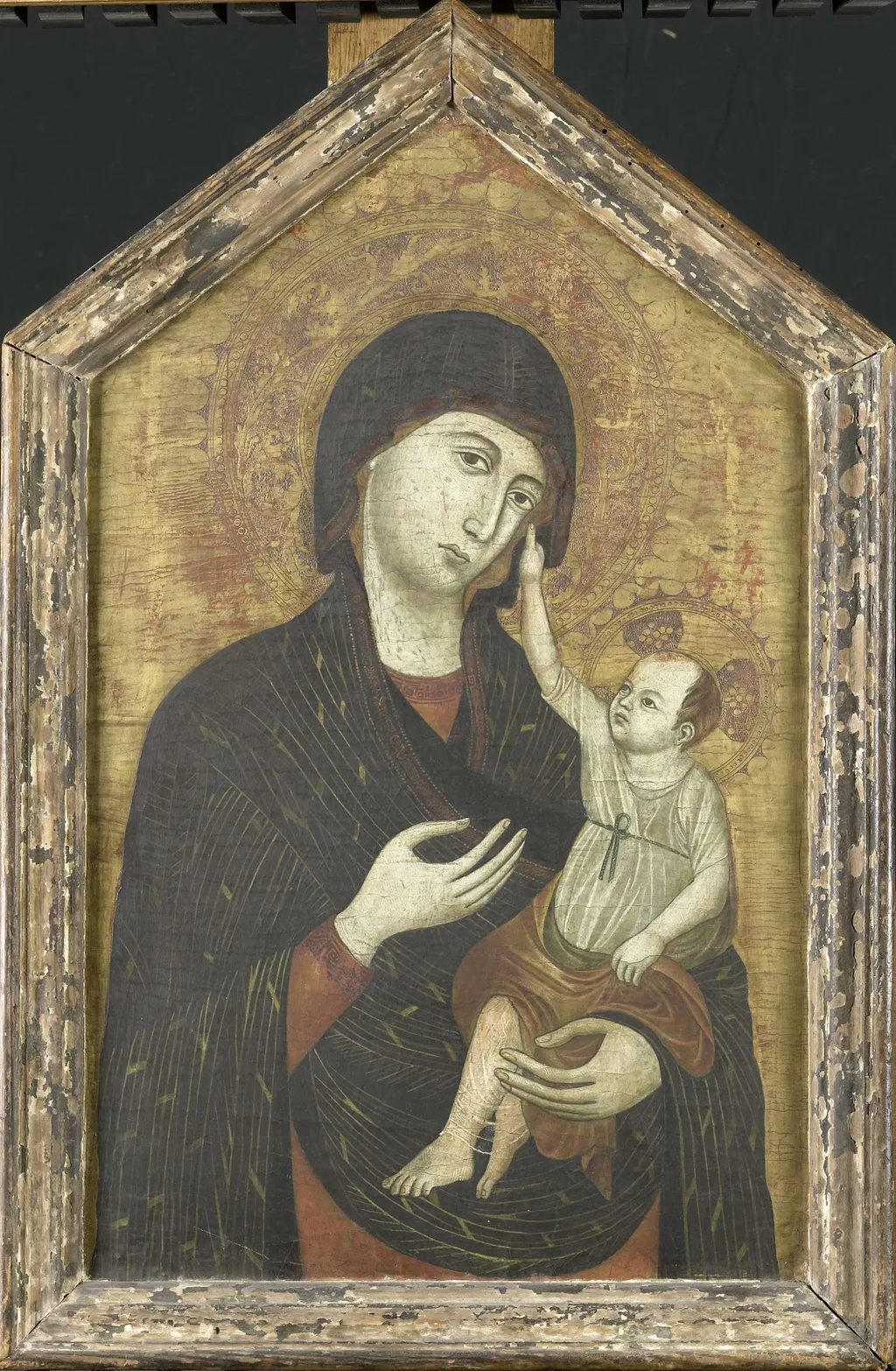
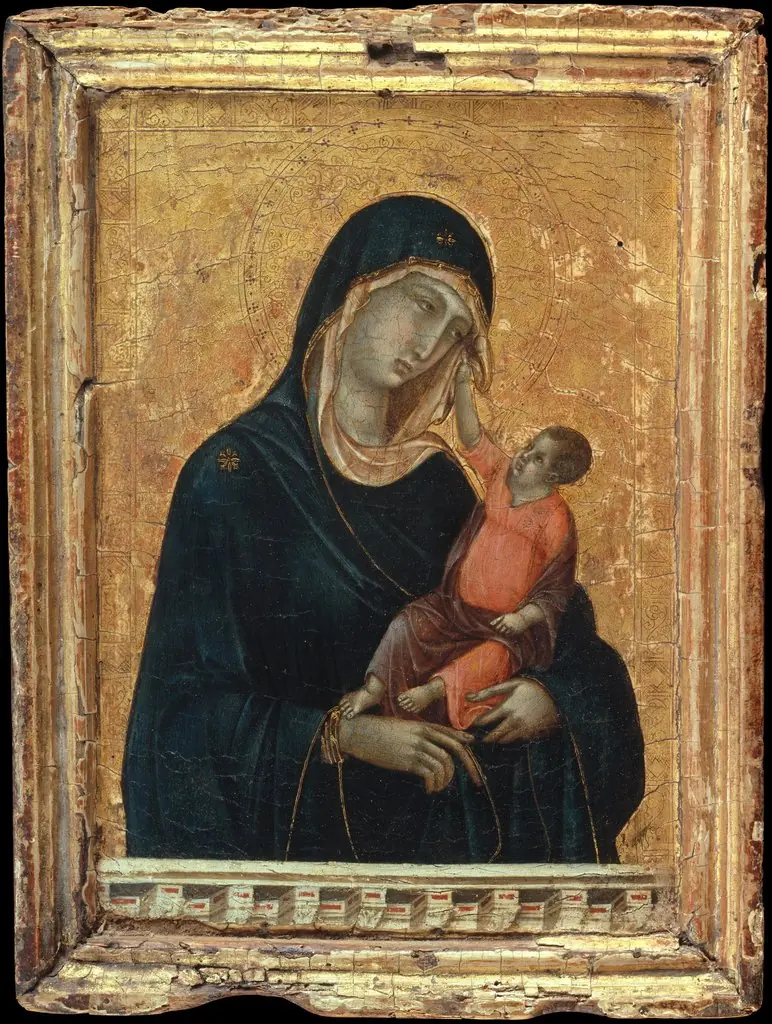
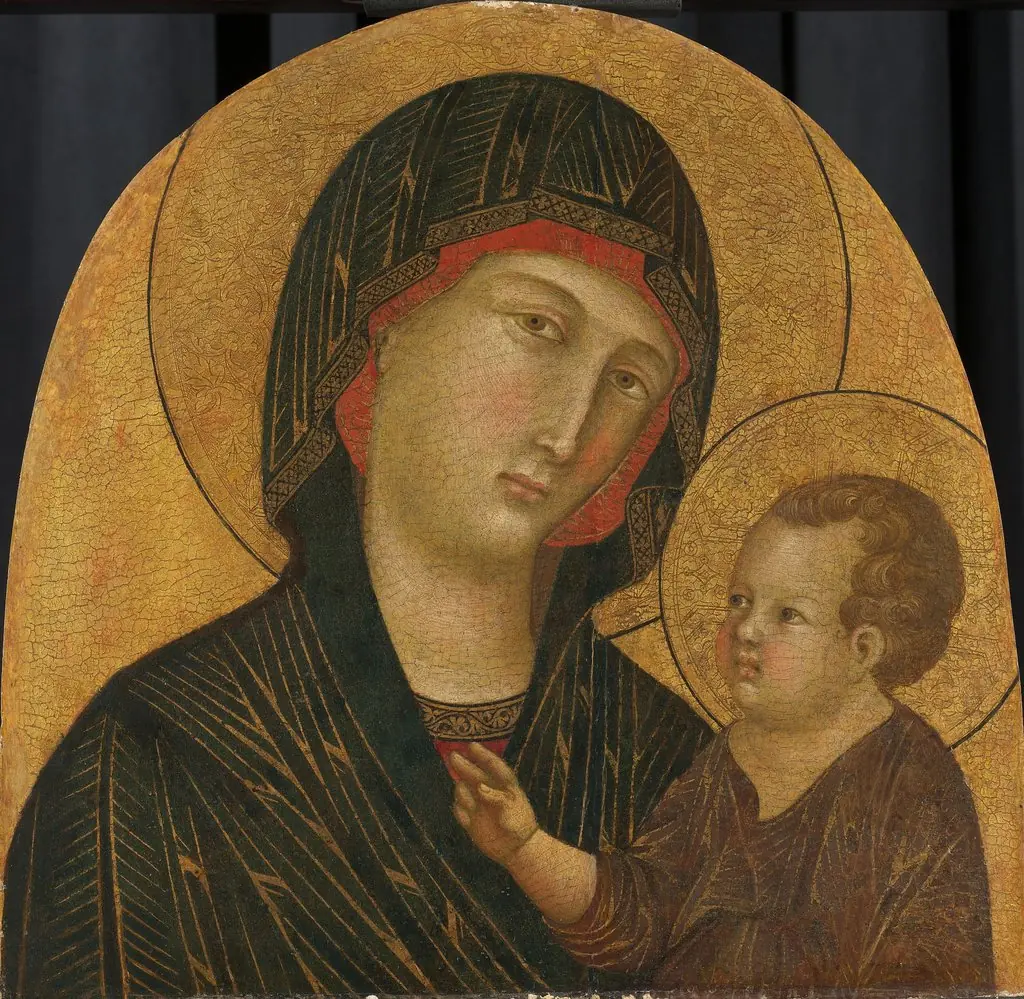
Maria met kind is an unspecified painting by the Byzantine icon painting artist Duccio di Buoninsegna. It dates from 1305 and is held in the collection of the Rijksmuseum.
About this work
Overview
Created around 1305, this early 14th‑century panel by the Sienese painter Duccio di Buoninsegna portrays a tender encounter between a mother and her infant. The work is part of the Rijksmuseum’s collection and exemplifies the devotional imagery common to the period, presenting a serene, intimate scene against a luminous gold backdrop.
Subject & Meaning
The composition features a woman, identified as the Virgin Mary, cradling the Christ Child. Her calm expression and the child’s upward gaze convey a sense of gentle reverence and maternal affection, reflecting theological ideas of the incarnation and the intimate bond between the divine and human.
Technique & Style
Duccio employs tempera on wood, applying delicate brushwork to render the figures’ soft flesh tones and the intricate folds of the dark blue mantle with a red lining. The gold ground, subtly patterned, creates a timeless, otherworldly space, while the gold headpiece adds a regal touch to the Virgin’s appearance.
History & Provenance
The panel has been in the Rijksmuseum’s holdings since the early 20th century, having passed through several private collections before entering the Dutch national institution. Its age is evident in the slight wear along the edges, a testament to its centuries‑long journey from medieval Siena to modern Europe.
Context
Duccio’s work marks a transitional moment in Italian art, moving away from the rigid Byzantine conventions toward greater naturalism and emotional expression. This painting, with its intimate pose and nuanced coloration, anticipates the developments that would later define the Italian Renaissance.
Artist & collection