Artwork
Red Cherries
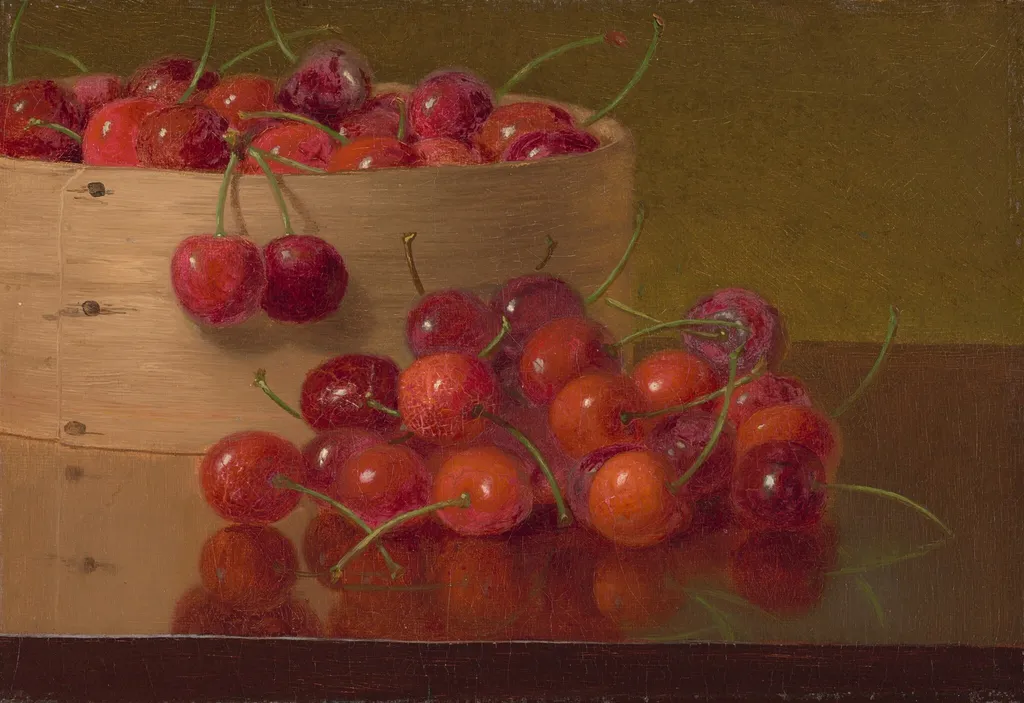
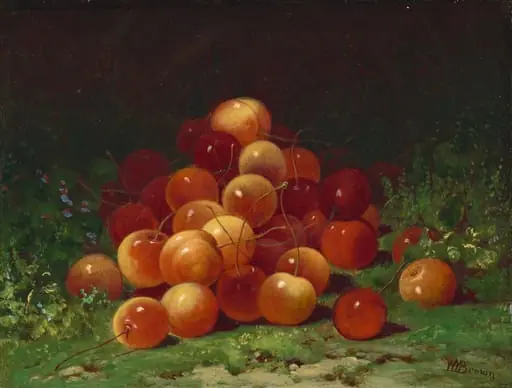
Red Cherries is an oil painting by the Impressionist artist Robert Spear Dunning. It dates from 1866 and is held in the collection of the National Gallery of Art.
About this work
The painting shows a small bowl of red cherries on a table.
The artist used simple still-life objects to create a sense of quiet and calm. This style was common during the 19th century, and it's interesting to see how the artist used everyday objects to create a peaceful scene.
The artist's use of light and color is similar to the technique of glazing.
Overview
Robert Spear Dunning’s 1866 oil on canvas entitled *Red Cherries* presents a modest still‑life: a solitary bowl of ripe, red fruit rests upon a simple tabletop. The composition is restrained, focusing attention on the quiet arrangement rather than narrative drama, and exemplifies the mid‑nineteenth‑century interest in domestic subjects rendered with careful observation.
Subject & Meaning
The work isolates everyday objects—a bowl and a handful of cherries—to evoke a sense of calm and contemplation. By limiting the visual field to these humble items, Dunning invites viewers to consider the quiet beauty of ordinary moments, a theme common in Victorian still‑life that emphasizes modesty and the appreciation of simple pleasures.
Technique & Style
Dunning employs a glazing technique, building thin, translucent layers of oil to achieve luminous color and subtle shifts of light across the cherries and the surrounding surface. The restrained palette and soft modeling reflect the academic still‑life tradition of the 1800s, where careful handling of light and color served to enhance realism while maintaining a serene atmosphere.
History & Provenance
Created in 1866, *Red Cherries* was produced during Dunning’s mature period when he focused on modest genre scenes and still‑lifes. The painting’s ownership record is limited, but it has appeared in several 19th‑century exhibition catalogues, indicating it was shown publicly shortly after its completion and has since been held in private collections.
Own this work as a print
Artist & collection