Artwork
Mill of the Sologne (Moulin de la Sologne)
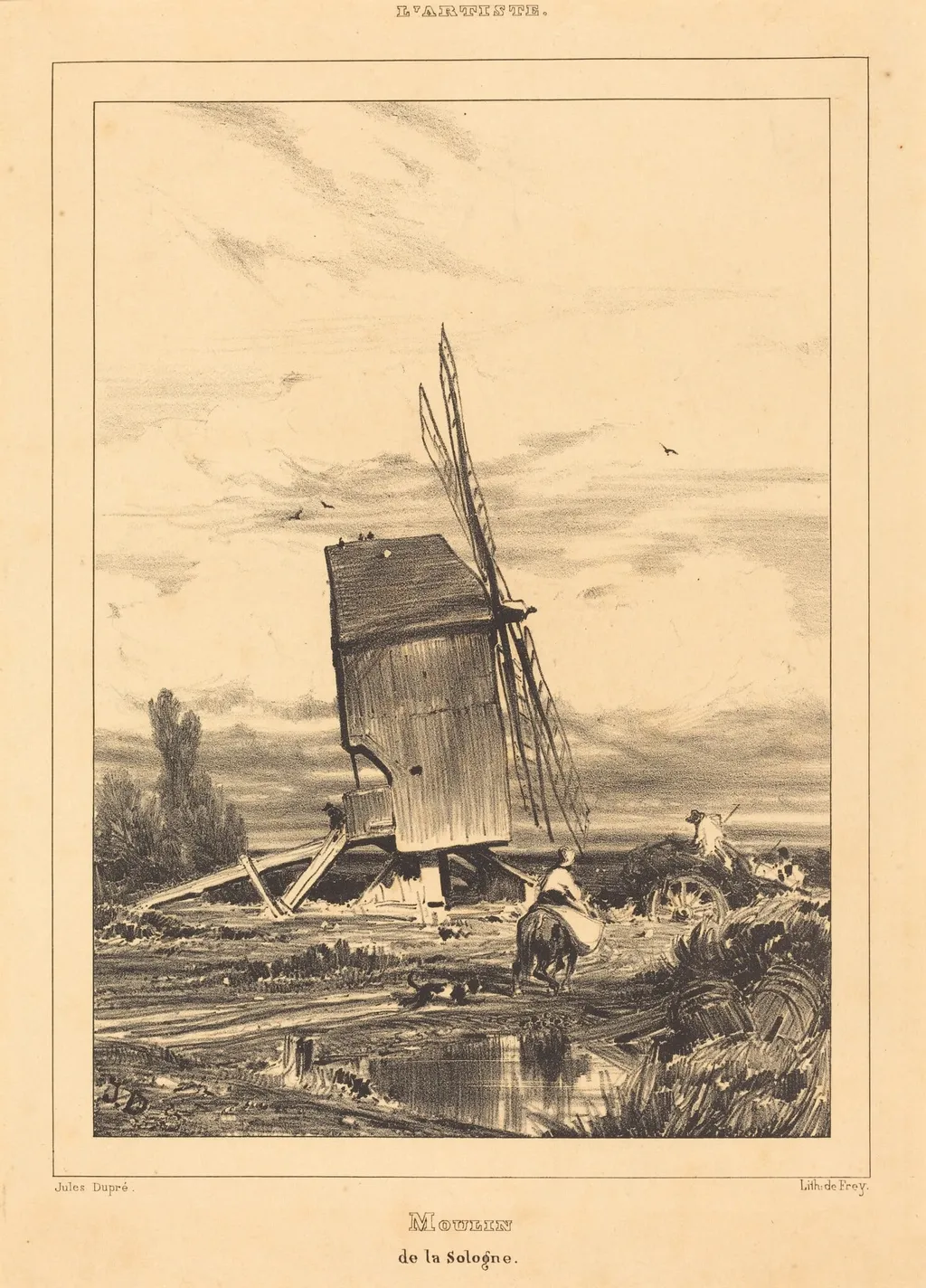
Mill of the Sologne (Moulin de la Sologne) is an ink print by the Romanticist artist Jules Dupré. It dates from 1835 and is held in the collection of the National Gallery of Art.
About this work
Overview
Jules Dupré’s 1835 lithograph titled *Mill of the Sologne* depicts a solitary windmill set against an expansive, level landscape. The composition is dominated by crisp linear marks and sharply rendered shadows that give the structure a palpable weight. A lone, slightly inclined tree stands near the mill, introducing a modest element of life to the otherwise stark horizon.
Subject & Meaning
The work presents a windmill as a quiet sentinel within the open fields of the Sologne region, emphasizing the relationship between human‑made structures and the surrounding countryside. The solitary setting and the stillness of the scene suggest themes of isolation and endurance, while the leaning tree hints at the subtle influence of nature on human endeavors.
Technique & Style
Created during the early years of lithography, the print employs the traditional stone‑based process, where greasy ink adheres to a prepared limestone surface before being transferred to paper. Dupré exploits the medium’s capacity for fine line work, achieving precise detailing and strong contrast that render the mill’s form solid and tactile, a hallmark of the period’s experimental printmaking.
Context
In the 1830s, lithography was emerging as a popular method for reproducing images with greater fidelity than earlier print techniques. Dupré, primarily known for landscape painting, applied this new technology to capture the atmospheric clarity of the French countryside, aligning his work with contemporary interests in realism and the documentation of rural architecture.
Artist & collection


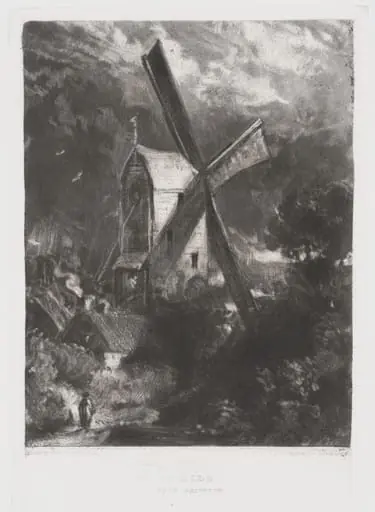 A MILL. NEAR BRIGHTON
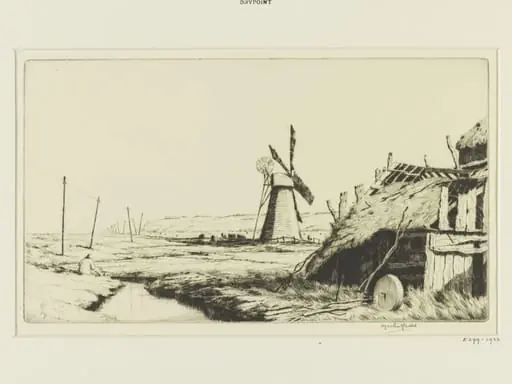 On the Suffolk Coast
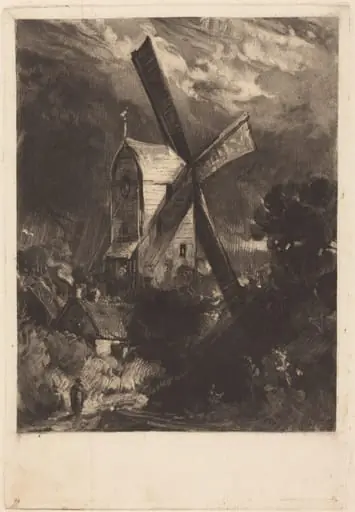 Mill near Brighton
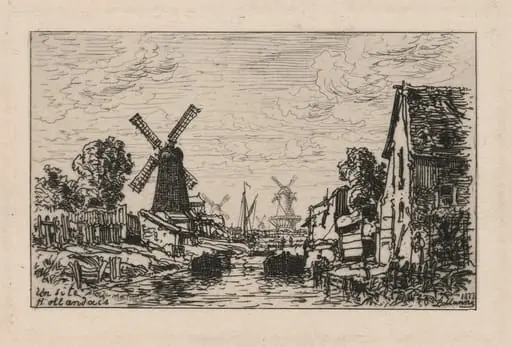 Un Site Hollandais (A Zaandam)
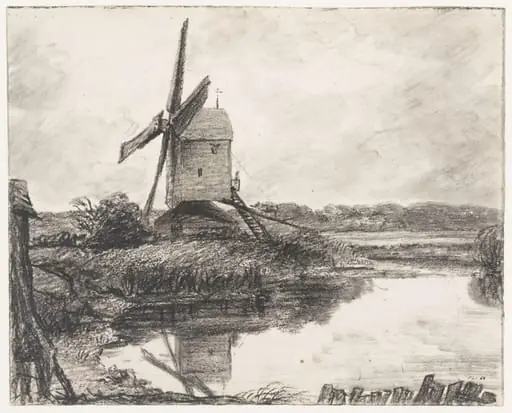 A mill on the banks of the River Stour
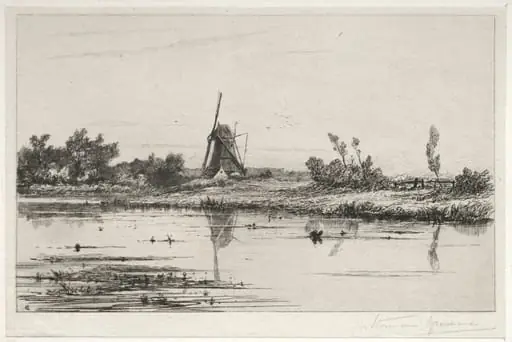 Le bord au Gein
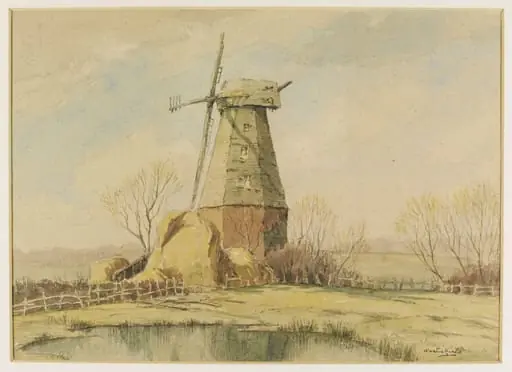 The Mill, Biddenden
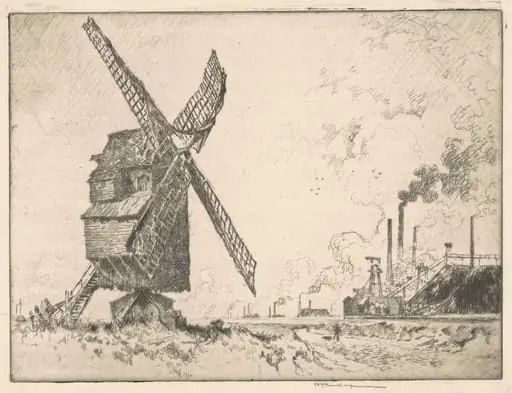 Old and New Mills, Valenciennes
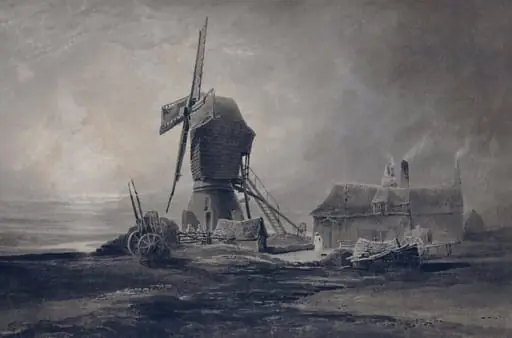 Old Windmill on Windmill Hill, Gateshead
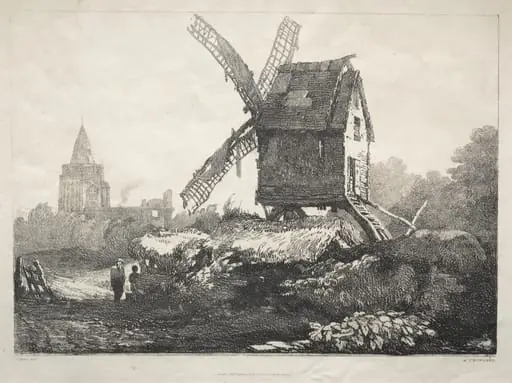 A Series of Ancient Buildings and Rural Cottages in the North of England: At Crowland, Windmill