Artwork
Singing a Pathetic Song
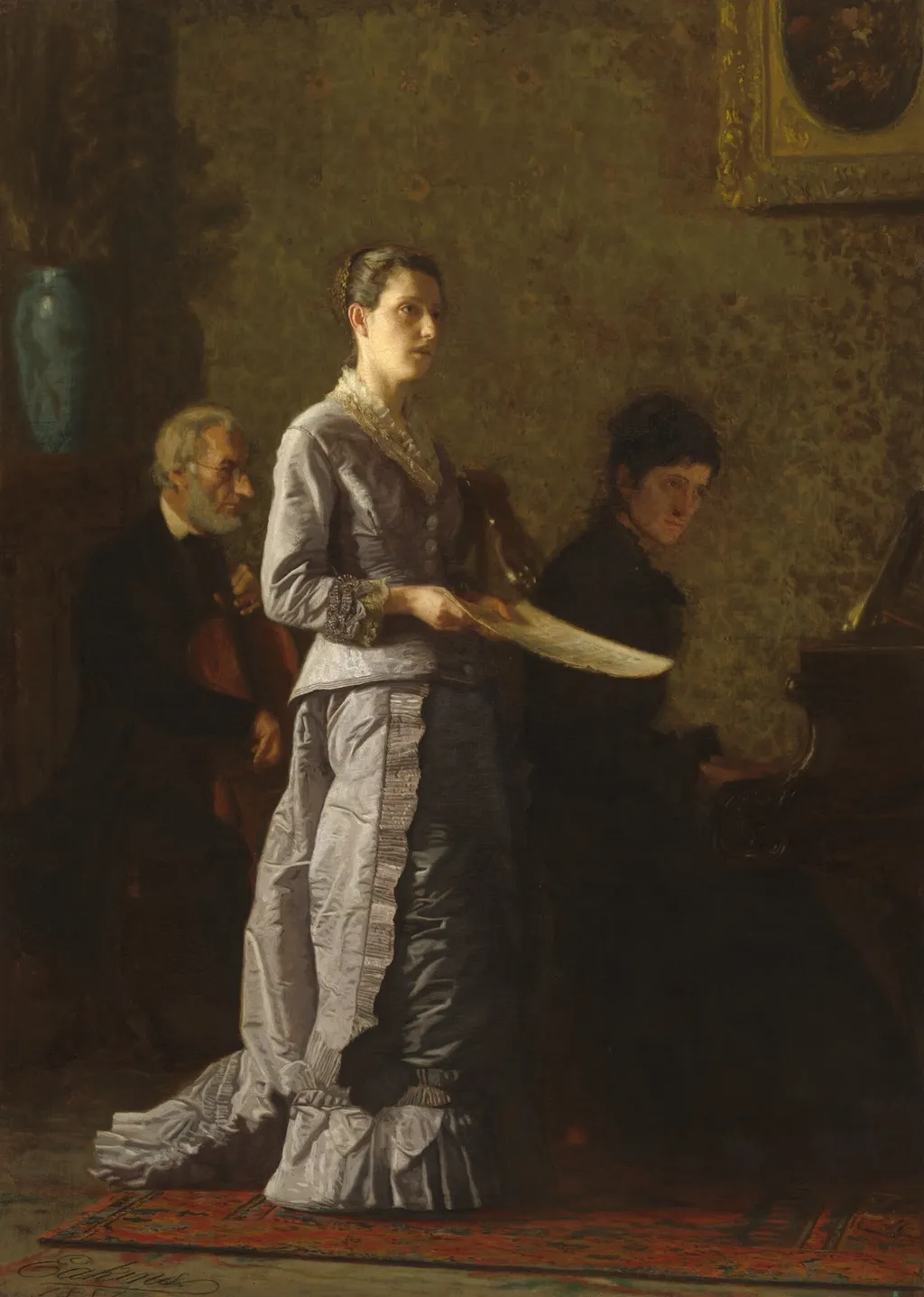
Singing a Pathetic Song is an oil painting by the Impressionist artist Thomas Eakins. It dates from 1881 and is held in the collection of the National Gallery of Art.
About this work
Overview
Eakins utilizes a dimly lit interior with dark walls and a red rug to focus attention on the figures and their subtle interactions.
Singing a Pathetic Song, painted by Thomas Eakins in 1881, is an oil-on-canvas work that exemplifies the artist's commitment to psychological realism and his exploration of domestic intimacy. The composition centers on a young woman in a light-gray dress who stands holding sheet music, her expression conveying the emotional weight of the song she performs. Behind her, an older man in dark attire leans against a table, while a second man sits with his head bowed, creating a triangular arrangement that emphasizes the shared, somber atmosphere. Eakins utilizes a dimly lit interior with dark walls and a red rug to focus attention on the figures and their subtle interactions. The painting reflects Eakins' interest in capturing unidealized human moments and the complex dynamics of family life, distinguishing it from the sentimental genre scenes popular in late 19th-century America. Executed during a period when the artist was deeply engaged in studying anatomy and light, the work demonstrates his rigorous approach to observation and his ability to infuse ordinary subjects with profound narrative depth.
Subject & Meaning
The central figure appears to be a vocalist, captured in a moment of concentration rather than overt emotion. The presence of the older male observers suggests a private gathering, perhaps a domestic recital, emphasizing the intimacy of music as a shared, contemplative experience. The subdued lighting and restrained gestures convey a sense of stillness and introspection.
Technique & Style
Eakins employs a restrained palette of grays, browns, and deep reds, allowing the texture of the woman’s dress to catch subtle highlights. Careful modeling of fabric folds and the soft illumination of the figures reveal his commitment to anatomical accuracy and realistic detail. The chiaroscuro effect deepens the spatial recession, while the brushwork remains tight and controlled, characteristic of his early realist phase.
History & Provenance
Created in 1881, the work belongs to the period when Eakins was establishing his reputation as a realist painter in Philadelphia. The painting has remained within private collections for much of its history, with occasional exhibition in retrospectives of Eakins’ oeuvre. Its provenance reflects the artist’s growing recognition among collectors of American 19th‑century art.
Own this work as a print
Artist & collection
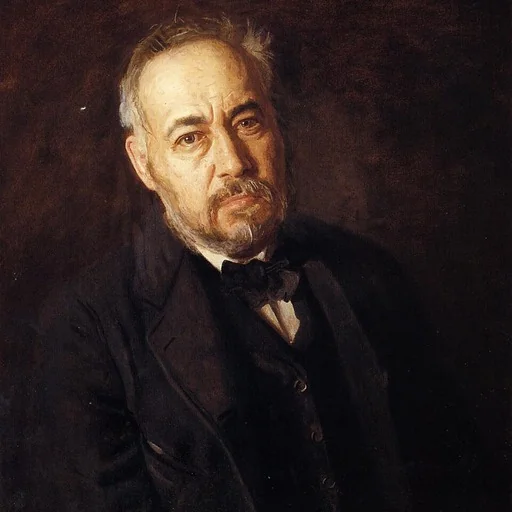
Artist
Thomas Cowperthwait Eakins (; July 25, 1844 – June 25, 1916) was an American realist painter, photographer, sculptor, and fine arts educator.