Artwork
The Biglin Brothers Racing
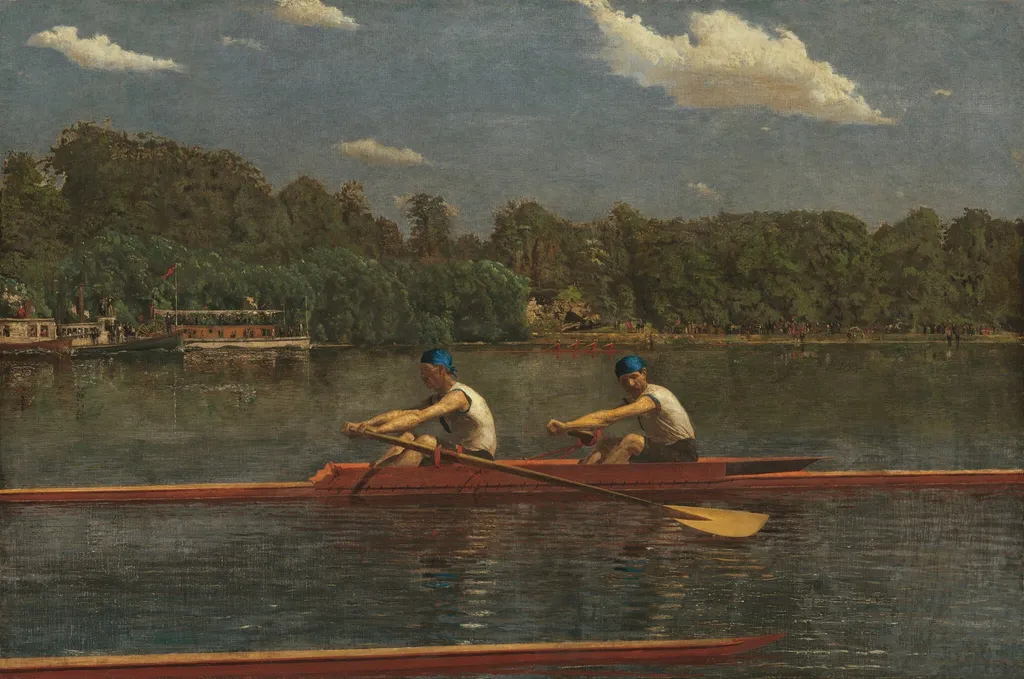
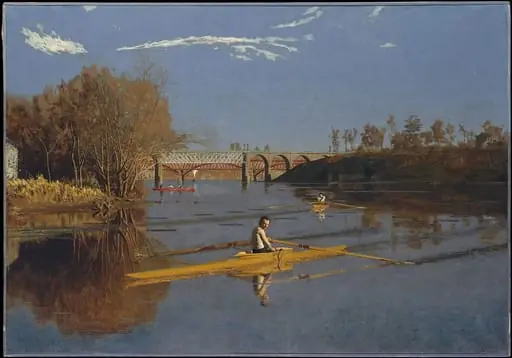
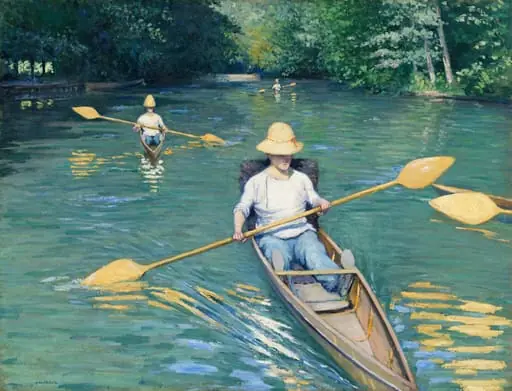
The Biglin Brothers Racing is an oil painting by the American Impressionist artist Thomas Eakins. It dates from 1872 and is held in the collection of the National Gallery of Art.
About this work
Overview
The composition is viewed from a low angle, placing the viewer at water level to emphasize the physical exertion and mechanical precision of the rowing stroke.
The Biglin Brothers Racing, painted by Thomas Eakins in 1872, is a seminal work of American Realism that captures the brothers John and Barney Biglin in a shell on the Schuylkill River in Philadelphia. The composition is viewed from a low angle, placing the viewer at water level to emphasize the physical exertion and mechanical precision of the rowing stroke. Eakins depicts the athletes mid-race, their bodies twisted in synchronized motion, with oars cutting sharply into the water. The artist, an accomplished rower himself, applied rigorous anatomical study to render the musculature and the tension in the men's faces with scientific accuracy. The painting is notable for its dynamic depiction of movement and the realistic treatment of light reflecting off the river surface. Created during Eakins's early career, this work established his reputation for merging athletic subject matter with a commitment to empirical observation. It stands as a key example of his dedication to depicting modern American life and the human body in action, foreshadowing his later, more controversial explorations of anatomy and motion.
Subject & Meaning
The artwork portrays two men, likely the Biglin brothers, intensely focused on their rowing during a race. Their expressions convey determination and effort, reflecting the physical demands of the sport. Eakins captures the specific moment of competition, emphasizing the human element of athletic endeavor rather than merely documenting an event. The tension inherent in the race is palpable, drawing the viewer into the scene.
Technique & Style
Eakins's meticulous attention to detail is evident in the rendering of the boat, the figures, and the water. He carefully observes the play of light across the surface of the water, creating a sense of movement and depth. The artist's command of light and shadow contributes to the painting's realistic quality, highlighting the forms and textures with precision. This approach reflects his commitment to accurately representing the visual world.
Context
Thomas Eakins himself was an avid rower, providing him with a profound understanding of the sport's mechanics and the physical experience of the athletes. This personal connection informed his ability to depict the scene with authenticity and empathy. His choice of subject matter aligns with a broader interest in capturing everyday American life and the emerging culture of competitive sports in the late 19th century.
Own this work as a print
Artist & collection
Artist
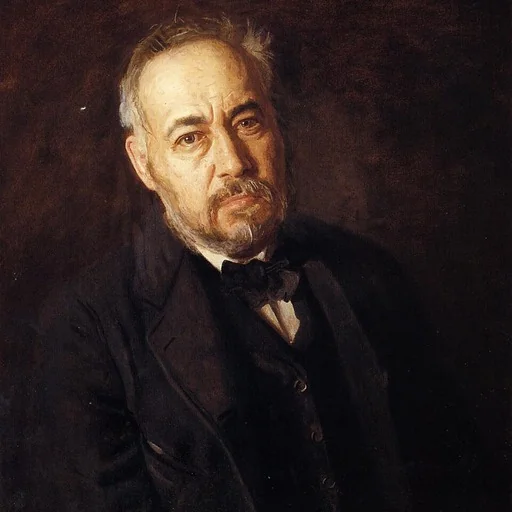
Thomas Cowperthwait Eakins (; July 25, 1844 – June 25, 1916) was an American realist painter, photographer, sculptor, and fine arts educator.