Artwork
Count Lepic and His Daughters
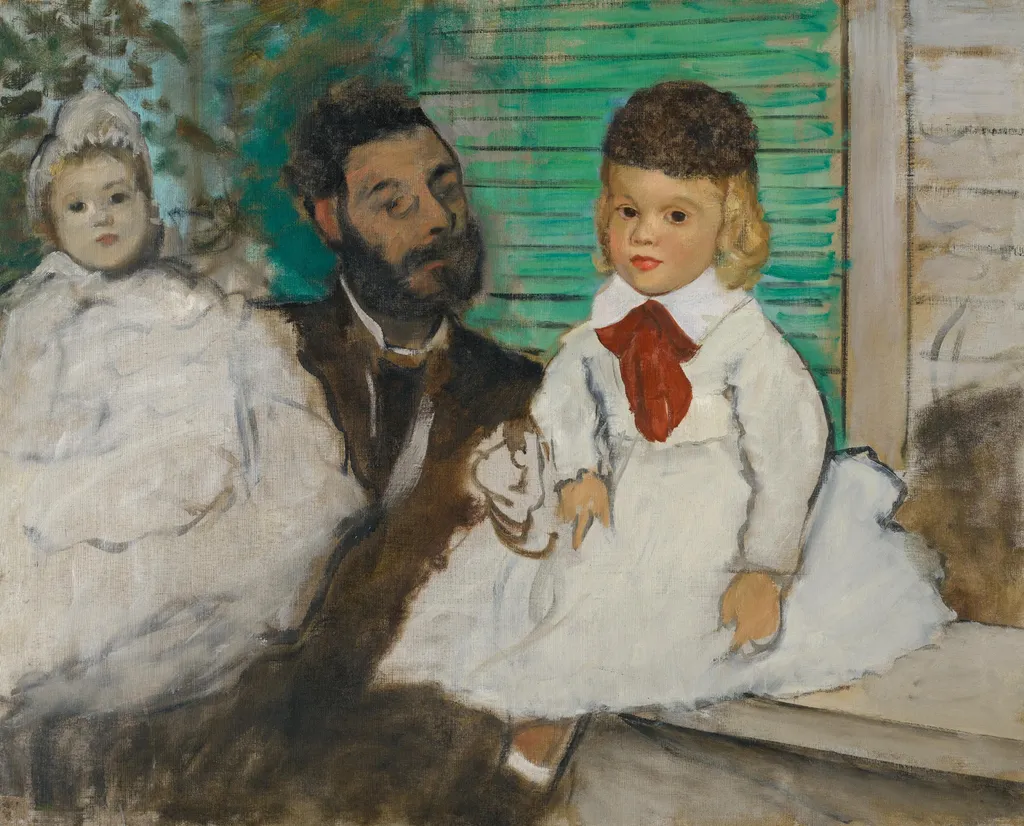
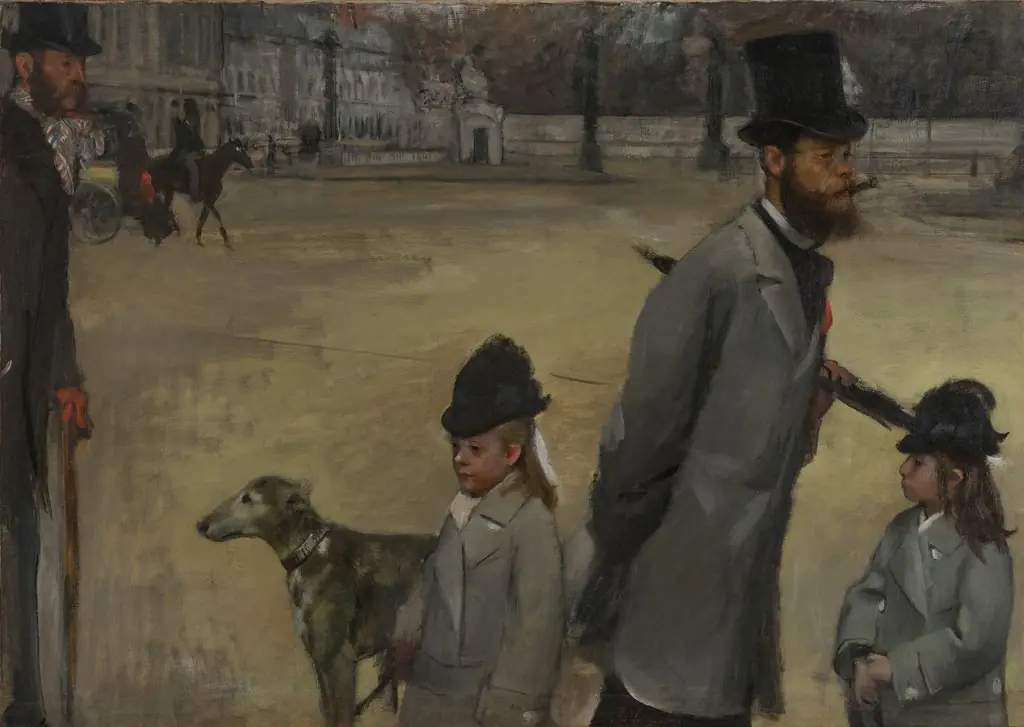
Count Lepic and His Daughters is an oil painting by the Impressionist artist Edgar Degas. It dates from 1871 and is held in the collection of the Foundation E.G. Bührle Collection.
About this work
Overview
Created around 1871, this oil on canvas by Edgar Degas portrays Ludovic‑Napoléon Lepic accompanied by his two young daughters, Eylau and Jeanine, strolling through a Parisian street. The composition captures a brief, intimate moment of family life, rendered with Degas’s characteristic attention to everyday scenes.
Subject & Meaning
The work presents Lepic, a bearded gentleman in a dark coat, flanked by his daughters in modest dresses. Their close proximity suggests a protective, paternal bond, while the urban backdrop situates the family within the rhythm of contemporary Paris, reflecting Degas’s interest in the quiet narratives of modern society.
Technique & Style
Degas employs oil paint to achieve a soft yet precise rendering of figures and atmosphere. The brushwork balances detail—such as the texture of the coat and the girls’ garments—with broader, impressionistic strokes that convey the street’s ambient light, exemplifying his transitional approach between realism and impressionism.
History & Provenance
After remaining in private collections for over a century, the painting entered the Swiss Foundation E.G. Bührle. It was stolen on 10 February 2008, then recovered in April 2012, having sustained minor damage during its disappearance. The work now resides in the foundation’s holdings, restored to its pre‑theft condition.
Context
Degas painted Lepic on multiple occasions, most notably in the larger composition *Place de la Concorde*. This repeated focus underscores Lepic’s role as a frequent model within Degas’s circle, offering insight into the artist’s network of acquaintances and his recurring exploration of familial and social themes.
Artist & collection
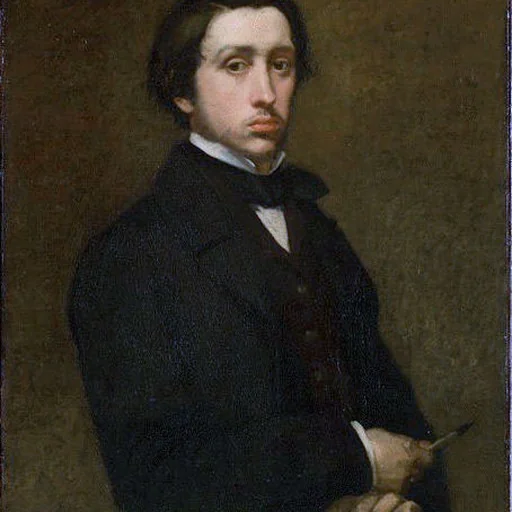
Artist
Born Hilaire-Germain-Edgar De Gas on 19 July 1834 in Paris, Edgar Degas came from an affluent banking family with aristocratic roots and spent his childhood among the cultivated circles of the French capital.