Artwork
Frieze of Dancers
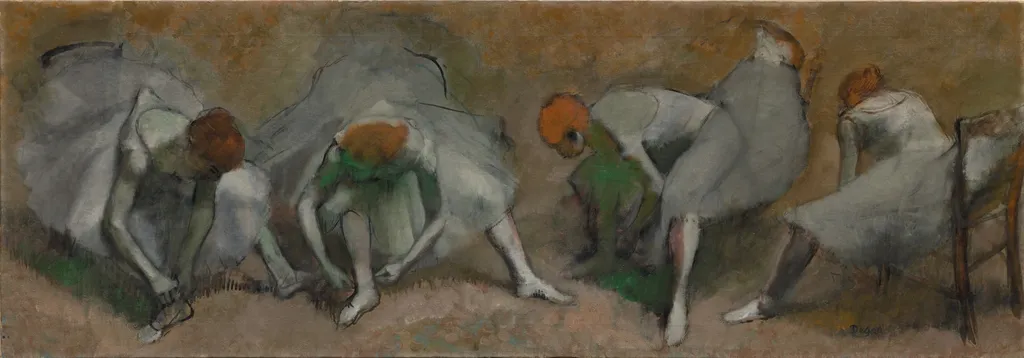
Frieze of Dancers is an unspecified painting by the Impressionist artist Edgar Degas. It dates from 1898 and is held in the collection of the Cleveland Museum of Art.
About this work
Overview
This painting stands as a significant example of Degas's ability to transform the mundane aspects of the dance world into a study of form and color.
Edgar Degas's Frieze of Dancers, executed in 1898, presents a horizontal composition featuring five ballerinas arranged in a rhythmic sequence against a muted brown background. The figures, clad in white tutus and leotards, are distinguished by their identical red hair buns, a stylistic choice that unifies the group while emphasizing their individual postures. One dancer is seated on a chair at the far right, breaking the standing pattern of the others and adding a sense of casual observation typical of Degas's studio scenes. The work exemplifies the artist's late-career preoccupation with movement and the formal arrangement of figures, moving away from narrative storytelling toward a focus on line, color, and the decorative potential of the human form. Painted during a period when Degas increasingly favored pastels and monotypes, this piece reflects his enduring fascination with the ballet as a subject, capturing the dancers not in performance but in a moment of rehearsal or rest. The composition's frieze-like structure suggests a classical influence, yet the candid poses and modern attire ground the work firmly in the Impressionist exploration of contemporary life. This painting stands as a significant example of Degas's ability to transform the mundane aspects of the dance world into a study of form and color.
Subject & Meaning
The canvas shows five ballerinas, each distinguished by a red hair bun, dressed in white tutus and leotards. One figure is seated on a chair at the right edge, while the others are caught mid‑movement—bending, stretching, or poised to rise. The arrangement suggests a fleeting, private rehearsal moment, emphasizing the quiet concentration of the dancers.
Technique & Style
Degas employs soft, blended brushwork and a limited chromatic range of whites, muted browns, and subtle pinks. The background’s earthy tone recedes, allowing the luminous costumes to stand out. The painter’s characteristic interest in capturing movement through fleeting gestures is evident in the varied poses and the delicate handling of light on fabric.
History & Provenance
The piece was completed toward the end of Degas’s career, a period marked by his continued fascination with ballet subjects. It entered the Cleveland Museum of Art’s holdings through acquisition in the early twentieth century, where it has remained on view as part of the museum’s European painting collection.
Artist & collection
Artist
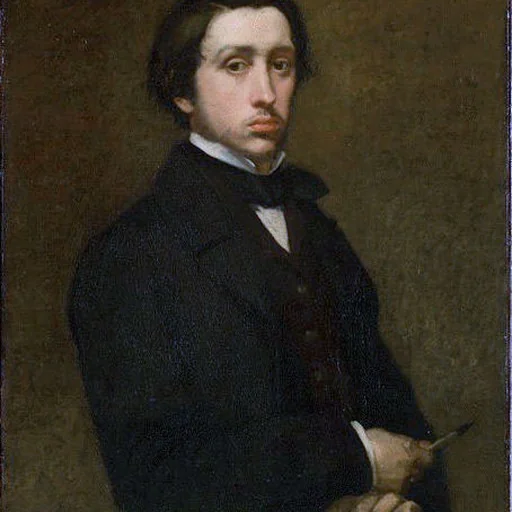
Born Hilaire-Germain-Edgar De Gas on 19 July 1834 in Paris, Edgar Degas came from an affluent banking family with aristocratic roots and spent his childhood among the cultivated circles of the French capital.