Artwork
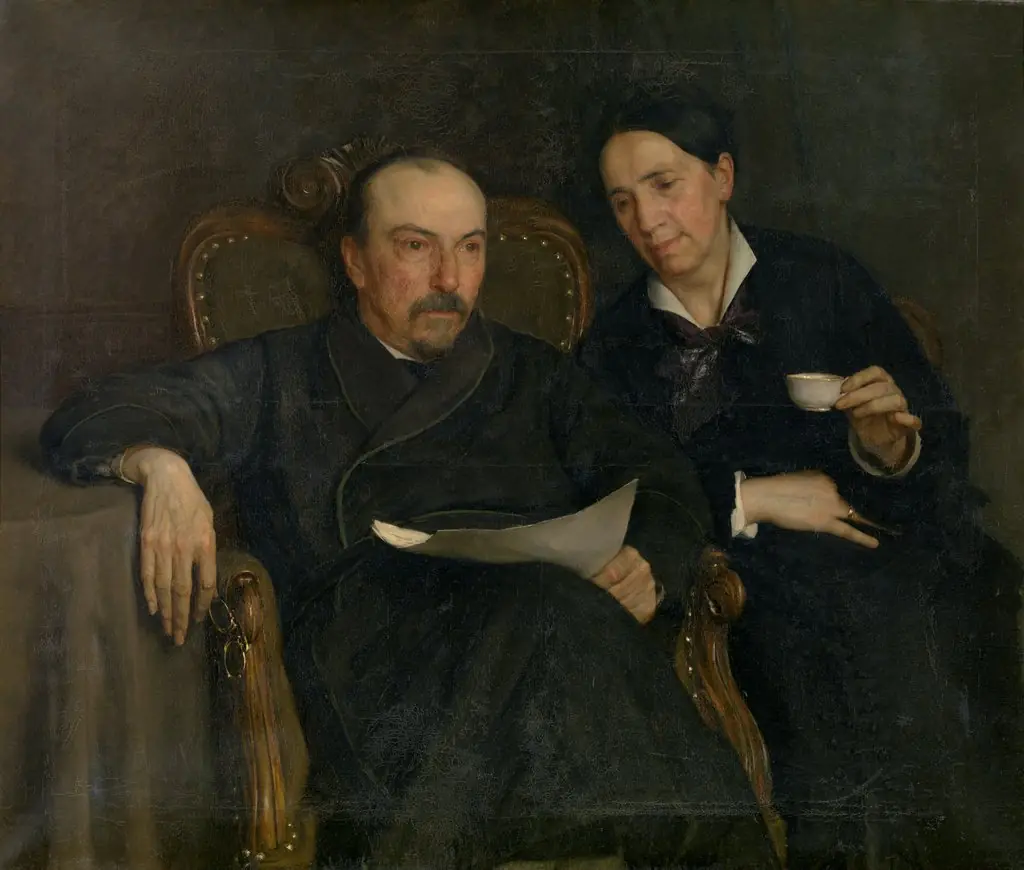
Henri Degas and His Niece Lucie Degas (The Artist's Uncle and Cousin)
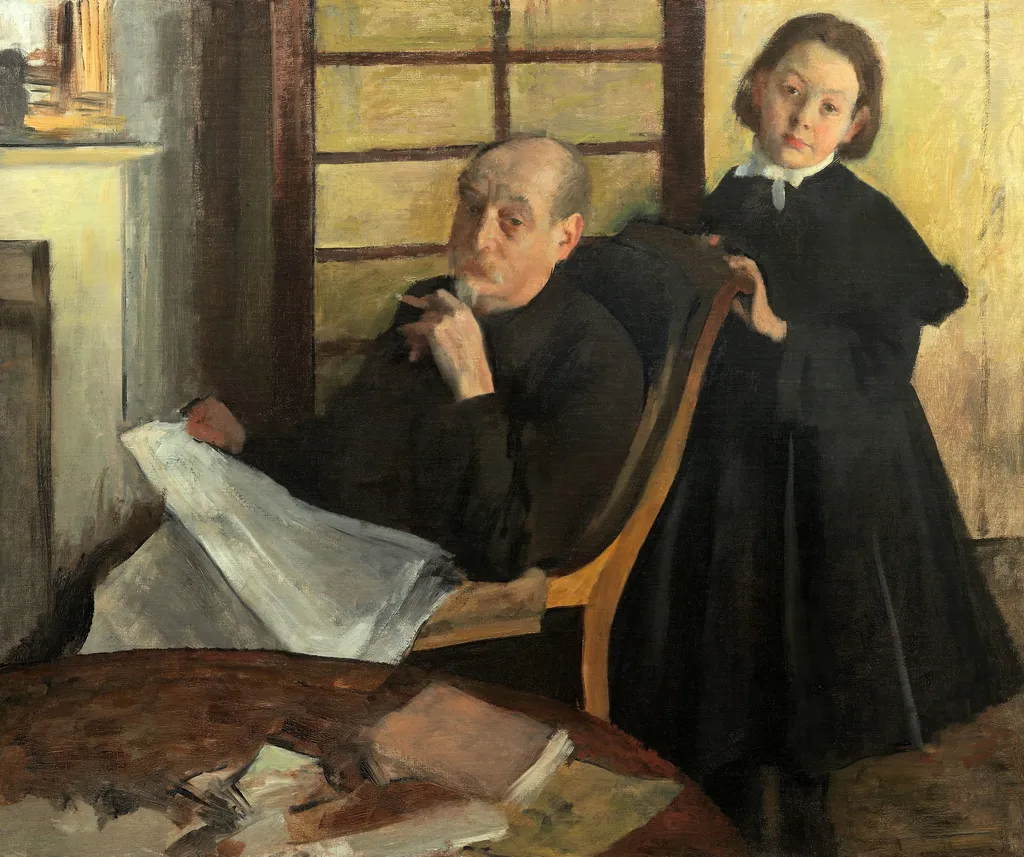
Henri Degas and His Niece Lucie Degas (The Artist's Uncle and Cousin) is an oil painting by the Impressionist artist Edgar Degas. It dates from 1875 and is held in the collection of the Art Institute of Chicago.
About this work
Overview
Painted in 1875, this oil work by Edgar Degas portrays his uncle, Henri Degas, and his niece, Lucie Degas, in a domestic interior. The scene captures a moment of quiet stillness, emphasizing the quiet intimacy of family life. The painting is part of the permanent collection at the Art Institute of Chicago, where it has been held since its acquisition.
Subject & Meaning
The figures are Henri Degas, the artist’s uncle, seated with a document in hand, and Lucie, his young niece, standing behind him with hands resting on the chairback. Their postures suggest contemplation and quiet duty. The absence of direct eye contact and the focus on mundane objects imply a private, unguarded moment, reflecting Degas’s interest in unposed domestic routines rather than formal portraiture.
Technique & Style
The composition is asymmetrical, with the window and fireplace framing the scene without drawing attention away from the figures.
Degas employs muted tones and loose brushwork to convey texture and atmosphere. The dark clothing of both figures contrasts subtly with Lucie’s white collar and the pale wall behind them. Papers scattered on the floor are rendered with swift strokes, adding spontaneity. The composition is asymmetrical, with the window and fireplace framing the scene without drawing attention away from the figures.
History & Provenance
The painting was created during a period when Degas frequently depicted family members in private settings. It remained in the artist’s possession until his death, after which it passed through private collections before being acquired by the Art Institute of Chicago in the early 20th century. Its provenance reflects Degas’s personal connection to the subjects and his reluctance to sell intimate works.
Context
In the 1870s, Degas turned increasingly toward domestic interiors and family scenes, moving away from the ballet and horse-racing subjects for which he later became known. This work aligns with his broader interest in capturing unguarded moments, influenced by photography and Japanese prints, which emphasized candid composition and asymmetrical framing.
Legacy
Though less widely exhibited than his ballet or racehorse paintings, this work exemplifies Degas’s sensitivity to familial dynamics and quiet psychological presence. It contributes to understanding his evolution as a chronicler of everyday life, revealing a more personal dimension of his artistic vision beyond public spectacles.
Own this work as a print
Artist & collection
Artist
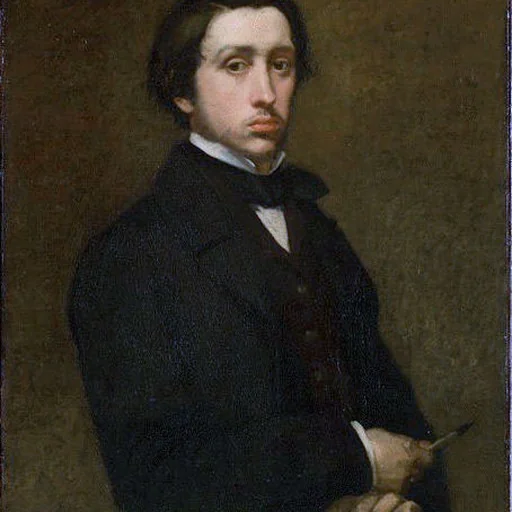
Born Hilaire-Germain-Edgar De Gas on 19 July 1834 in Paris, Edgar Degas came from an affluent banking family with aristocratic roots and spent his childhood among the cultivated circles of the French capital.