Artwork
Madame Louis Claes et sa fille
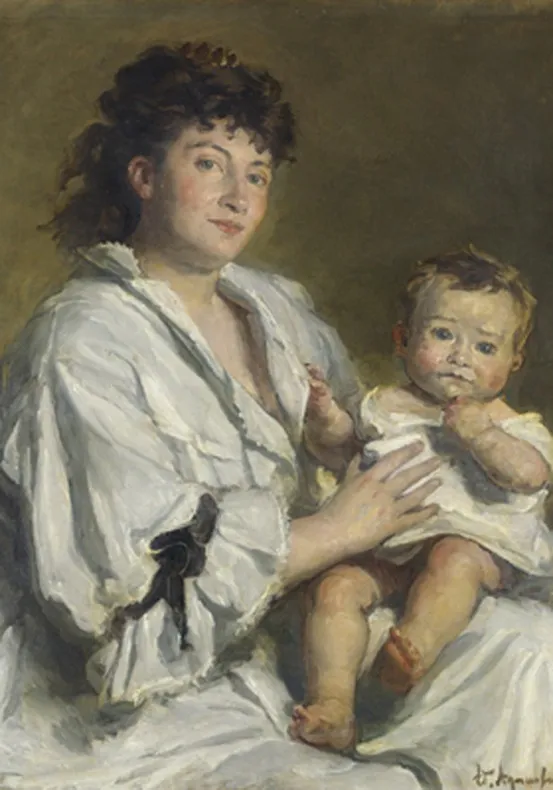
Madame Louis Claes et sa fille is an oil painting by the Impressionist artist Edouard Agneessens. It dates from 1875 and is held in the collection of the Royal Museums of Fine Arts of Belgium. Painted in 1875 by Belgian artist Édouard Agneessens, this oil on canvas portrays a mother and her infant in a quiet domestic moment.
About this work
Overview
The work is held in the Royal Museums of Fine Arts of Belgium, reflecting its significance in the nation’s 19th-century artistic record.
Painted in 1875 by Belgian artist Édouard Agneessens, this oil on canvas portrays a mother and her infant in a quiet domestic moment. Agneessens, associated with the Société Libre des Beaux-Arts, was influenced by emerging Impressionist tendencies, though his approach remained grounded in observed realism. The work is held in the Royal Museums of Fine Arts of Belgium, reflecting its significance in the nation’s 19th-century artistic record.
Subject & Meaning
The painting captures a tender, unposed interaction between a woman and her child. The mother, dressed in a loose white gown with a black ribbon around her arm, gazes directly at the viewer, while the infant looks away, absorbed in its own world. This subtle contrast suggests a private, intimate moment—neither staged nor performative—emphasizing the quiet dignity of everyday maternal care.
Technique & Style
Agneessens employed soft, blended brushwork and a restrained palette dominated by muted browns and whites. The background recedes subtly, drawing focus to the figures without distraction. Light falls gently across the woman’s dress and face, suggesting natural indoor illumination. The handling of fabric and skin tone reflects a sensitivity to texture and tone, aligning with late Impressionist concerns while retaining a sense of formal structure.
History & Provenance
Created during Agneessens’ mature period, the painting entered the collection of the Royal Museums of Fine Arts of Belgium in the late 19th or early 20th century. Its acquisition reflects institutional interest in domestic scenes by Belgian artists active in the post-Romantic era. No significant changes in ownership are documented, and it has remained in public custody since its acquisition.
Context
In 1875, Belgian art was navigating between academic traditions and the influence of French Impressionism. Agneessens, part of the Société Libre des Beaux-Arts, rejected rigid academic norms in favor of contemporary subjects and looser technique. This painting exemplifies a middle ground: intimate in subject, yet composed with a quiet discipline that distinguishes it from more radical Impressionist works.
Legacy
Though not widely exhibited beyond Belgium, the painting remains a representative example of Agneessens’ contribution to late 19th-century Belgian genre painting. It illustrates how local artists adapted broader European trends to depict private, everyday life with emotional restraint and technical care, preserving a nuanced record of domestic experience in the period.
Artist & collection
Artist
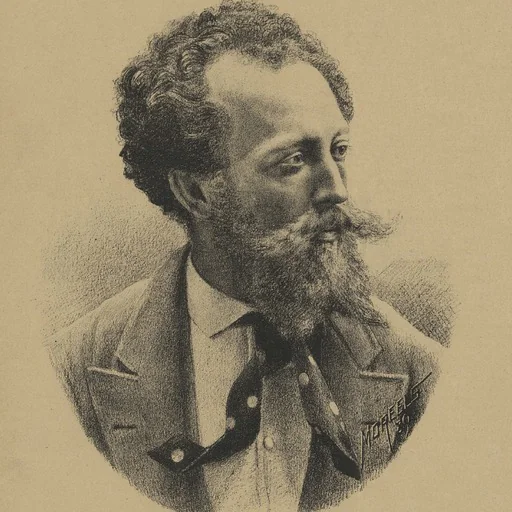
Edouard Agneessens (24 August 1842 – 20 August 1885) was a Belgian painter born in Brussels.

Museum
Royal Museums of Fine Arts of Belgium
Continue through works from the same source collection.
 The Young Mother's Pastime
 Mother and Child
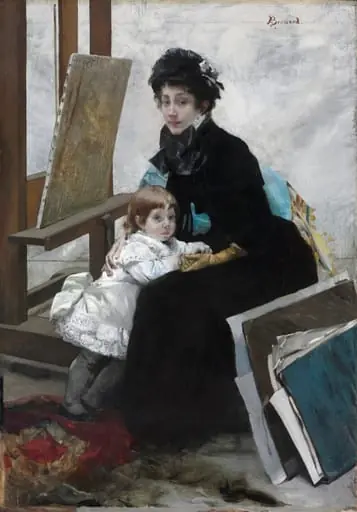 Madeleine Lerolle and Her Daughter Yvonne
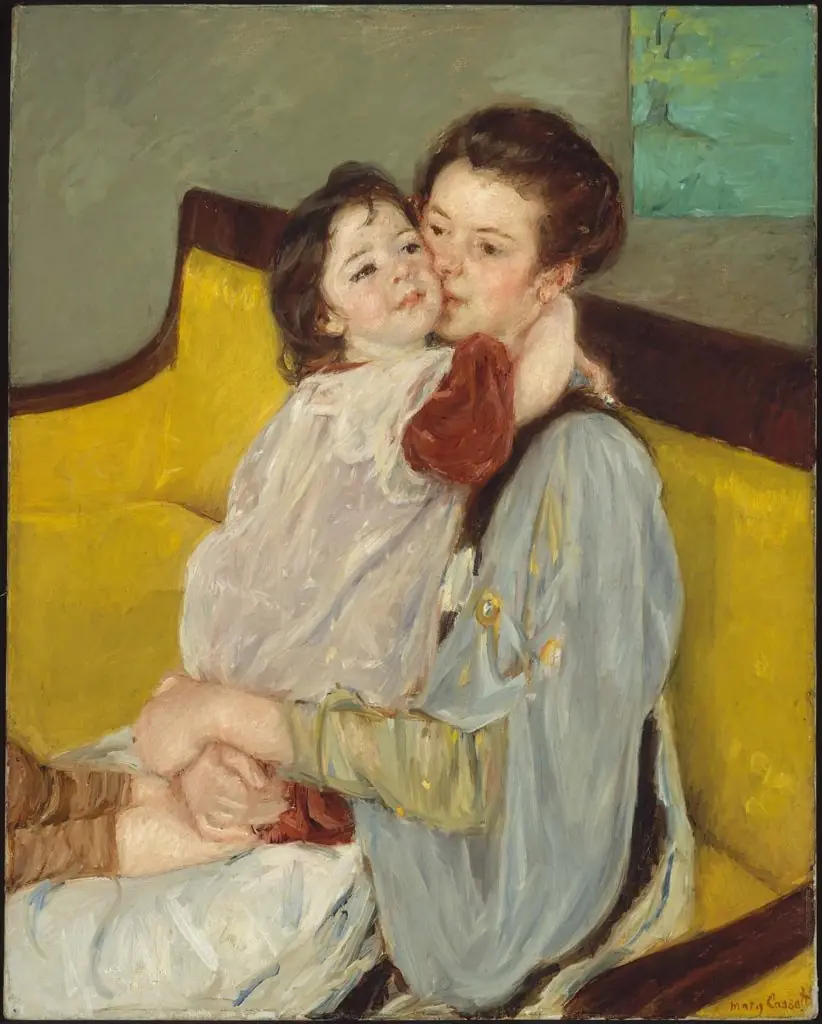 Caresse Maternelle
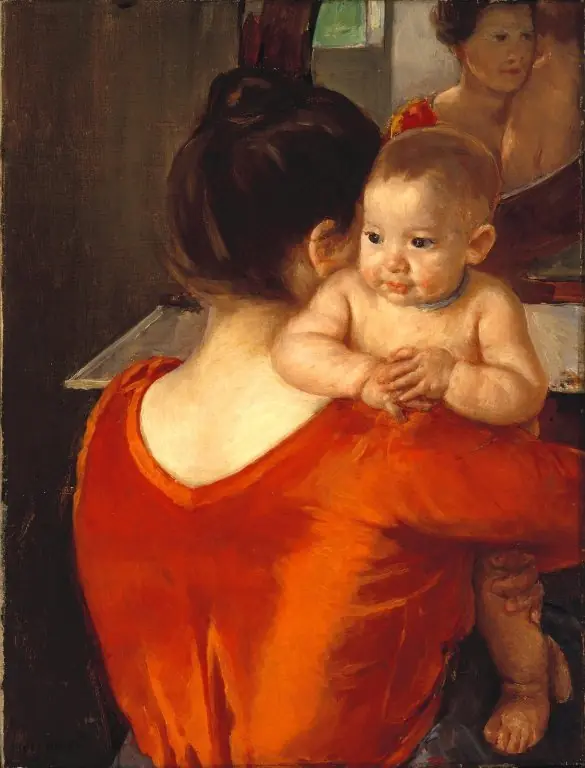 Woman in a Red Bodice and Her Child
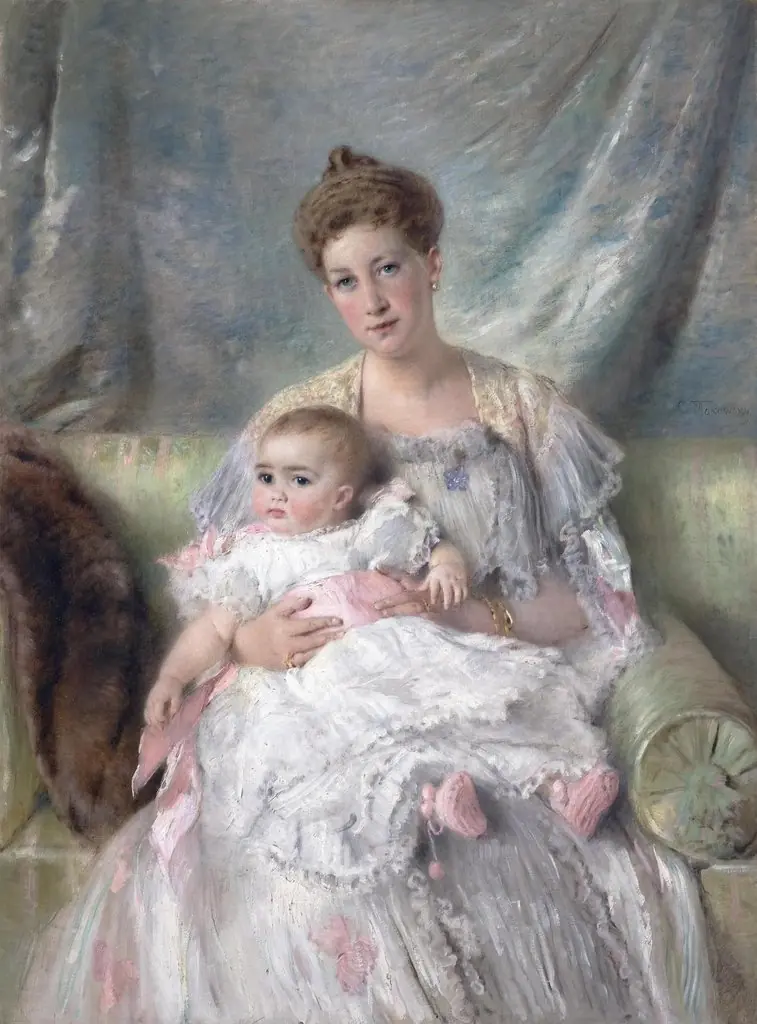 Portrait of Grand Duchess Maria Georgievna with Her Daughter Nina
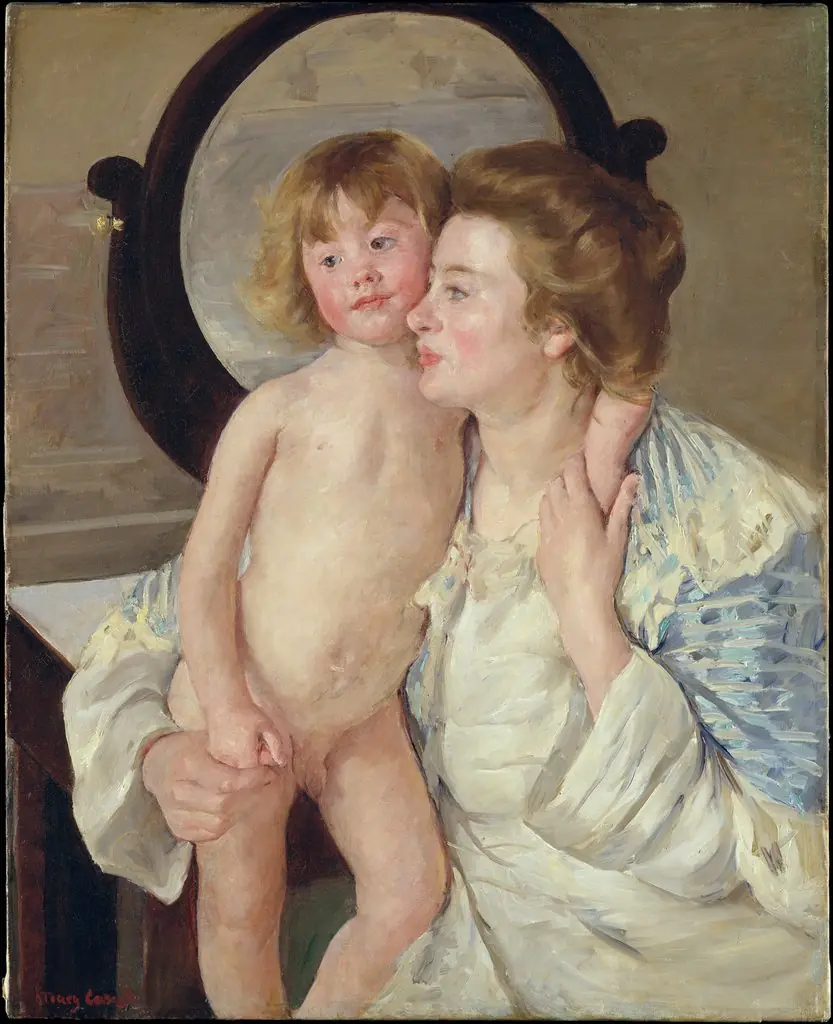 Mother and Child (The Oval Mirror)
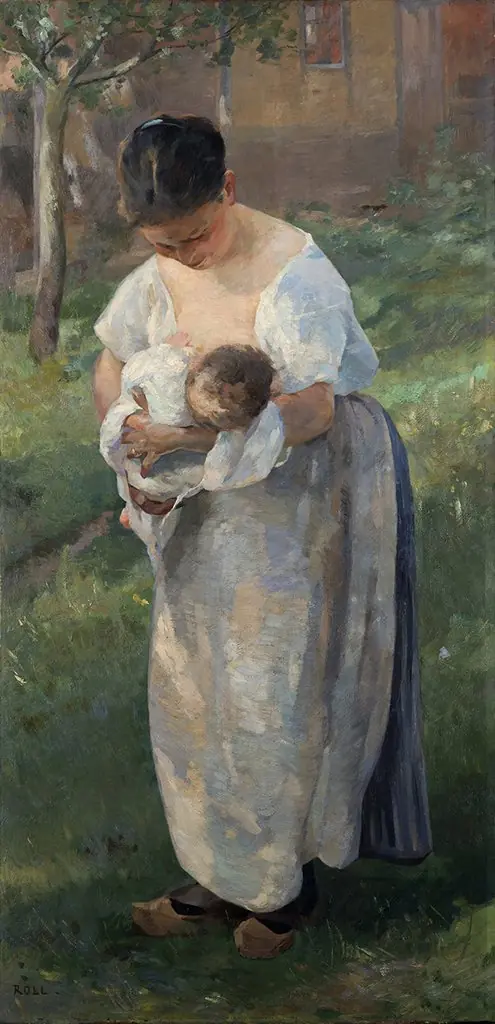 La nodriza
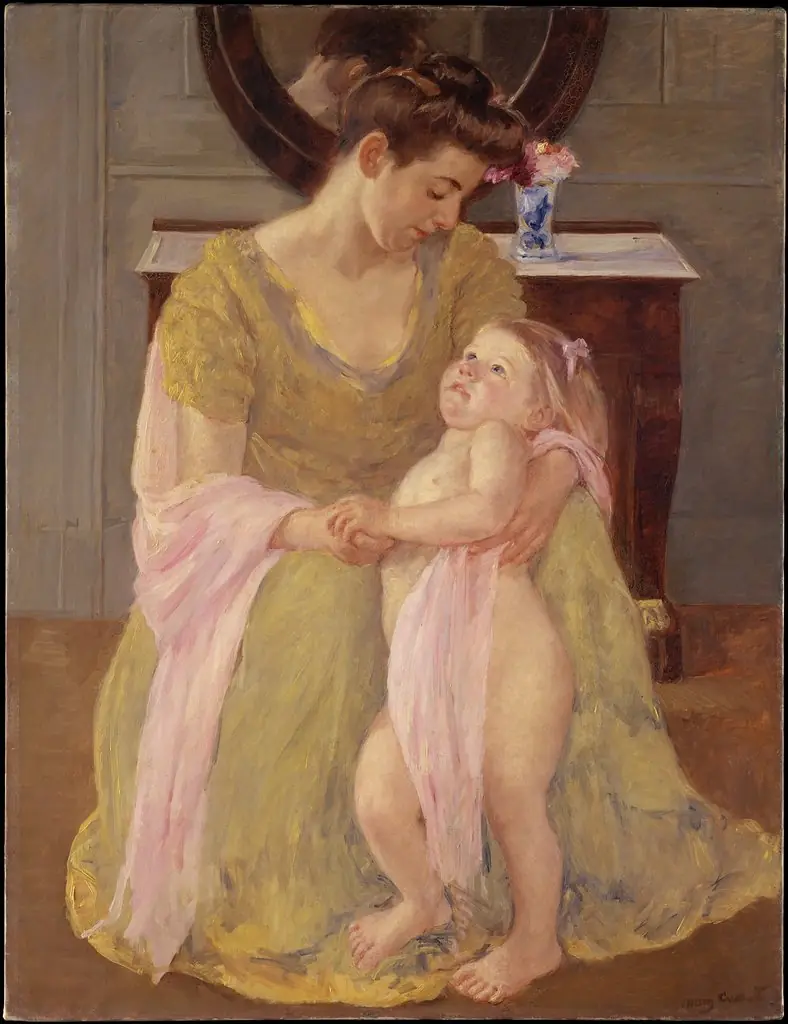 Mother and Child with a Rose Scarf
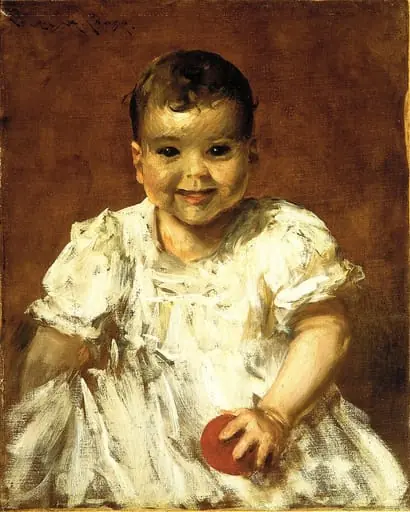 Roland
 Mother and Child
 The young mother