Artwork
De zitting van de rechtbank
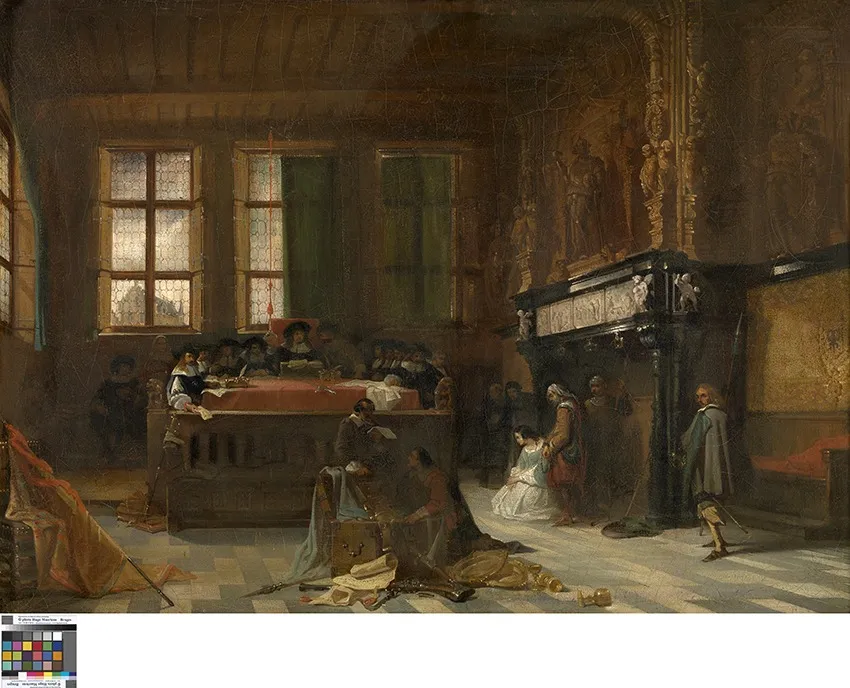
De zitting van de rechtbank is an oil painting by the Neoclassicist artist Eduard Wallays. It dates from 1813 and is held in the collection of the Groeningemuseum.
About this work
Overview
The composition centers on a long wooden table beneath a high ceiling, where a magistrate in traditional robes presides over a group of officials and witnesses.
Created in 1813 by Belgian artist Eduard Wallays, *De zitting van de rechtbank* is an oil painting that records a formal judicial gathering. The composition centers on a long wooden table beneath a high ceiling, where a magistrate in traditional robes presides over a group of officials and witnesses. The setting is rendered with a subdued palette that emphasizes the solemn atmosphere of the proceedings.
Subject & Meaning
The work portrays a courtroom scene associated with the historic Manor of the Liberty of Bruges, an institution that once administered local justice. Figures are arranged around the bench, some kneeling, others standing, suggesting a hierarchy of roles within the legal process. The inclusion of everyday objects—a chair, a chest, scattered papers—grounds the painting in a realistic depiction of civic authority.
Technique & Style
Wallays employs a neoclassical approach, favoring clear lines, balanced composition, and restrained coloration. The brushwork is smooth, allowing the textures of wood, fabric, and stone to be discerned without overt painterly flourish. Light enters through tall, slightly grimy windows, casting a diffused glow that highlights the central judge while leaving peripheral corners in shadow, reinforcing the painting’s orderly yet somber tone.
History & Provenance
Educated at the Bruges Academy and the Royal Academy of Fine Arts in Antwerp, Wallays later refined his practice in Paris under the guidance of Albert Gregorius and Antoine‑Jean Gros. After a career that included directing the Bruges Academy, the painting entered the collection of the Groeningemuseum, where it remains part of the institution’s holdings of early‑19th‑century Flemish art.
Context
The early nineteenth century saw a revival of interest in civic institutions and their visual representation, especially in the wake of the Napoleonic reorganization of the Low Countries. Wallays’ depiction of a local court reflects contemporary concerns with law, order, and regional identity, while the neoclassical aesthetic aligns the scene with broader European artistic trends that emphasized rationality and moral clarity.
Artist & collection
Artist
Eduard Wallays (2 July 1813 in Bruges – 28 January 1891 in Bruges) was a Belgian painter, graphic designer, and Director of the Bruges Academy of Fine Arts.