Artwork
George Washington
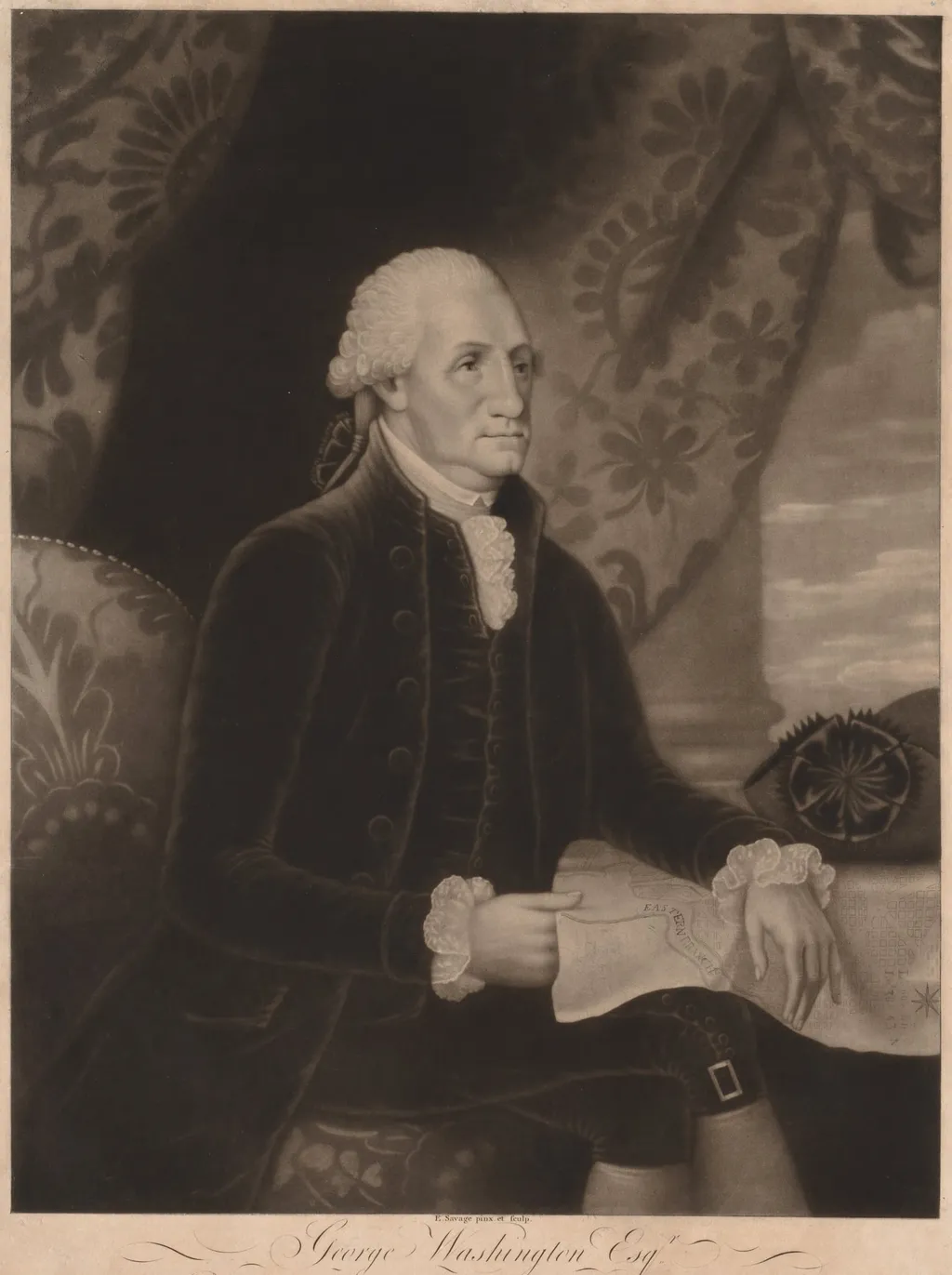
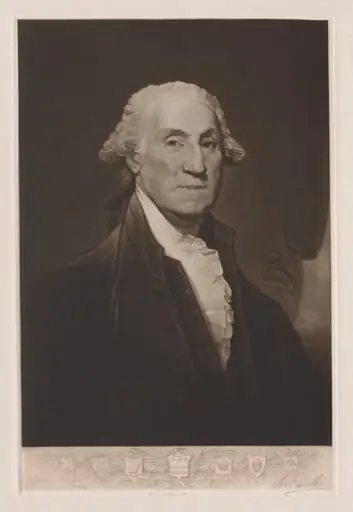
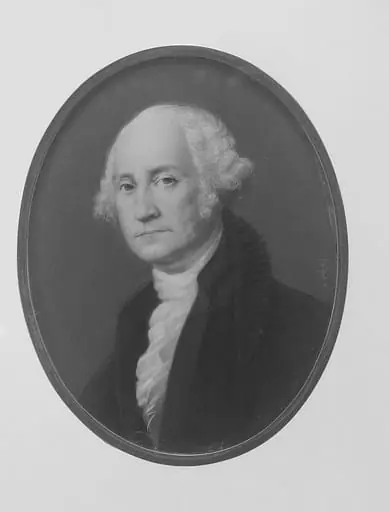
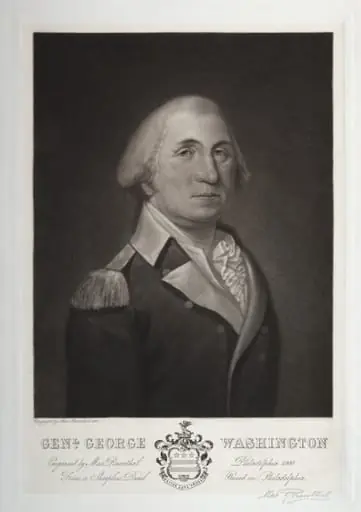
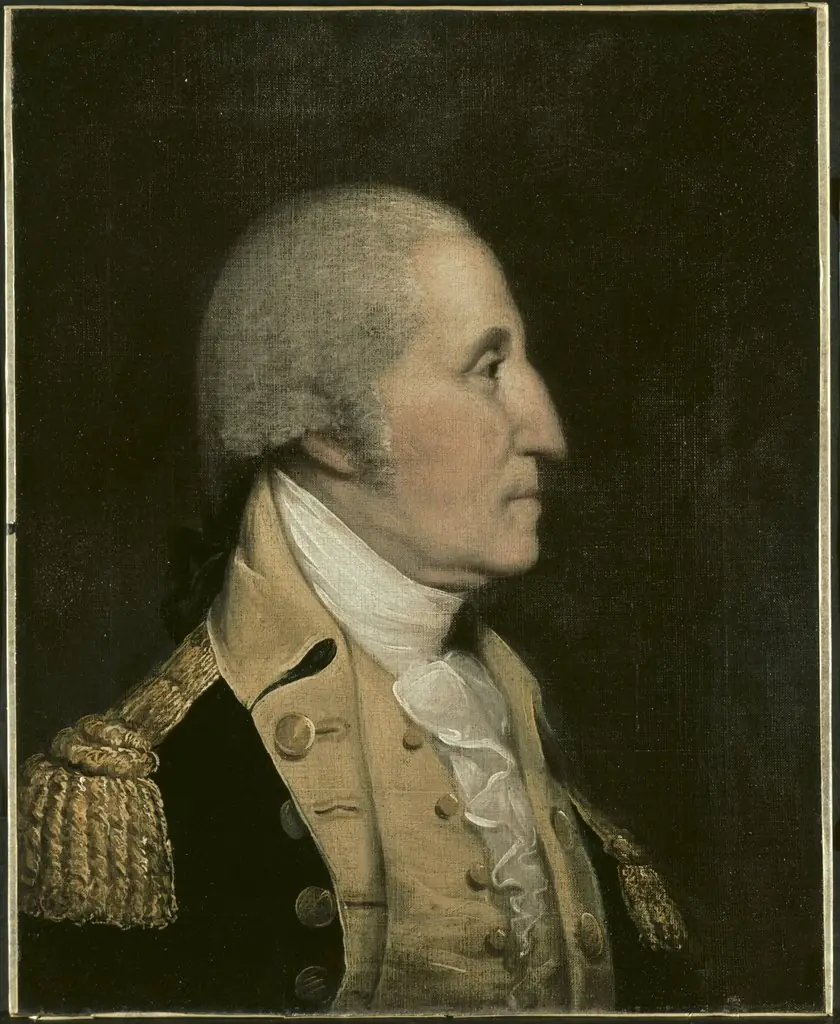
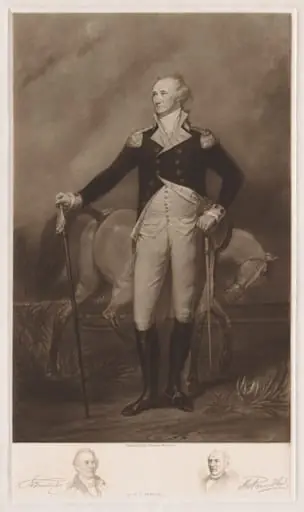
George Washington is a print by the Romanticist artist Edward Savage. It dates from 1793 and is held in the collection of the Cleveland Museum of Art.
About this work
The artist copied poses from European leaders, but kept Washington looking serious and real.
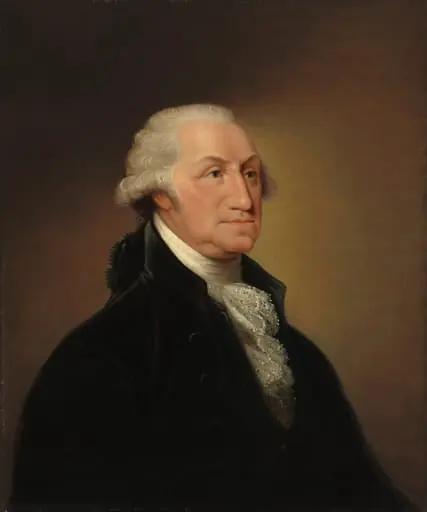
George Washington stands tall in a dark coat, his right hand resting on a walking stick. The background is plain and gray, putting all focus on him. His left hand holds a rolled paper, maybe a letter.
Savage painted this in 1793, right after Washington became president. It’s one of the first big portraits of him. The artist copied poses from European leaders, but kept Washington looking serious and real.
Check out the original at The Cleveland Museum of Art.
Overview
Edward Savage’s 1793 print of George Washington presents the newly inaugurated president in a dignified stance. The figure is rendered in a dark coat, his right hand supporting a walking stick while his left grasps a rolled document. A plain gray backdrop eliminates distractions, concentrating attention on Washington’s solemn expression.
Subject & Meaning
The portrait emphasizes Washington’s role as a steady leader, his posture and the held paper suggesting both authority and a connection to official duties. The absence of ornamental background reinforces a focus on his personal gravitas rather than decorative symbolism, portraying him as a realistic embodiment of republican virtue.
Technique & Style
Savage employed the print medium, likely a mezzotint or engraving, to achieve fine tonal contrasts between the dark coat and the muted background. The composition mirrors European portrait conventions of the era, yet the treatment of light and the straightforward pose lend an American sensibility to the work.
History & Provenance
Created shortly after Washington assumed the presidency, the image is among the earliest large-scale representations of the president. The print entered the collection of the Cleveland Museum of Art, where it remains on view, documenting both the artist’s early career and the nascent visual culture of the United States.
Context
In the early 1790s, American portraiture often looked to European models for compositional guidance. Savage’s adaptation of such poses, combined with a restrained, earnest depiction of Washington, reflects the young nation’s desire to align itself with established artistic standards while asserting its own identity.
Artist & collection
Artist
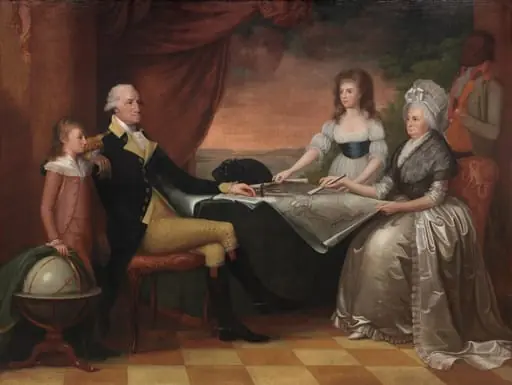
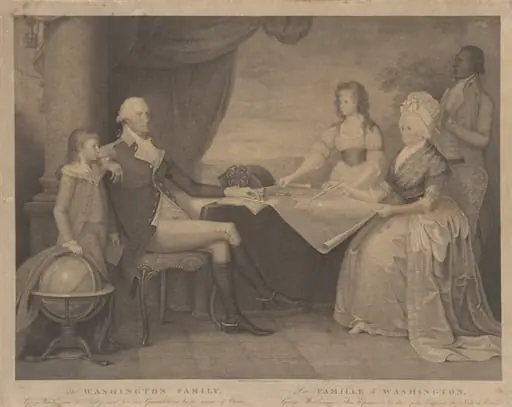
Edward Savage painted America’s first power family in a room full of clues. The Washington Family shows George and Martha Washington seated with two of Martha’s grandchildren and a young man standing behind them. The…