Artwork
Portrait of a Man
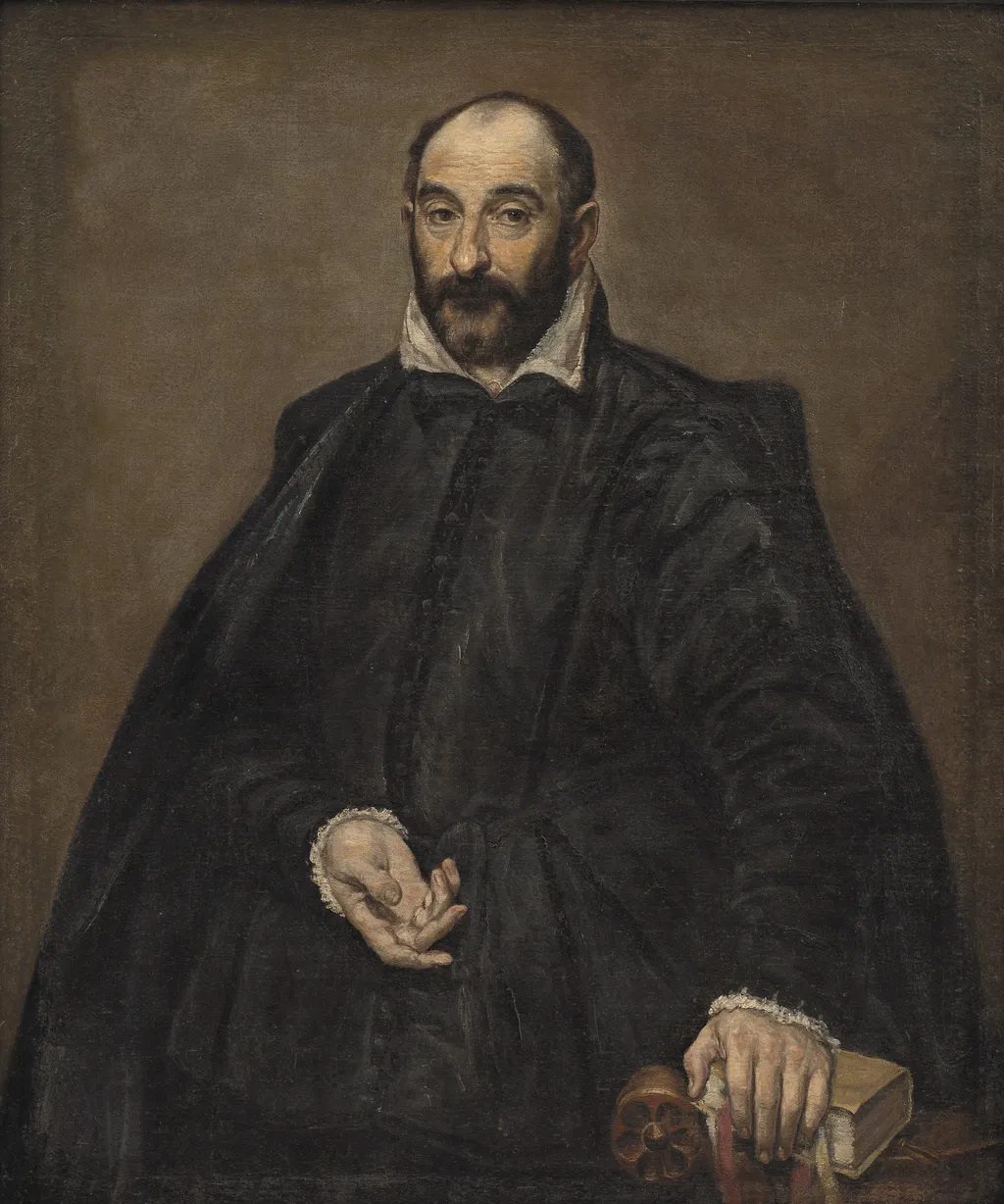
Portrait of a Man is an oil painting by the Mannerist artist El Greco. It dates from 1570 and is held in the collection of the Statens Museum for Kunst.
About this work
Overview
Executed around 1570, this oil portrait by the Spanish-Mannerist painter El Greco presents a seated figure in a dark interior. The composition is dominated by a deep black robe contrasted with stark white collar and cuffs, while a modestly bound volume rests on the sitter’s right. The background consists of a muted brown tone, lending the work a somber, introspective atmosphere.
Subject & Meaning
The individual portrayed is identified as the renowned architect Andrea Palladio, a leading figure of the Italian Renaissance. The inclusion of a book suggests scholarly activity or the architect’s intellectual pursuits, reinforcing his reputation as a learned professional. The dignified pose and restrained attire convey a sense of authority and contemplation appropriate to Palladio’s status.
Technique & Style
El Greco employs oil on canvas with a visible, expressive brushwork that creates subtle texture across fabric and flesh. The handling of light emphasizes the contrast between the black garment and the luminous white trim, a hallmark of Mannerist elongation and stylization. The figure’s elongated proportions and slightly exaggerated posture reflect the movement’s departure from strict naturalism.
History & Provenance
The painting has been part of the collection of the Statens Museum for Kunst in Copenhagen since the early 20th century, where it is displayed among other works of European art. Its attribution to El Greco has been confirmed through stylistic analysis and archival documentation linking the work to his early period in Spain.
Context
Created during El Greco’s formative years, the portrait aligns with the broader Mannerist tendency to emphasize elegance and intellectualism over realistic representation. At the time, portraiture often served to commemorate the achievements of prominent cultural figures, and Palladio’s prominence as an architect made him a fitting subject for such a dignified rendering.
Own this work as a print
Artist & collection
Artist
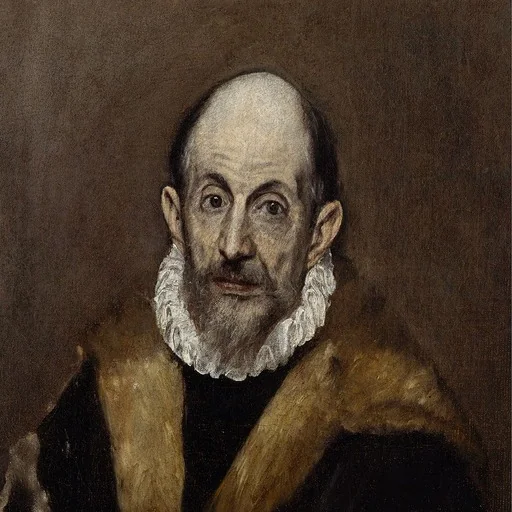
Doménikos Theotokópoulos was born in 1541 in Candia (modern Heraklion), the capital of Venetian-ruled Crete, where he was trained in the post-Byzantine tradition of icon painting.