Artwork
Natură statică cu flori
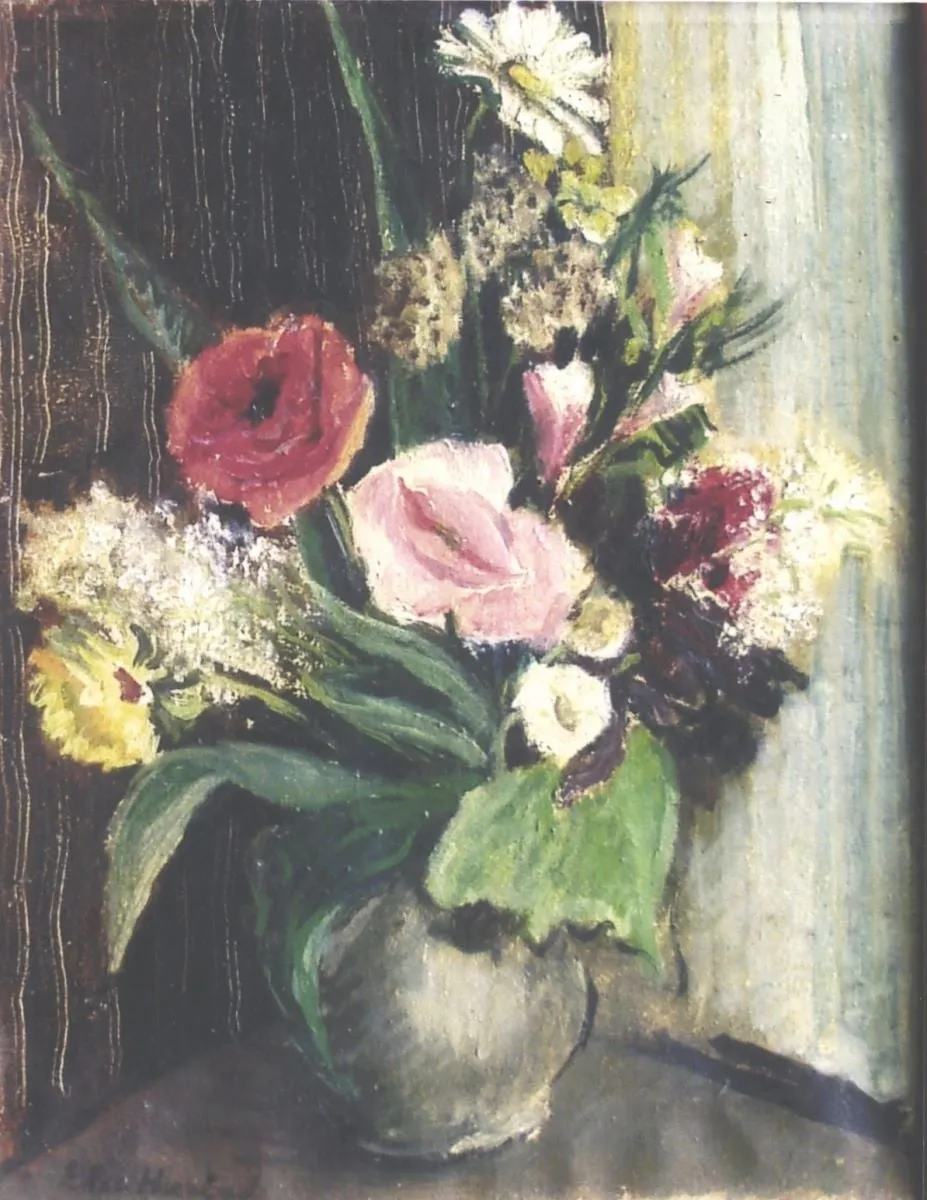
Natură statică cu flori is an unspecified painting by Micaela Eleutheriade. It dates from 1950 and is held in the collection of the Bucharest Municipality Museum.
About this work
Overview
The work is part of the collection at the Museum of Ethnography, where it is preserved as an example of mid-20th-century Romanian domestic art.
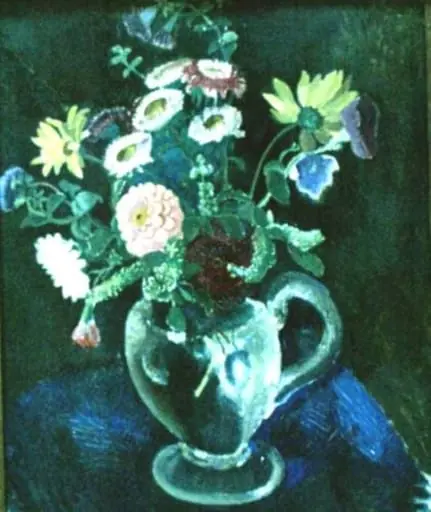
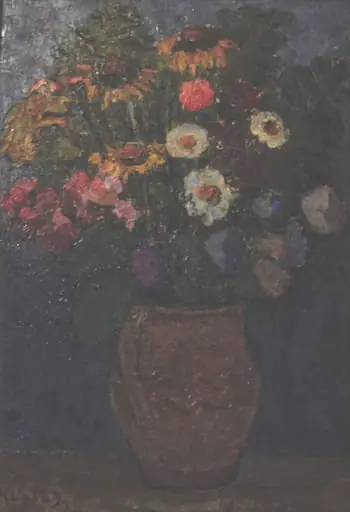
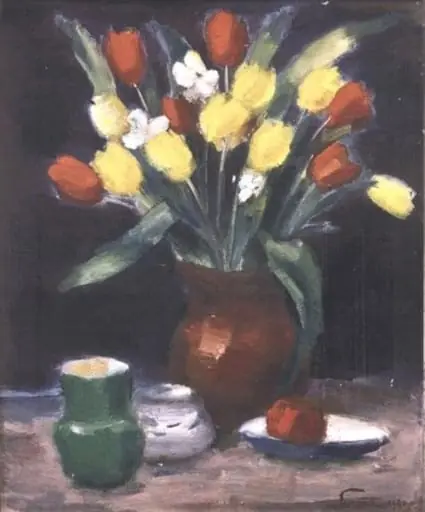
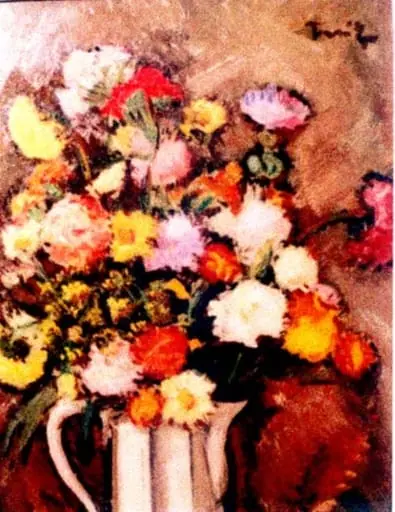
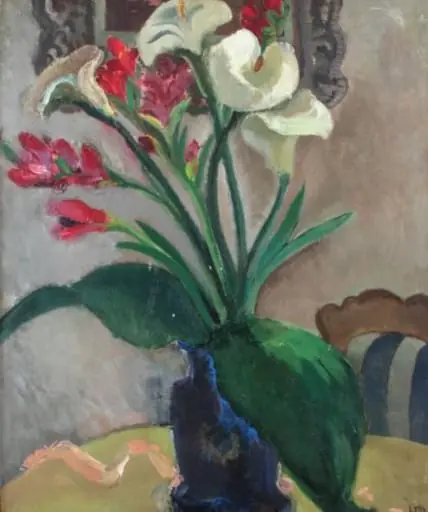
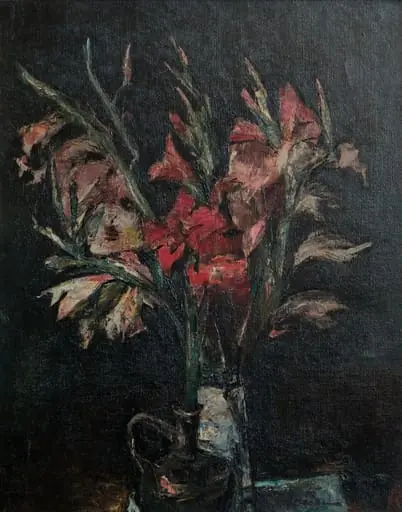
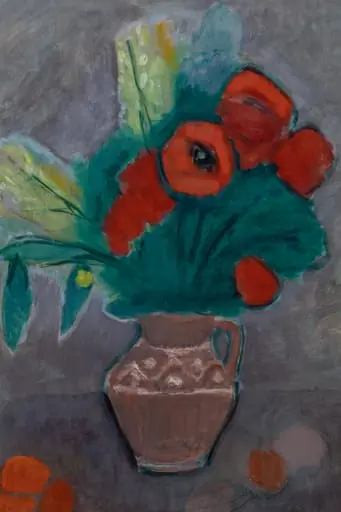
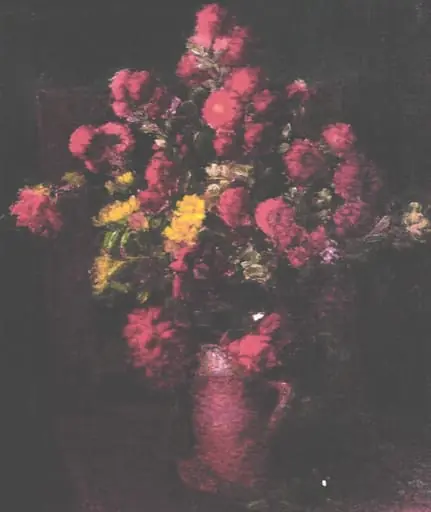
Natură statică cu flori, dated around 1950, is a still life painting by Romanian artist Micaela Eleutheriade. It depicts a modest arrangement of flowers in a vase, placed on a plain surface. The work is part of the collection at the Museum of Ethnography, where it is preserved as an example of mid-20th-century Romanian domestic art. Its unadorned composition reflects a quiet, intimate observation of everyday objects.
Subject & Meaning
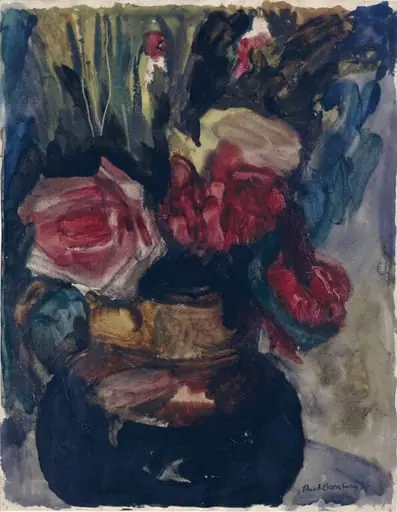
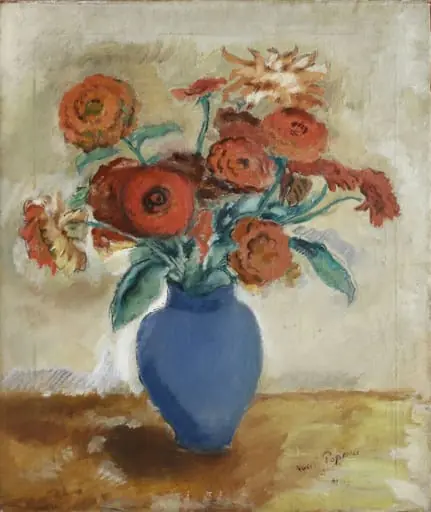
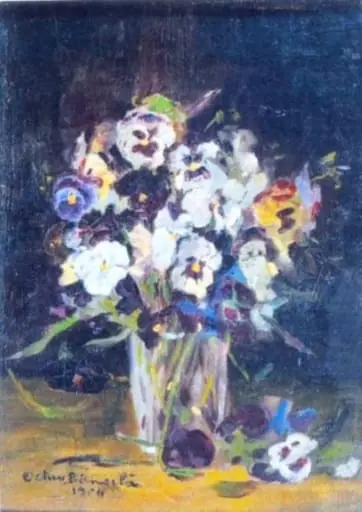
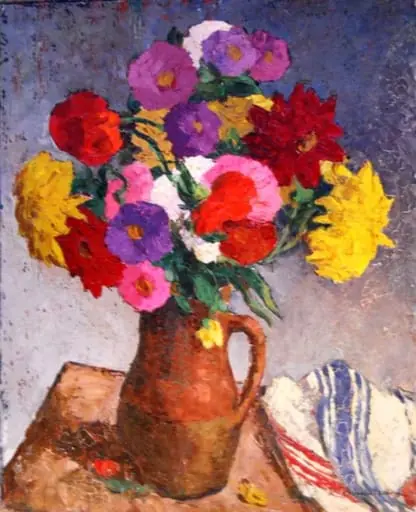
The painting features a vase holding a poppy, pink roses, and small white blossoms, accompanied by lush green foliage. These flowers, common in Romanian households, suggest a personal, possibly domestic setting. The absence of elaborate décor or symbolic elements points to a focus on quiet beauty rather than allegory. The arrangement conveys a sense of stillness and transient life, typical of still-life traditions without overt narrative.
Technique & Style
Eleutheriade employed impasto to build texture in the petals and leaves, applying paint thickly with visible brushwork. This method gives the flowers a tactile, almost sculptural presence against the muted background. The rough, uneven wall and draped curtain are rendered with looser strokes, creating contrast between the vibrant foreground and subdued surroundings. The technique emphasizes materiality over realism, drawing attention to the paint itself.
History & Provenance
The painting was likely created in Romania during the early postwar period, a time when artistic expression was often constrained by political shifts. It entered the Museum of Ethnography’s collection as part of a broader effort to document vernacular artistic practices. Its provenance remains largely undocumented, but its inclusion suggests it was recognized for its representation of everyday visual culture rather than formal artistic innovation.
Context
In mid-century Romania, still-life painting was a common subject among artists working outside official socialist realism. Eleutheriade’s work aligns with a quieter, personal tradition of domestic observation, distinct from state-sanctioned themes. The use of impasto and informal composition reflects influences from European modernism, filtered through a local sensibility that valued authenticity over grandeur.
Legacy
While not widely exhibited beyond institutional collections, Natură statică cu flori contributes to understanding the breadth of Romanian art beyond political narratives. It preserves a moment when private, intimate subjects were rendered with emotional sincerity and material attention. The work remains a quiet testament to the role of domestic still life in sustaining artistic expression during periods of cultural constraint.
Artist & collection

Artist
Micaela Eleutheriade (1900–1982) was a noted Romanian painter and engraver. She was a descendant, through her mother, of the painter Gheorghe Tattarescu, the pioneer of neoclassicism in Romania.