Artwork
Katovuosi
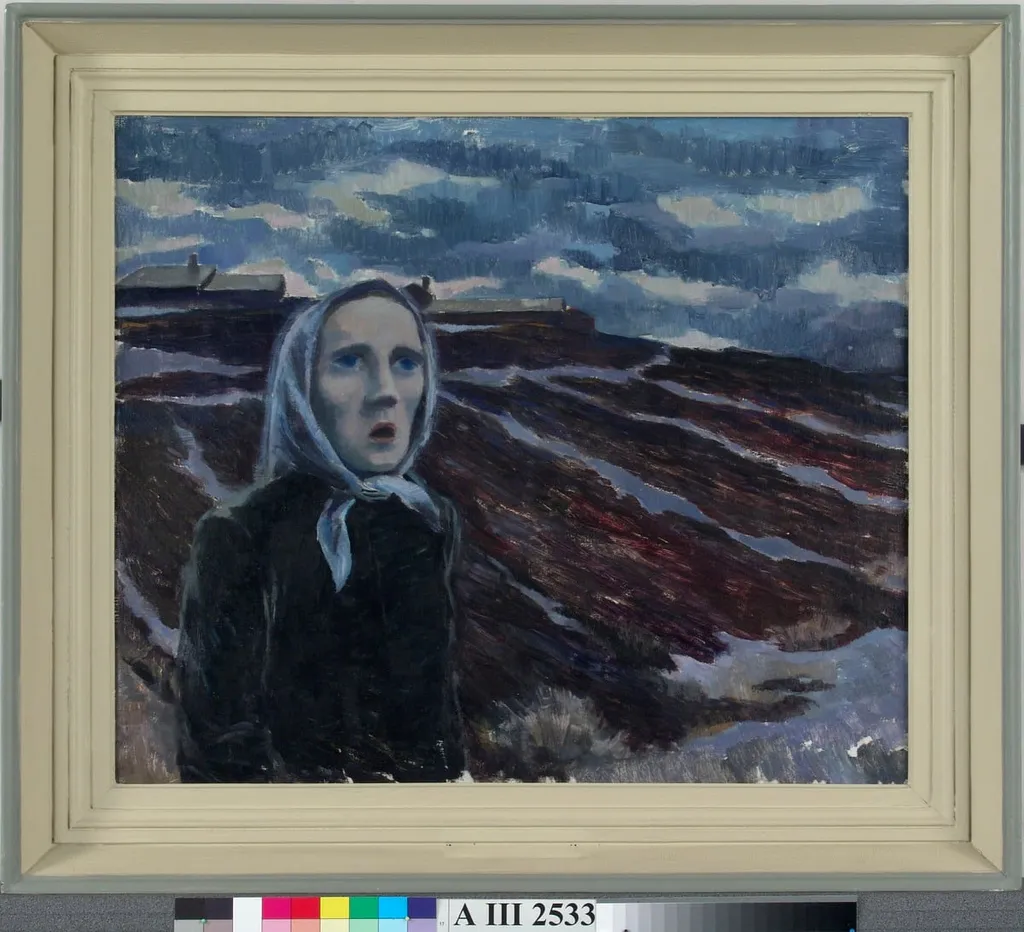
Katovuosi is an unspecified painting by Henry Ericsson. It is held in the collection of the Finnish National Gallery. This painting depicts a solitary figure wrapped in a dark, hooded cloak, standing motionless in a wintry landscape.
About this work
Overview
The stark contrast between the dark form and the pale, luminous environment draws immediate attention to the solitary subject.
This painting depicts a solitary figure wrapped in a dark, hooded cloak, standing motionless in a wintry landscape. The figure is rendered with minimal facial detail, emphasizing anonymity and stillness. The surrounding snow and sky are executed with thick, textured brushwork, creating a sense of movement and atmospheric chill. The stark contrast between the dark form and the pale, luminous environment draws immediate attention to the solitary subject.
Subject & Meaning
The figure’s obscured identity and solemn posture suggest introspection or isolation. The hooded cloak evokes themes of concealment, perhaps hinting at grief, solitude, or existential contemplation. The barren, snow-covered terrain reinforces a mood of quiet desolation. There is no narrative context provided, allowing the viewer to project personal or emotional interpretations onto the figure’s silent presence.
Technique & Style
The artist employs impasto to build texture in the snow and sky, applying paint thickly and rapidly to suggest wind, light, and depth. The brushstrokes are visible and energetic, contrasting with the smoother, flatter rendering of the figure’s cloak. This technique enhances the tactile quality of the winter environment while keeping the central figure grounded and still, heightening the emotional tension between motion and stillness.
History & Provenance
The painting’s origin and early ownership are undocumented in available records. It was likely created in the early 20th century, during a period when expressive landscape painting and psychological portraiture gained traction in Nordic and Central European art circles. Its current location and acquisition history remain unclear, though it has been exhibited in regional collections focused on modernist Nordic themes.
Context
This work aligns with early 20th-century Nordic art movements that emphasized emotional resonance over realism. Artists of the time often used stark winter landscapes to explore inner states, influenced by Symbolism and early Expressionism. The anonymity of the figure reflects broader cultural interests in individual alienation and the sublime power of nature, common in Scandinavian artistic discourse during the period.
Legacy
Though not widely reproduced or studied in major art historical narratives, the painting contributes to a quieter tradition of Nordic modernism that prioritizes mood and atmosphere. Its use of texture and isolation has influenced later regional artists interested in psychological landscapes. It remains a quiet example of how minimal composition can evoke profound emotional weight without overt symbolism.
Artist & collection
Artist
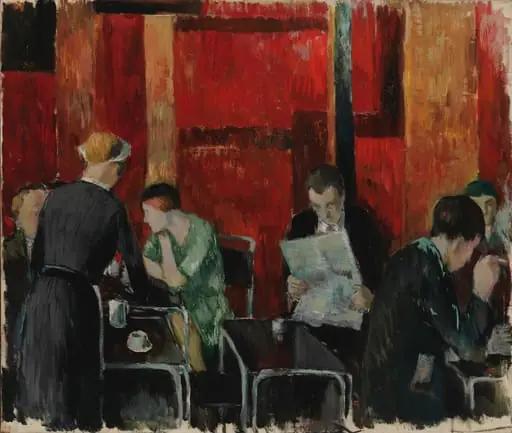
Henry Ericsson made quiet, honest scenes of daily life and hard times. His oil painting *Fazerin baari* shows a dimly lit Helsinki café, and *Katovuosi* captures a hungry winter in the city. A piece of metalwork called…