Artwork
Joan of Arc
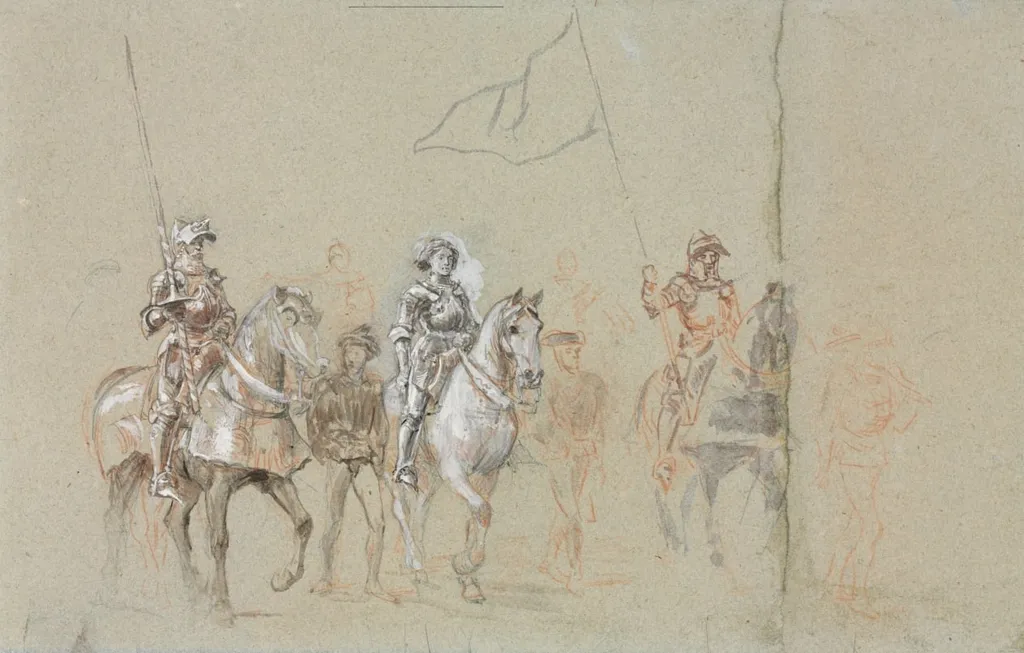
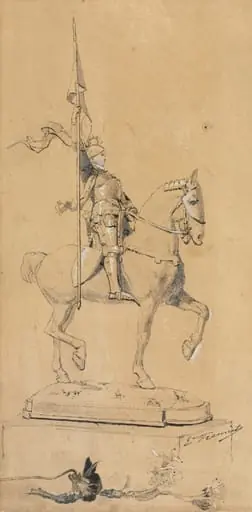
Joan of Arc is a drawing by the Impressionist artist Jean Louis Ernest Meissonier. It dates from 1889 and is held in the collection of the Cleveland Museum of Art. This drawing by Ernest Meissonier is a preparatory study for an unbuilt mural commission in the Panthéon, Paris.
About this work
You see Joan of Arc on a white horse, no helmet, staring straight ahead with calm focus.
This sketch was meant for a huge mural that never got painted. Meissonier won the job in 1874 but kept putting it off. The quiet confidence in Joan’s face feels like a study in stillness before battle.
To see how other artists painted her, look up *France, 19th century*.
Overview
It represents one of the few surviving visual records of Meissonier’s intended composition, made nearly fifteen years after the commission was granted.
This drawing by Ernest Meissonier is a preparatory study for an unbuilt mural commission in the Panthéon, Paris. Awarded in 1874, the project remained unfinished due to prolonged delays. The work captures Joan of Arc on a white horse, helmetless and motionless, her gaze fixed ahead. It represents one of the few surviving visual records of Meissonier’s intended composition, made nearly fifteen years after the commission was granted.
Subject & Meaning
Joan of Arc is depicted not in the heat of battle, but in a moment of quiet resolve. Her bare head and still posture suggest introspection rather than aggression, emphasizing spiritual conviction over martial fury. The absence of armor and the calm demeanor reflect a deliberate choice to portray her as a figure of moral clarity, aligning with 19th-century ideals of national heroism rooted in piety and endurance.
Technique & Style
Executed in pencil and ink, the drawing employs precise, controlled lines to define form and volume. Meissonier’s attention to anatomical detail and the horse’s musculature reveals his academic training. The stark white ground enhances the figure’s presence, isolating Joan in a meditative space. The minimal shading and absence of background elements focus attention entirely on her composed expression and posture.
History & Provenance
Meissonier received the Panthéon commission in 1874 but failed to complete the mural despite repeated deadlines. The drawing dates to the period when he was developing his concept, likely before 1889, when he presented a lost full-scale design to the commissioning body. The sketch survived as a private record, later entering public collections as a testament to the unrealized ambition of one of France’s most celebrated 19th-century painters.
Context
In the late 19th century, Joan of Arc was increasingly invoked as a symbol of French unity and resilience, especially after the trauma of the Franco-Prussian War. Public monuments and state-sponsored art sought to reinforce national identity through historical figures. Meissonier’s approach—quiet, reverent, and introspective—contrasted with more dramatic portrayals, reflecting a nuanced cultural moment seeking moral rather than martial exemplars.
Legacy
Though the mural was never executed, this drawing endures as a significant artifact of Meissonier’s late career and his engagement with national mythmaking. It offers insight into how a leading academic artist approached historical subjects with restraint, prioritizing psychological depth over spectacle. The work remains a quiet counterpoint to the grandiose public monuments of its time.
Artist & collection

Artist
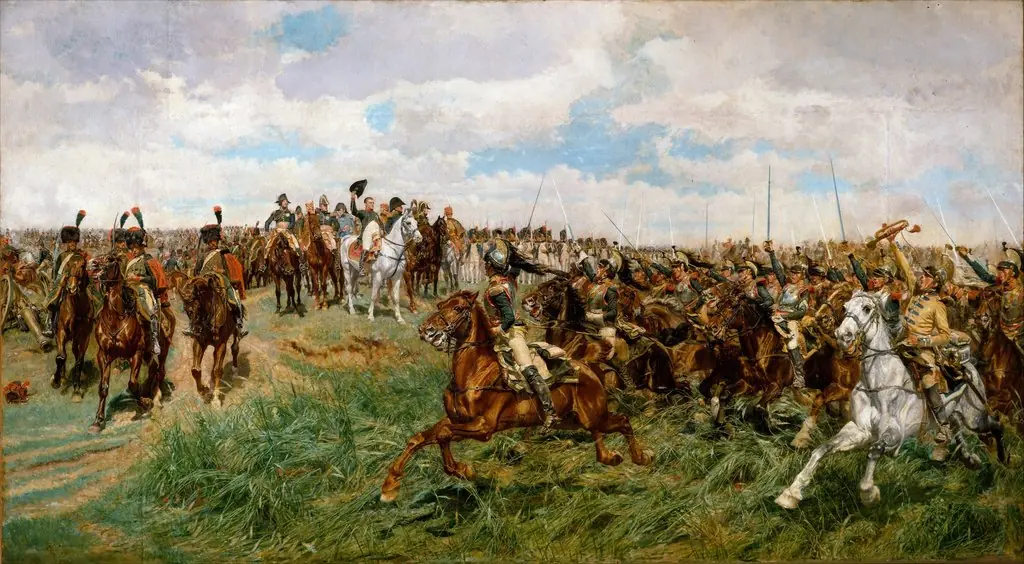
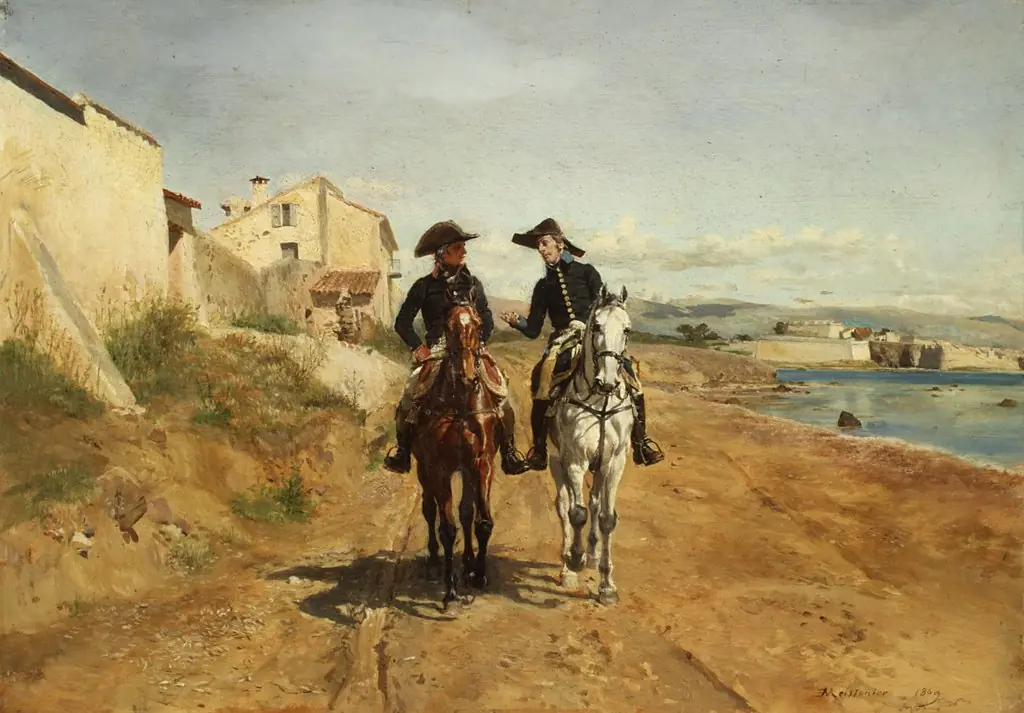
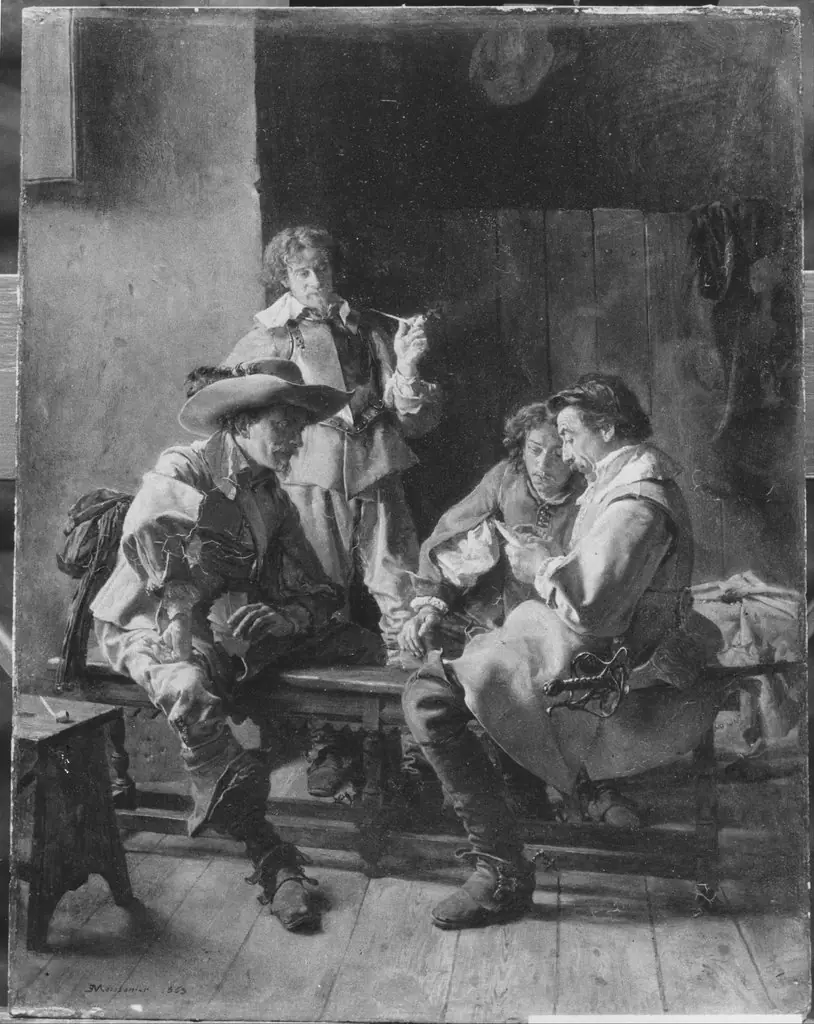
Jean-Louis-Ernest Meissonier was a French academic painter and sculptor. He became famous for his depictions of Napoleon and his military sieges and manoeuvres in paintings acclaimed both for the artist's mastery of…

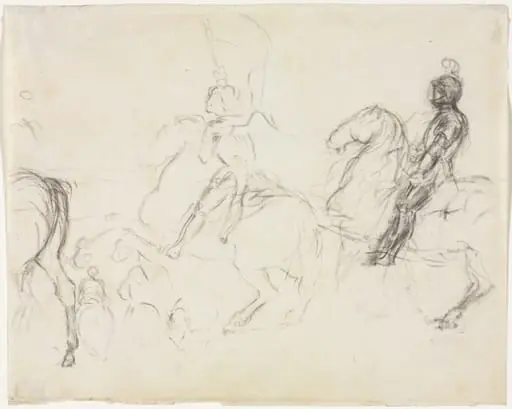 Battle Scene with Armored Figures on Horseback (recto)
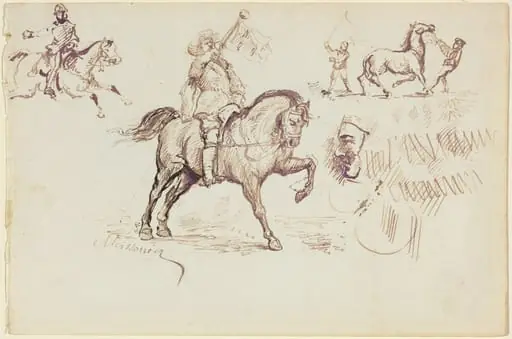 The Herald of Murcia and Other Studies (recto)
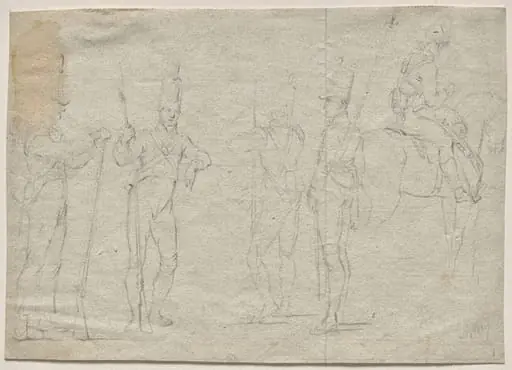 Soldiers
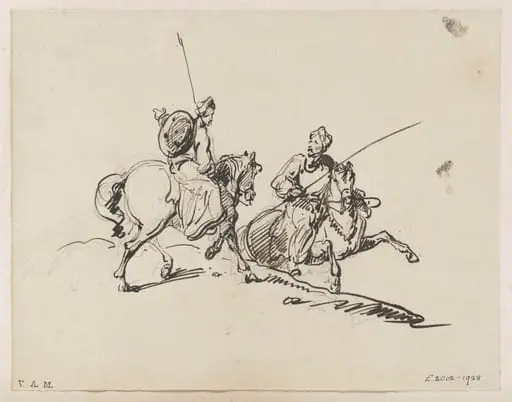 Two turbaned horsemen
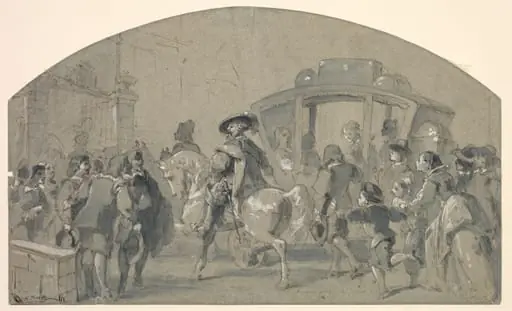 Street Scene (recto)
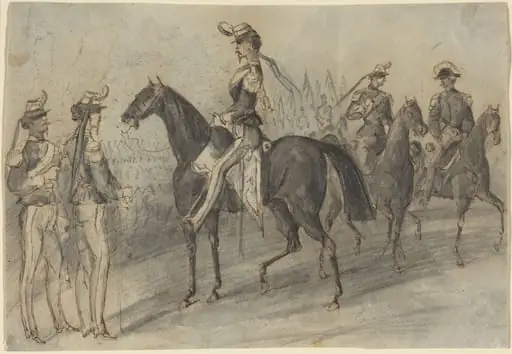 Military Parade
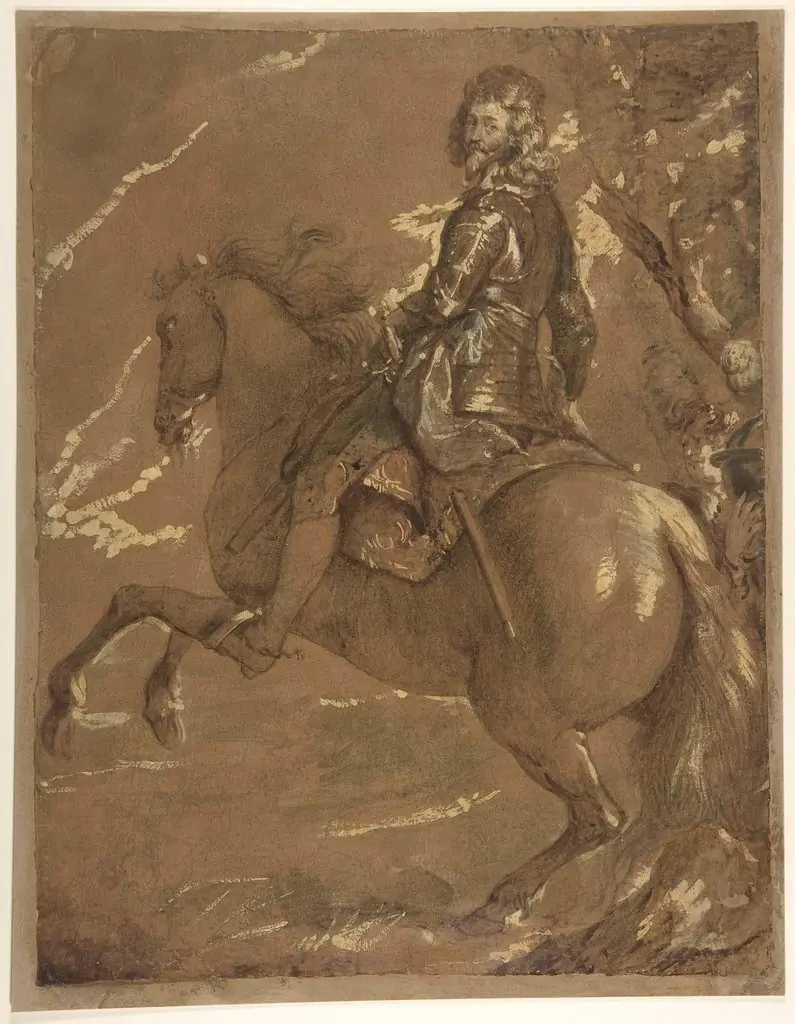 Albert de Ligne, Count of Arenberg, Prince of Brabançon, (1600-1674)
 Armored Figure on Horseback (recto)
![Figures on Horseback [verso], by Unknown](https://artifactworldgallery.com/img/unknown--figures-on-horseback-verso--014ce85ac0e4d9d4-w320.webp) Figures on Horseback [verso]
Figures on Horseback [verso] Don Quixote Attacking the Biscayan
 Study for Boadicea
 Joan of Arc on Horseback