Artwork
A Dominican Preaching
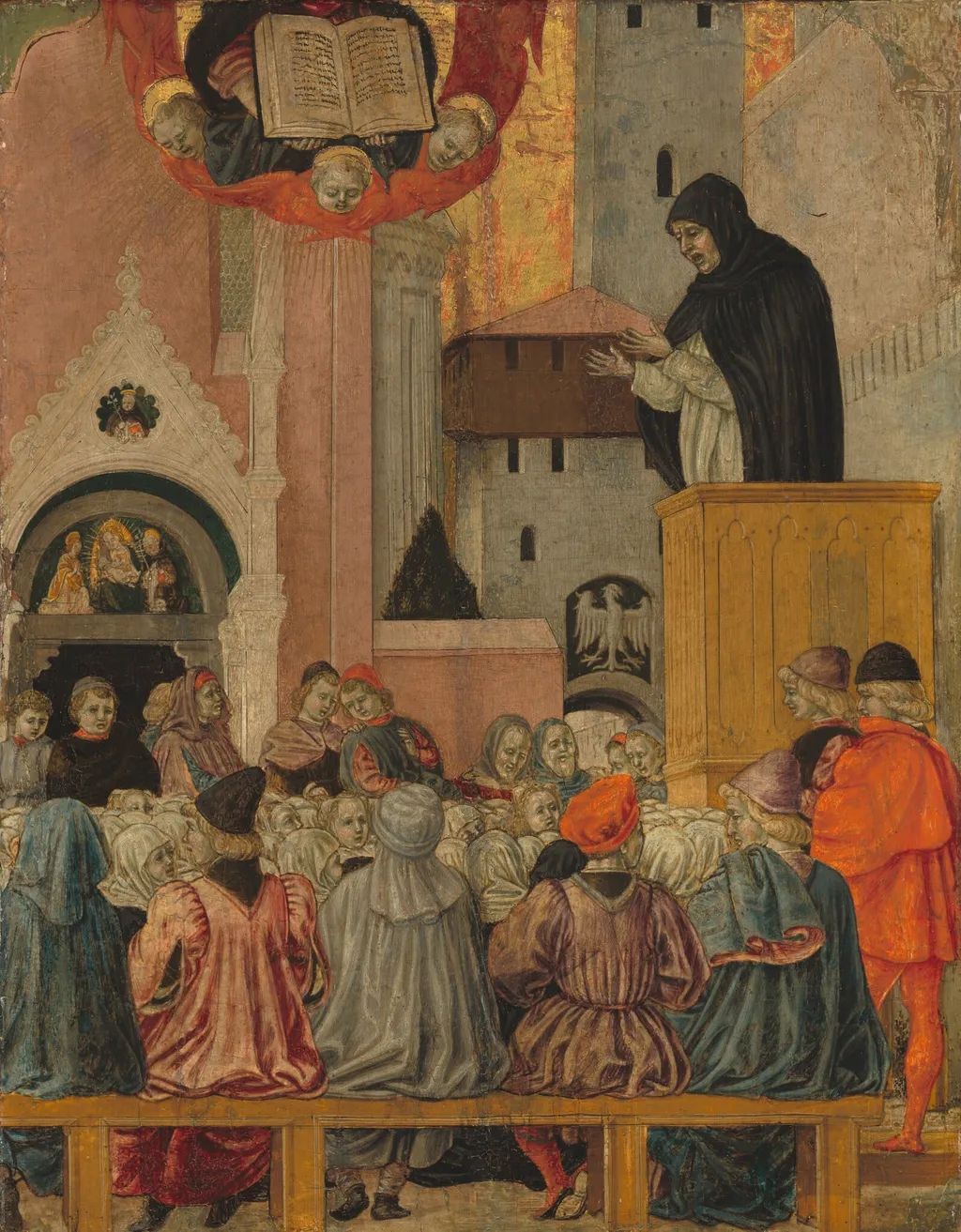
A Dominican Preaching is a tempera painting by the Early Renaissance artist Agnolo degli Erri. It dates from 1470 and is held in the collection of the National Gallery of Art. Created circa 1470, this tempera painting on a poplar panel portrays a Dominican friar delivering a sermon from a raised platform.
About this work
Overview
Created circa 1470, this tempera painting on a poplar panel portrays a Dominican friar delivering a sermon from a raised platform. The composition centers on the preacher, whose black hooded habit and white robe contrast with the surrounding figures, while architectural elements such as a stone façade, a tower, and a doorway frame the scene.
Subject & Meaning
The work illustrates a public preaching event, emphasizing the friar’s role as a spiritual guide. The assembled crowd includes men, women, and children of varied ages and social standing, suggesting the broad appeal of Dominican preaching in the period. Symbolic details—a red cloth, a book, and two angels—reinforce the religious authority of the sermon.
Technique & Style
Executed in tempera, the artist applied pigment mixed with egg yolk onto a smooth poplar surface, achieving a luminous, warm tonal quality. The figures retain Gothic linearity and decorative detail, yet the spatial arrangement and modest naturalism signal early Renaissance influences that were emerging in Modena during the Quattrocento.
History & Provenance
Attributed to Agnolo degli Erri, a Modenese painter active in the late 15th century, the piece reflects his collaboration with his brothers Bartolomeo and Bonascia. Though specific ownership records are limited, the painting remains a representative example of the artist’s output and of the transitional artistic climate in northern Italy at the time.
Own this work as a print
Artist & collection

Artist
Agnolo degli Erri (1440–1482) was an Italian Gothic painter of the Italian Renaissance.

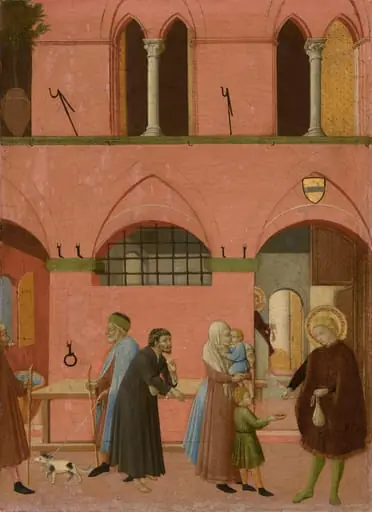 Saint Anthony Distributing His Wealth to the Poor
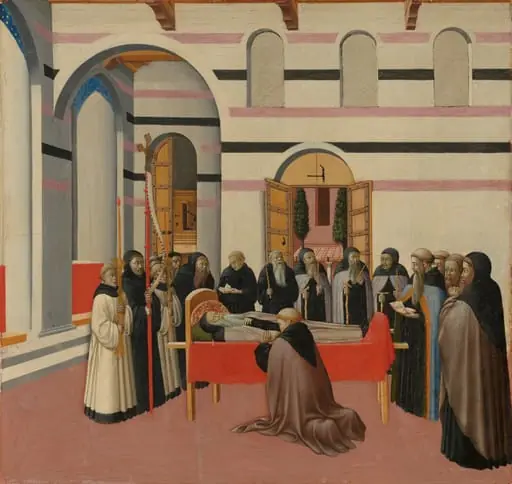 The Death of Saint Anthony
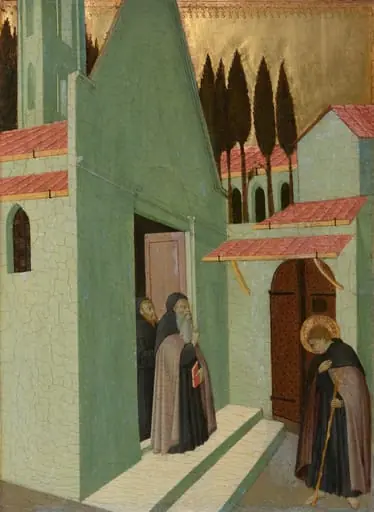 Saint Anthony Leaving His Monastery
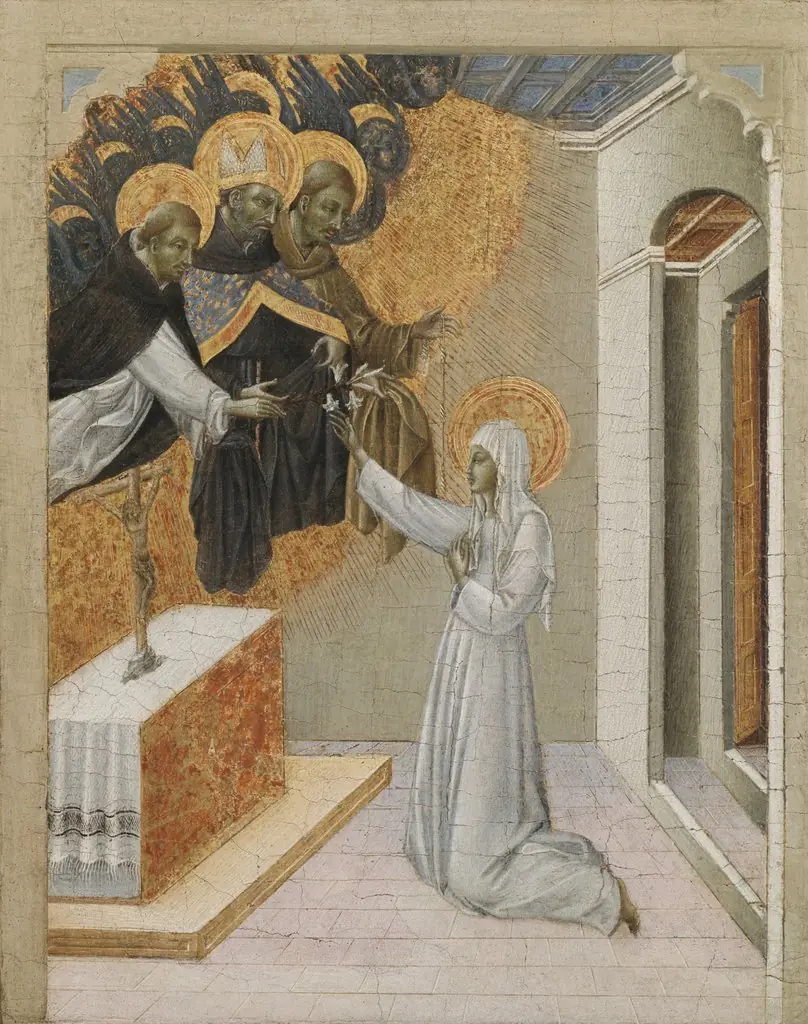 Predella Panel from an Altarpiece: St. Catherine of Siena Invested with the Dominican Habit
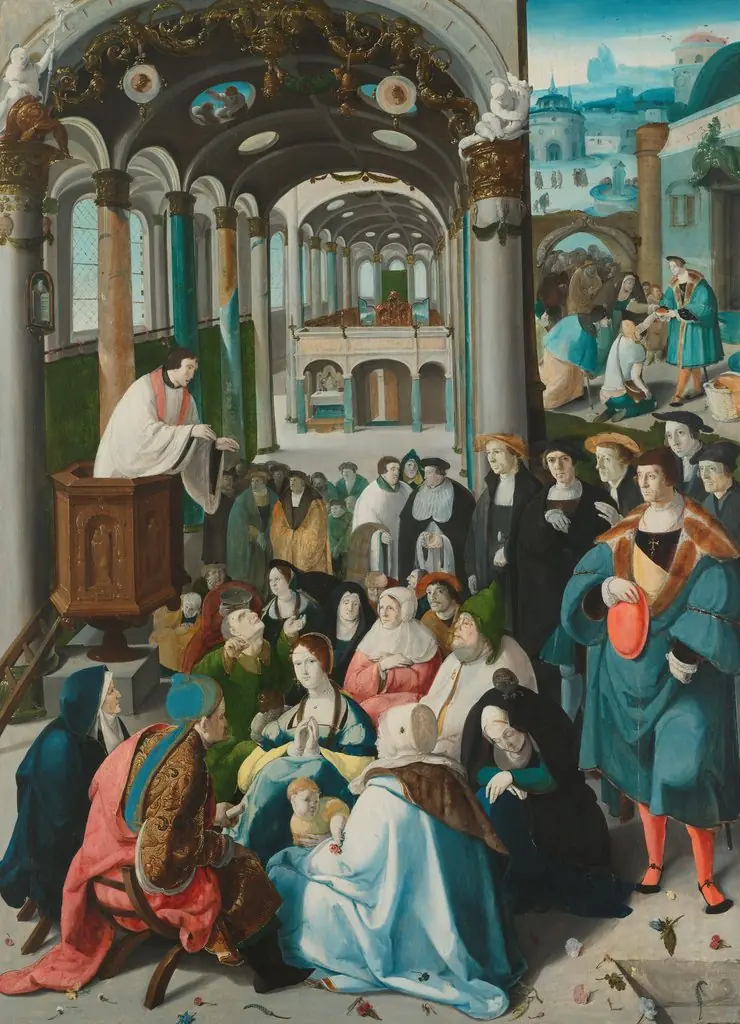 The Calling of Saint Anthony
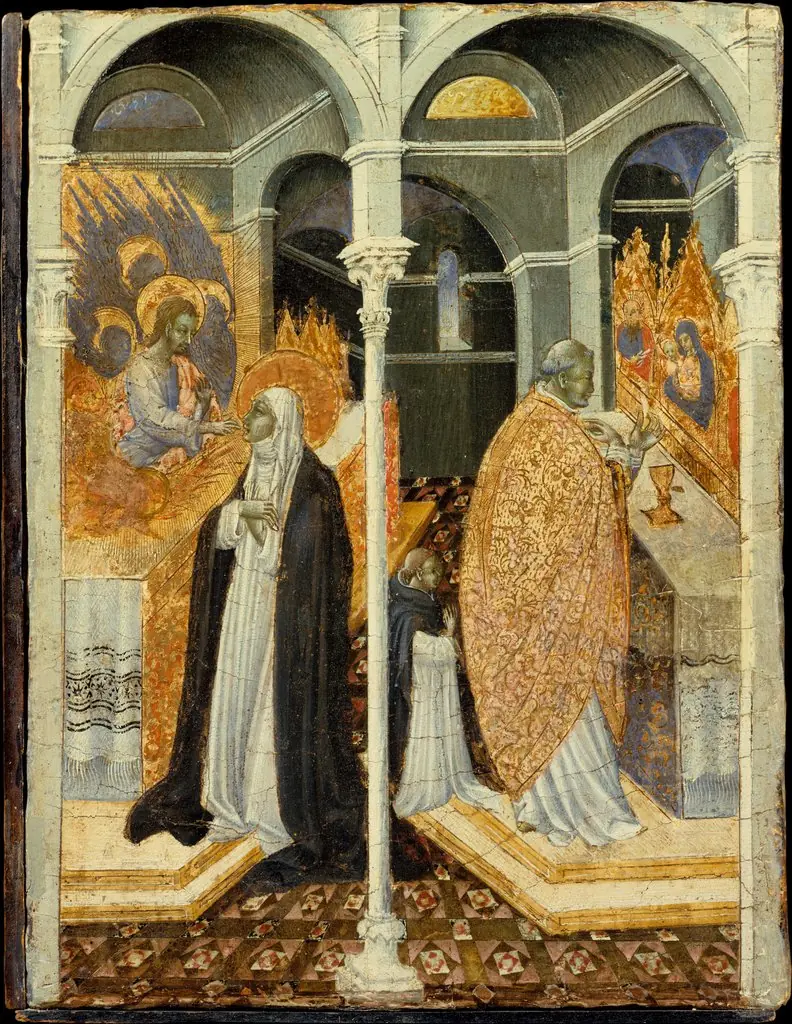 The Miraculous Communion of Saint Catherine of Siena
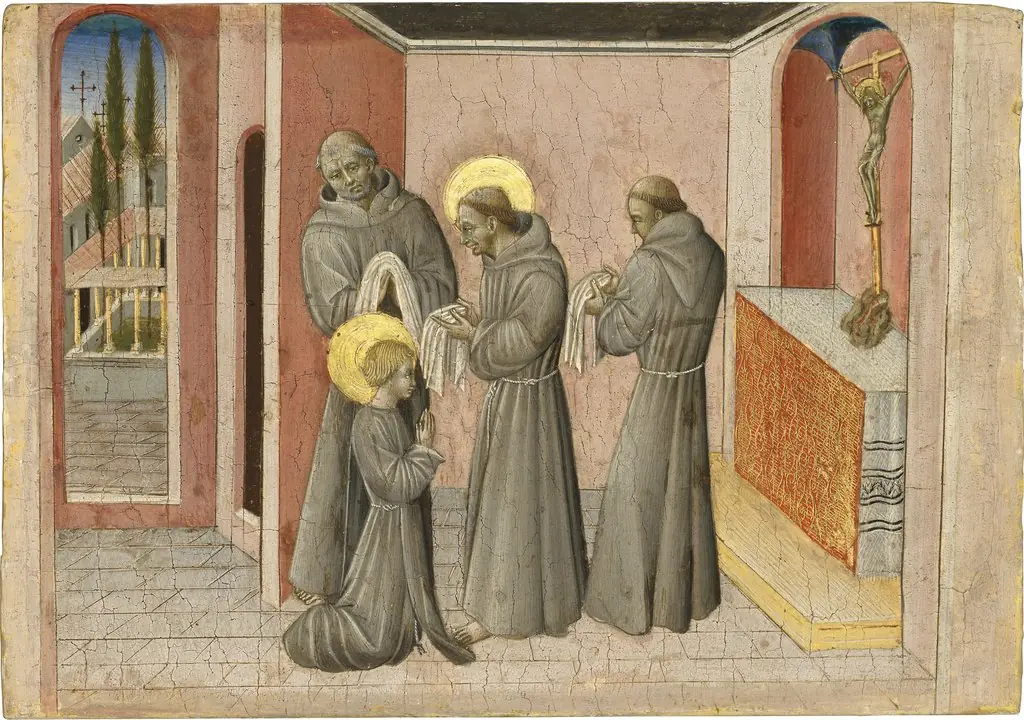 The Investiture of Saint Clare: the Saint receiving the clothes of her Order from Saint Francis
 Joachim and Anna Giving Food to the Poor and Offerings to the Temple