Artwork
Landscape with a Ruin
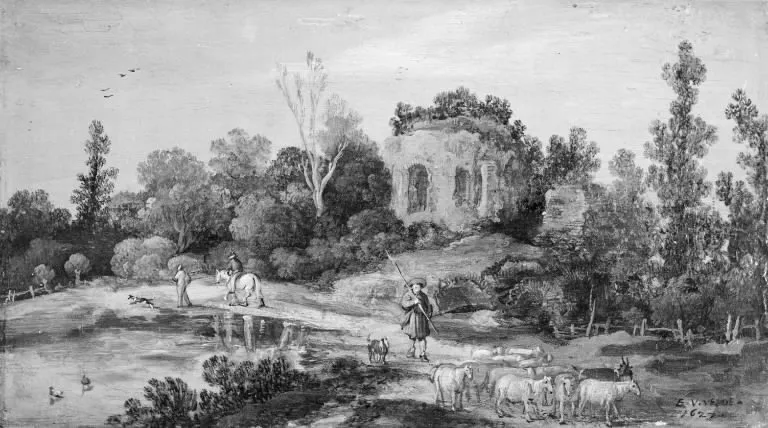
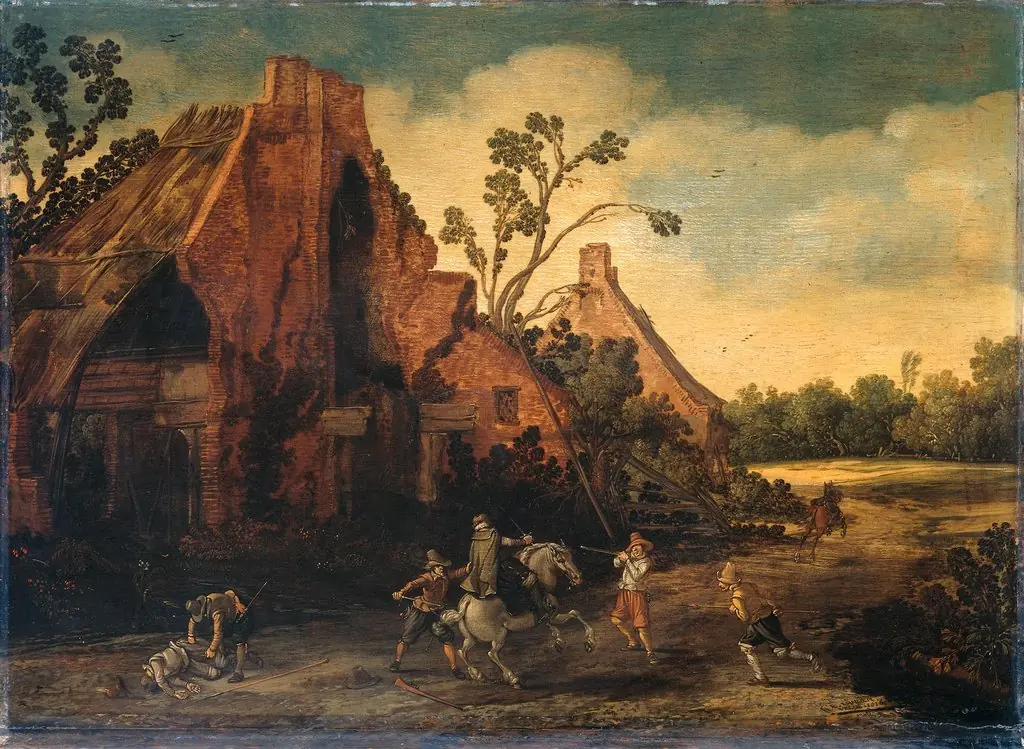
Landscape with a Ruin is an unspecified painting by the Dutch Golden Age artist Esaias van de Velde. It dates from 1627 and is held in the collection of the Statens Museum for Kunst.
About this work
Overview
Created in 1627 by Dutch painter Esaias van de Velde, *Landscape with a Ruin* exemplifies the detailed realism typical of the Dutch Golden Age. The canvas presents a tranquil countryside dominated by a central stone ruin, set against a backdrop of trees, foliage, and a reflective pool of water that mirrors the sky.
Subject & Meaning
The composition juxtaposes the remnants of a once‑solid structure with the vitality of surrounding nature, suggesting a dialogue between decay and renewal. The ruin, positioned prominently, serves as a focal point that anchors the pastoral scene while inviting contemplation of the passage of time.
Technique & Style
Van de Velde employs meticulous brushwork to render textures—from the weathered stonework to the delicate foliage—with precise shading. Light falls across the landscape, creating chiaroscuro effects that model forms and give the scene a convincing sense of depth and volume.
History & Provenance
Since its creation, the painting has entered the collection of Denmark’s Statens Museum for Kunst, where it remains on display. Its provenance traces back to the artist’s workshop in the early 17th century, reflecting the period’s market for finely rendered rural vistas.
Context
The work aligns with a broader Dutch interest in landscape painting that celebrated everyday scenery while incorporating classical ruins as symbols of antiquity. Van de Velde’s inclusion of both natural and architectural elements mirrors contemporary trends that blended realism with idealized references to the past.
Artist & collection
Artist
Esaias van de Velde (17 May 1587 (baptized) – 18 November 1630 (buried)) was a Dutch Golden Age painter, mainly of landscapes and a printmaker who experimented with etching.

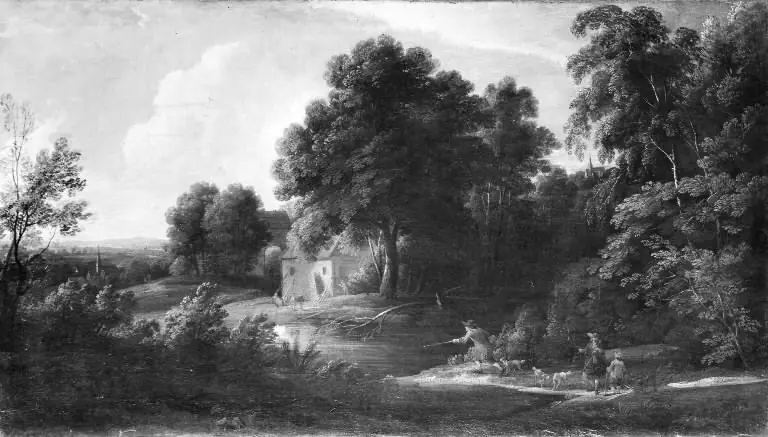 Wooded Landscape with Hunters
 Wooded Landscape with Hunters
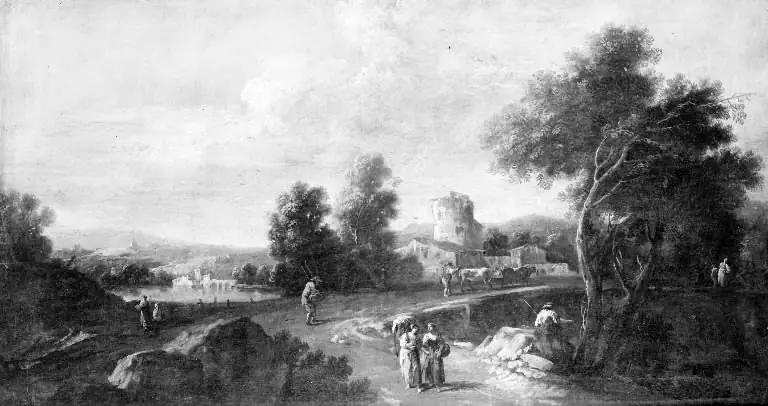 An Italian Landscape with Figures and Cattle
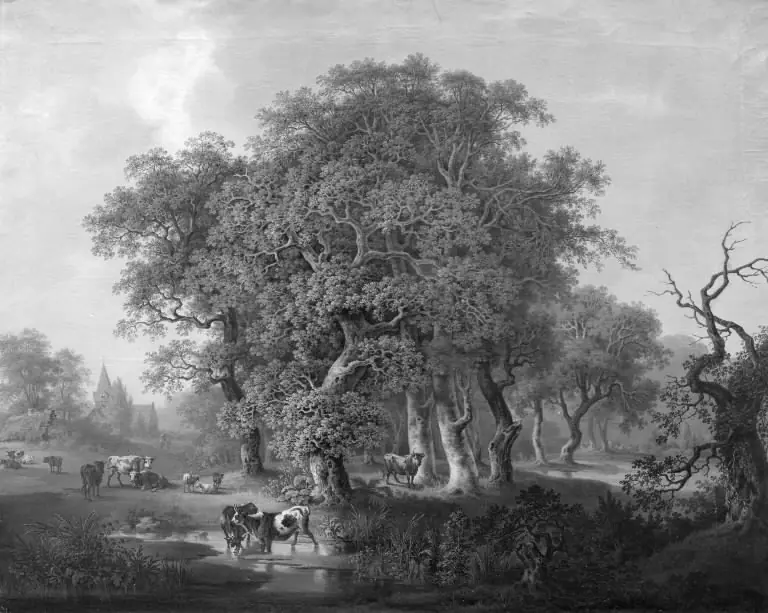 Kvæg i en skov
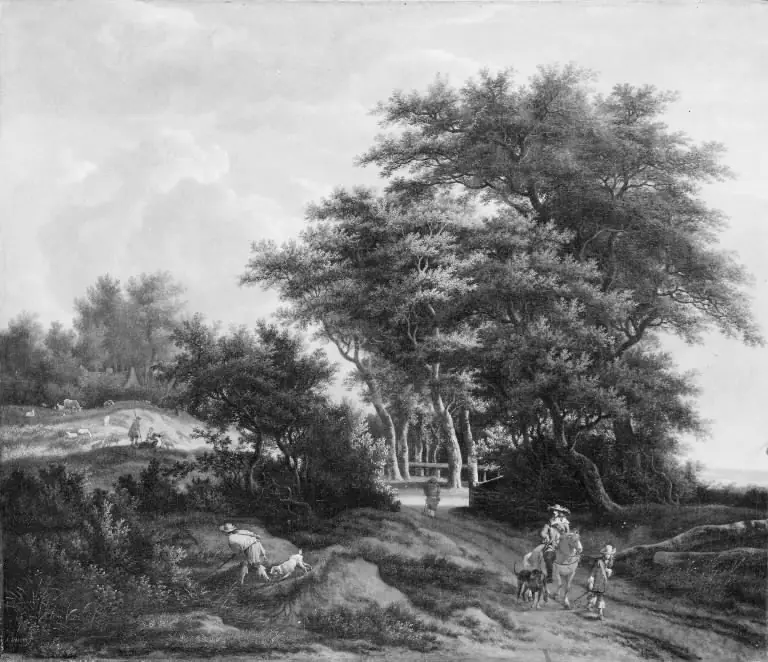 The Road to the Fenced-in Area
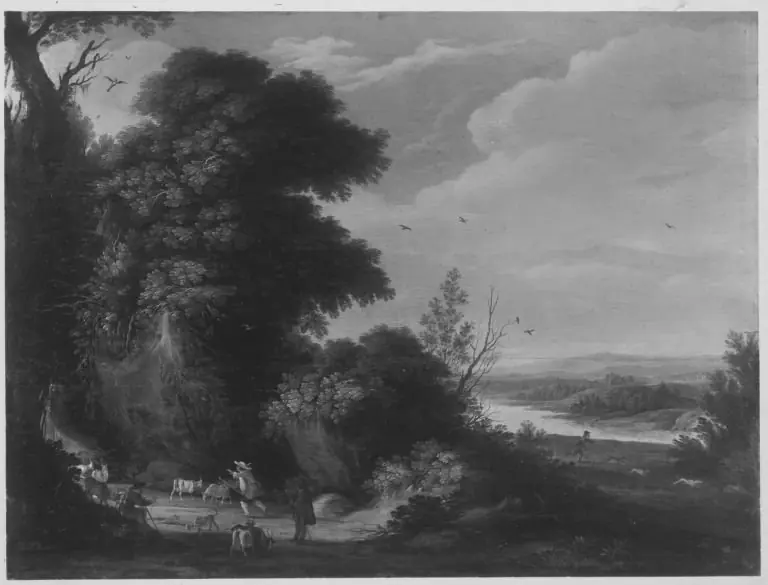 Ideal landscape
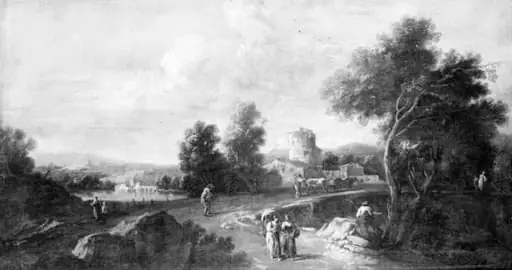 An Italian Landscape with Figures and Cattle
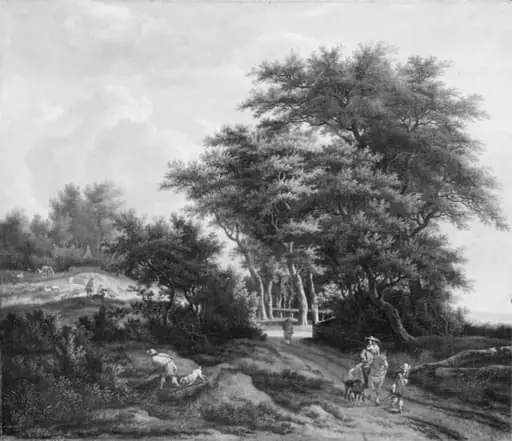 The Road to the Fenced-in Area
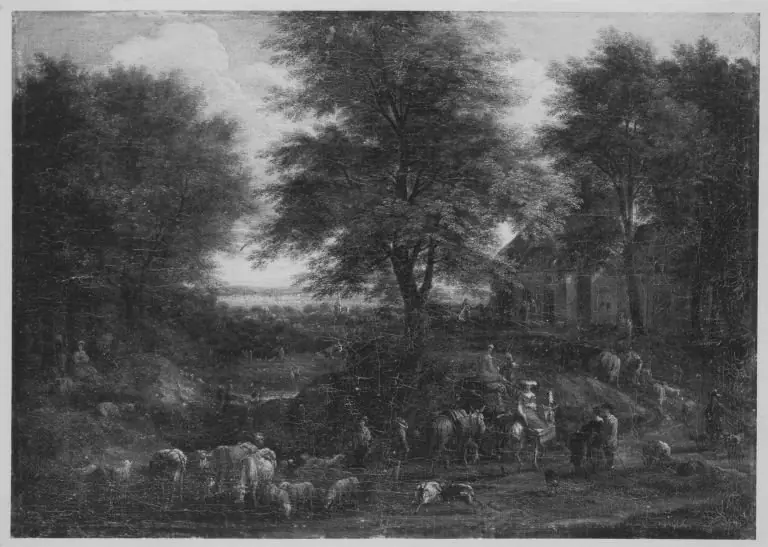 Landschaft mit Staffage
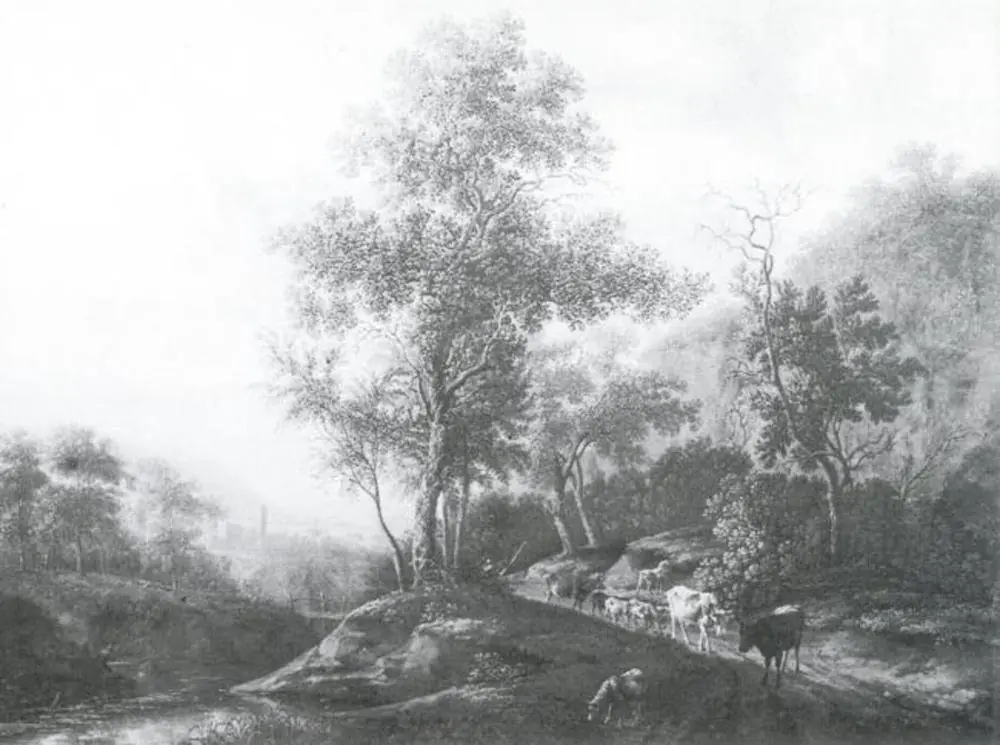 River Landscape with Cattle
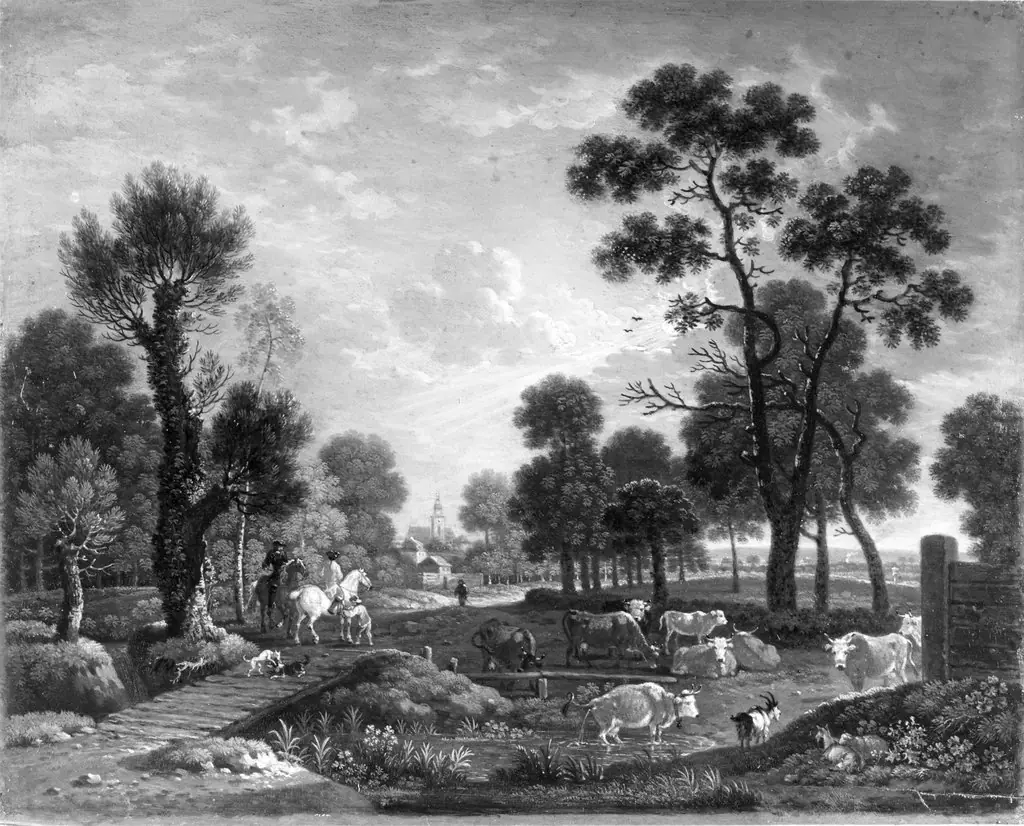 Landscape with Horsemen and Cattle
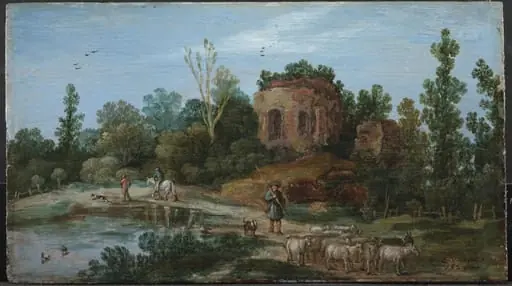 Landscape with a Ruin