Artwork
Evening on the Arun
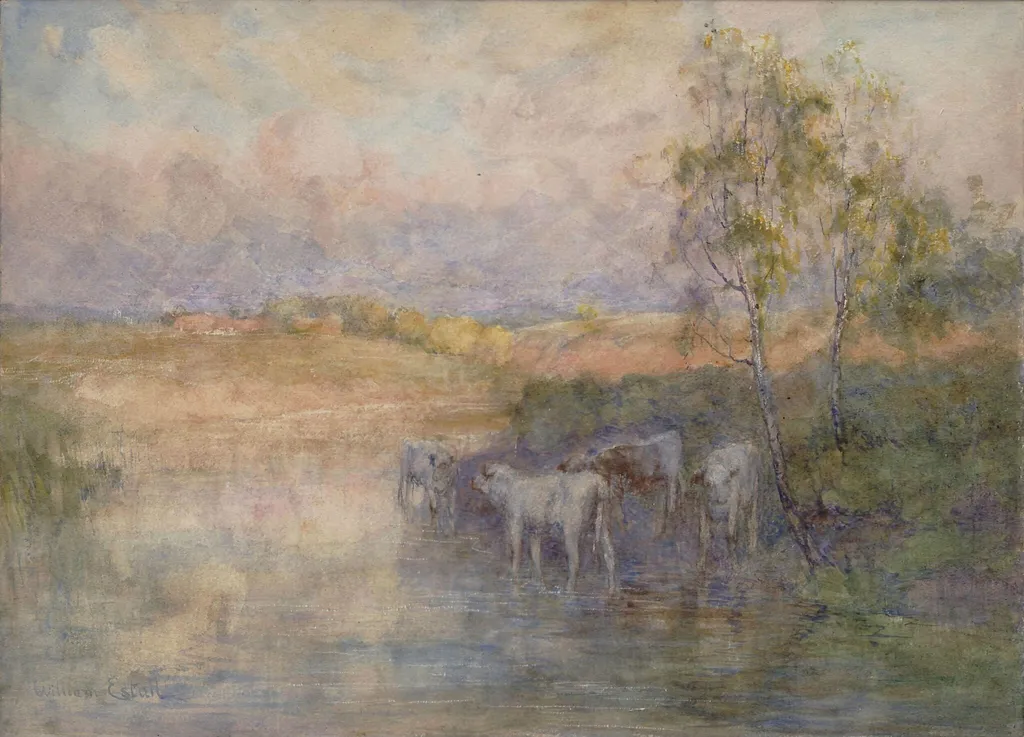
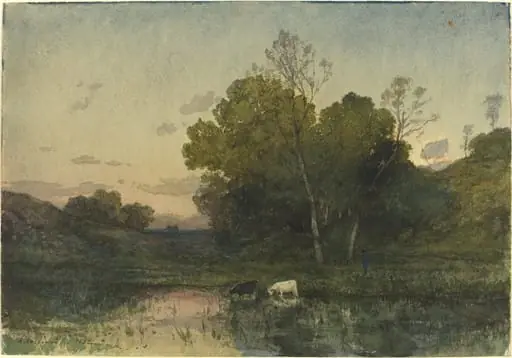
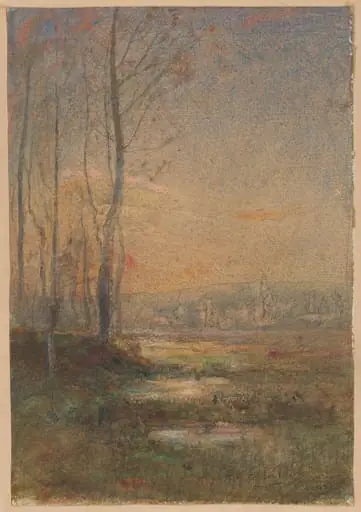
Evening on the Arun is a watercolor work on paper by the Impressionist artist Estall. It dates from 1886 and is held in the collection of the Victoria and Albert Museum.
About this work
Overview
Surrounding vegetation and the sky above are rendered with subtle gradations, reinforcing the stillness of the hour.
A watercolour titled Evening on the Arun captures a quiet moment along the River Arun at dusk. Signed by the artist, the work presents a pastoral scene rendered in delicate washes of muted tone. The composition centers on a group of cows standing in shallow water, their forms softened by the fading light. Surrounding vegetation and the sky above are rendered with subtle gradations, reinforcing the stillness of the hour.
Subject & Meaning
The painting focuses on livestock at rest, engaged in the quiet ritual of drinking or cooling in the river. No human figures are present, emphasizing nature’s rhythms over human activity. The scene suggests a moment of pause between day and night, evoking a sense of solitude and harmony with the land. The absence of disturbance reinforces an atmosphere of undisturbed tranquility.
Technique & Style
The artist employs transparent watercolour washes to build soft, layered tones, avoiding sharp outlines. Hues of pale ochre, grey-green, and lavender blend gently across the sky and water, mimicking twilight’s diffused light. Brushwork is restrained, with minimal detail in the foliage and animals, allowing the overall mood to emerge through tone and atmosphere rather than precision.
History & Provenance
The work is signed but bears no documented exhibition history or collector lineage prior to its current record. It is attributed to a 19th-century British watercolourist active in Sussex, where the River Arun flows. Its survival in relatively intact condition suggests it was privately held, likely by a local patron or the artist’s circle, rather than publicly displayed.
Context
Created during a period when British artists increasingly turned to rural landscapes for quiet, observational subjects, the painting reflects a broader interest in everyday rural life. Unlike grand Romantic vistas, this scene embraces modesty and intimacy, aligning with the tradition of topographical watercolours favored by amateur and professional artists alike in southern England.
Legacy
Though not widely reproduced or studied, the work remains a representative example of regional watercolour practice in the 1800s. Its preservation offers insight into how artists of the time engaged with local environments through understated, contemplative observation. It contributes to a quieter, less documented strand of British landscape art focused on daily rural serenity.
Artist & collection

 Oi păscând
 The River Sorteaa near Mejlgaard Manor, Jutland
 The River Sorteaa near Mejlgaard Manor, Jutland
 Evening Light on a Wooded Lakeside with Cattle Drinking
 Fen in the Kempen
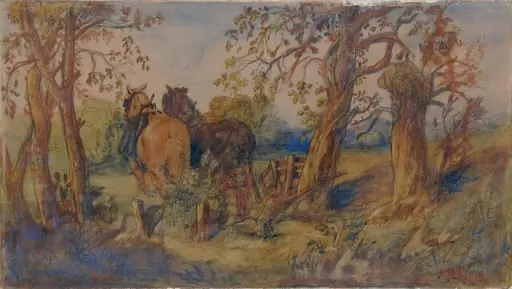 Horses in a Landscape
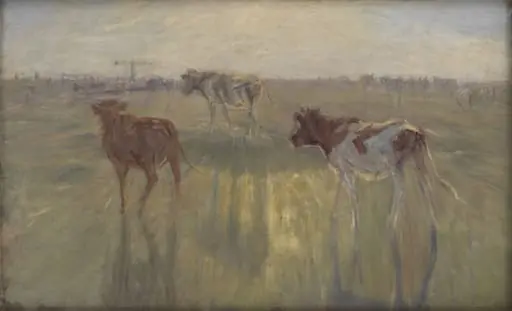 Cattle Seen against the Sun on the Island of Saltholm
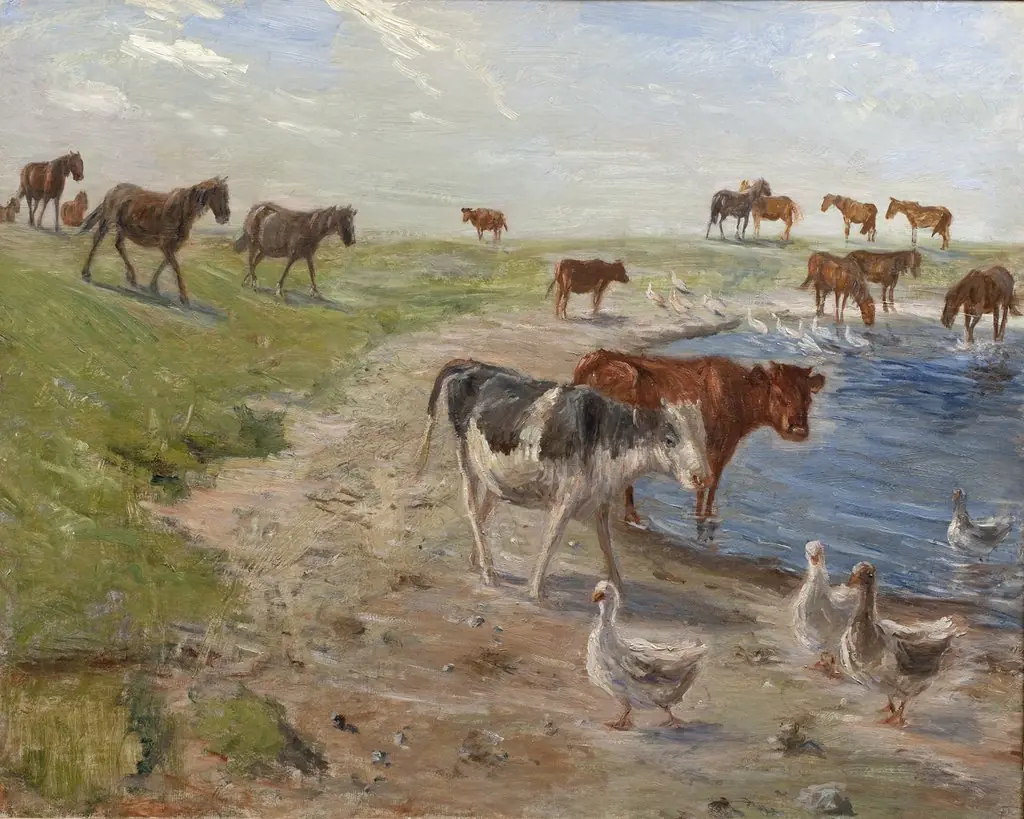 Calves and Geese at a Wateringhole on the Island of Saltholm
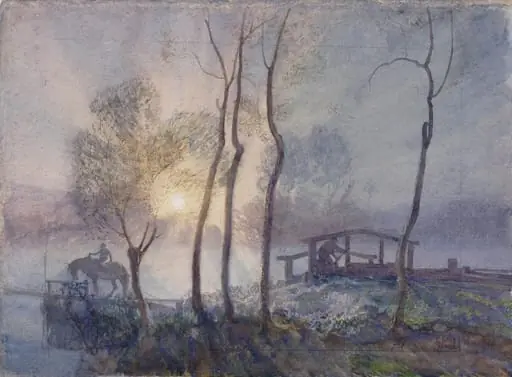 The Lock at Sunrise
 Marsh Landscape at Twilight
 The Evening Hour