Artwork
Armand Berton
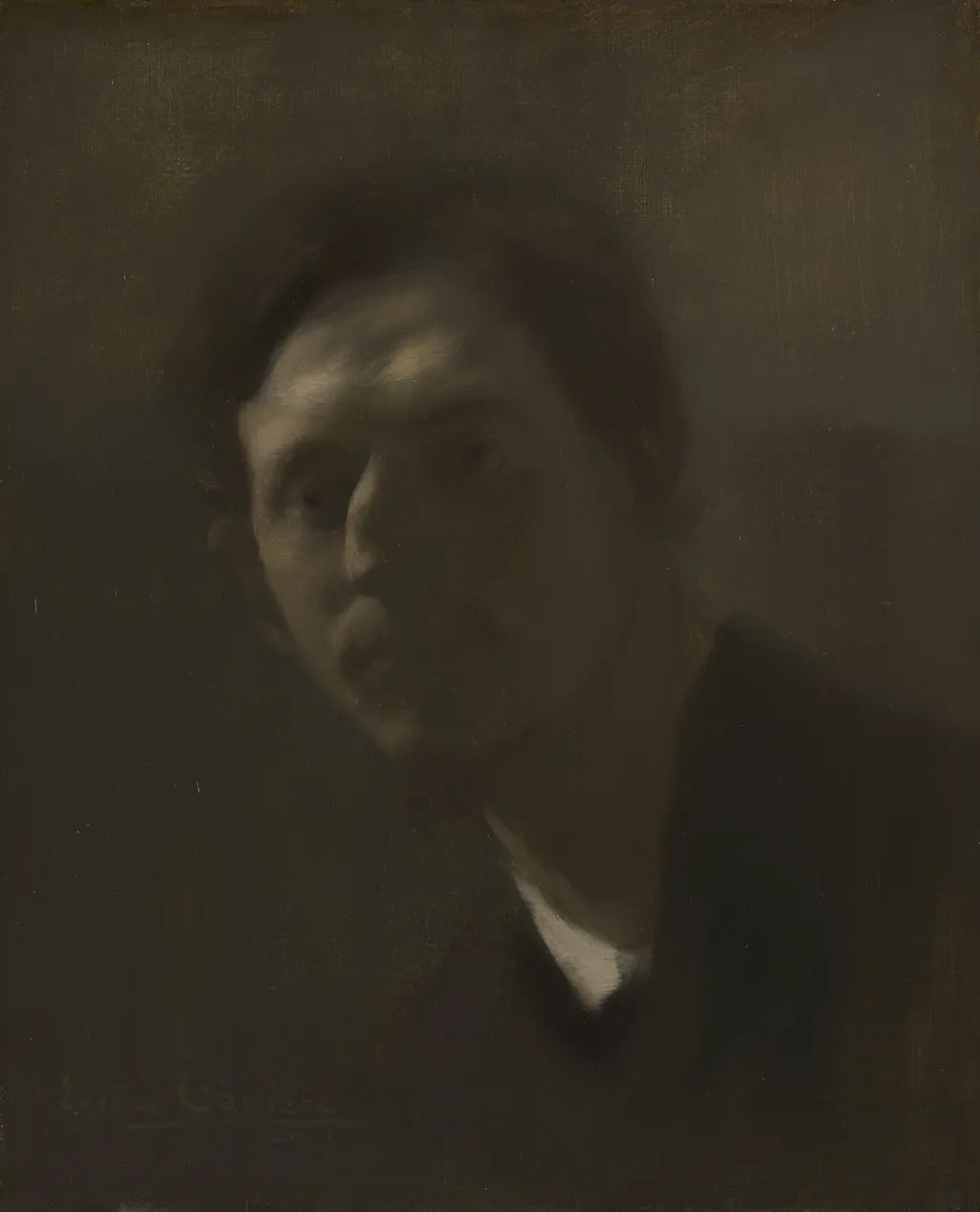
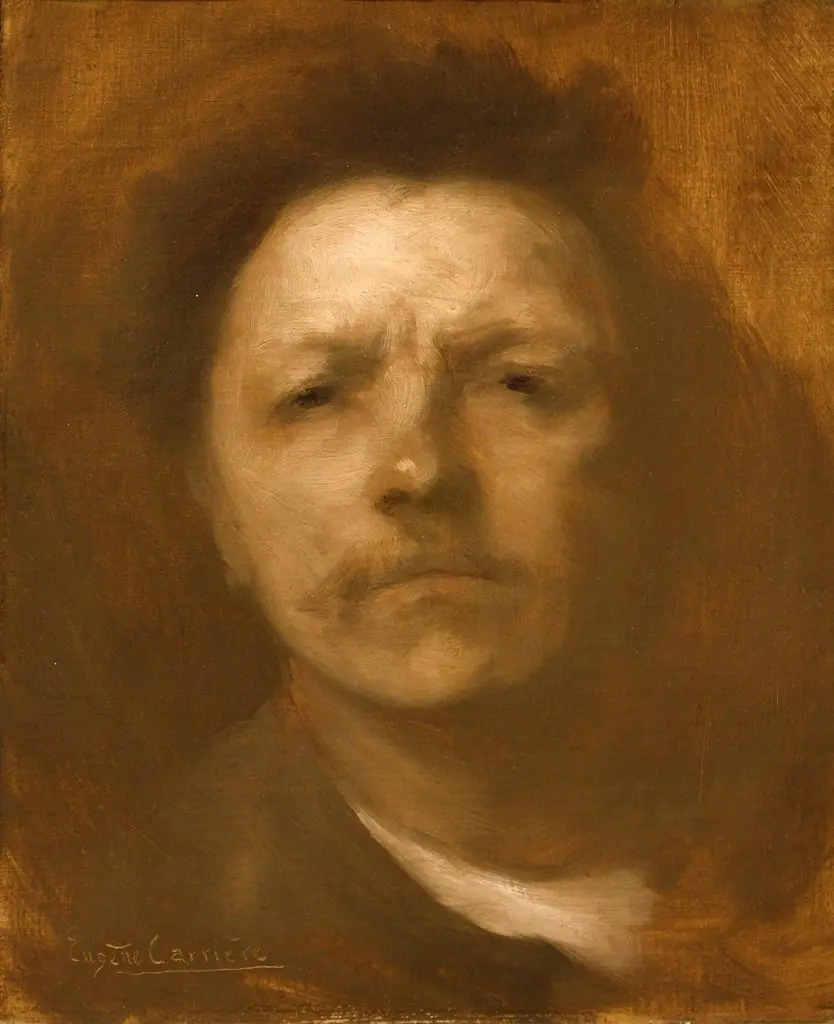
Armand Berton is an unspecified painting by the Post-Impressionist artist Eugène Carrière. It dates from 1896 and is held in the collection of the Cleveland Museum of Art.
About this work
Overview
The composition focuses entirely on the head and shoulders, isolating the subject to emphasize his serious expression and the quiet dignity of his persona.
Eugène Carrière's 1896 portrait, Armand Berton, depicts the French actor and playwright in a half-length format characterized by the artist's signature monochromatic palette and atmospheric softness. The sitter, dressed in a dark jacket with a stark white collar, is rendered with a gentle, almost ethereal quality, his features emerging from a dense, shadowy background. Carrière employs a technique of blurred contours and subtle tonal gradations, often described as a form of chiaroscuro, to dissolve the boundary between the figure and the surrounding void. This approach prioritizes psychological intimacy over precise anatomical detail, a hallmark of Carrière's mature style developed during the 1890s. The work reflects the Symbolist movement's interest in inner states and memory, transforming a standard portrait commission into a meditation on the sitter's presence. Painted during a period when Carrière was highly regarded for his sensitive depictions of family and friends, this portrait of Berton exemplifies the artist's ability to convey character through light and shadow rather than line. The composition focuses entirely on the head and shoulders, isolating the subject to emphasize his serious expression and the quiet dignity of his persona.
Subject & Meaning
The sitter, identified as Armand Berton, is depicted with dark hair, a dark jacket, and a crisp white collar. His expression is solemn, suggesting a dignified or contemplative demeanor. The lack of ornamental surroundings focuses attention on his personal presence, inviting viewers to consider the inner character rather than external status.
Technique & Style
Carrière employs a subtle chiaroscuro, using the contrast between the deep background and the illuminated face to model form and create depth. The brushwork softens the facial features, giving the skin a velvety quality, while the overall tonal harmony remains muted, characteristic of the artist’s preference for atmospheric, almost monochromatic effects.
History & Provenance
Created in 1896, the portrait entered the Cleveland Museum of Art’s holdings through acquisition (date of purchase not specified). Its presence in an American institution underscores the broader European interest in Carrière’s work during the early twentieth century, when his intimate portraiture found a receptive audience beyond France.
Own this work as a print
Artist & collection

Artist
Eugène Anatole Carrière was a French Symbolist artist of the fin-de-siècle period.