Artwork
Study of a Woman Seen from the Back
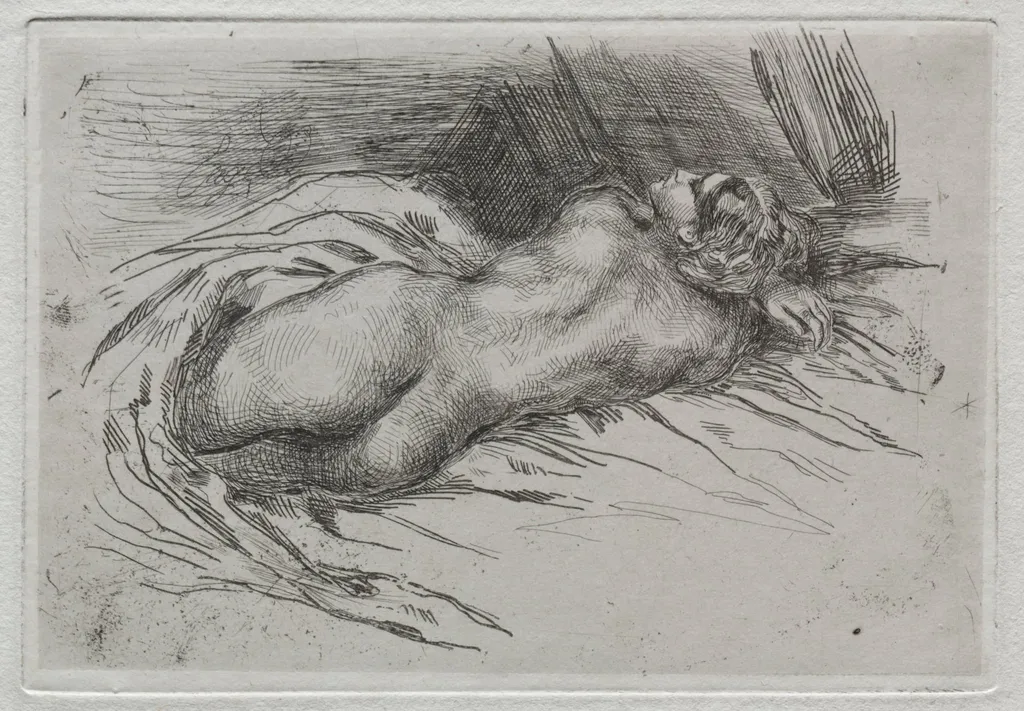
Study of a Woman Seen from the Back is a print by the Romanticist artist Eugène Delacroix. It dates from 1833 and is held in the collection of the Cleveland Museum of Art.
About this work
Overview
Created in 1833, *Study of a Woman Seen from the Back* is a paper drawing by French Romantic painter Eugène Delacroix. The work belongs to the collection of the Cleveland Museum of Art and exemplifies the artist’s interest in capturing fleeting gesture rather than precise anatomical rendering.
Subject & Meaning
The composition presents the rear view of a female figure, her hair and torso rendered in a cascade of overlapping lines. By showing only the back, Delacroix invites the viewer to imagine the unseen face and narrative, emphasizing the mystery and emotional resonance typical of Romantic subject matter.
Technique & Style
Executed with dark ink on largely untouched paper, the drawing consists of rapid, tangled strokes that trace each curl and contour. The lines are deliberately uneven, conveying a sense of immediacy and kinetic energy. This approach reflects Delacroix’s preference for movement and texture over the smooth finish favored by earlier Neoclassical models.
History & Provenance
Delacroix, who drew inspiration from the dynamism of Rubens and the coloristic richness of the Venetian Renaissance, produced this study during a period when he was consolidating his Romantic aesthetic. The piece entered the Cleveland Museum of Art’s holdings through acquisition, where it remains part of the museum’s print and drawing collection.
Artist & collection
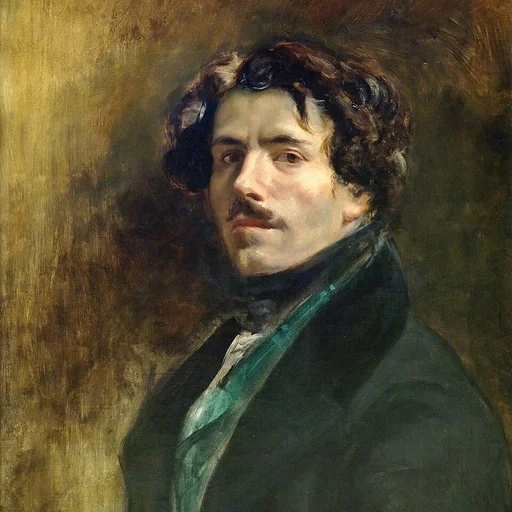
Artist
Ferdinand Victor Eugène Delacroix ( DEL-ə-krwah, -KRWAH; French: ; 26 April 1798 – 13 August 1863) was a French Romantic artist who was regarded as the leader of the French Romantic school.



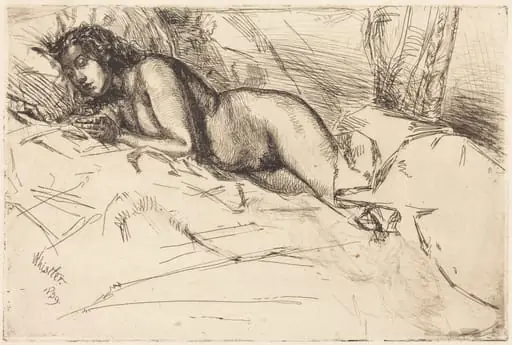 Venus
Venus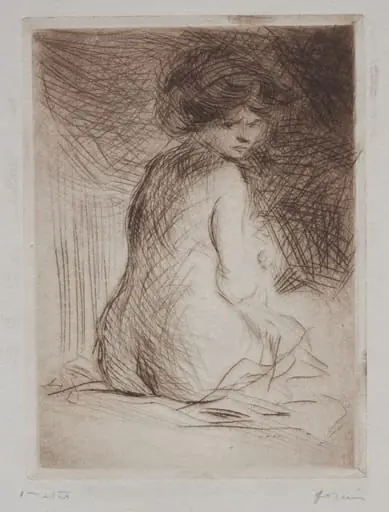 Seated Nude Woman from the Back
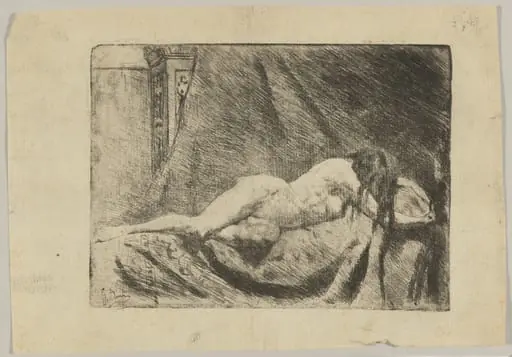 Reclining Female Nude (recto); Architectural Design (verso)
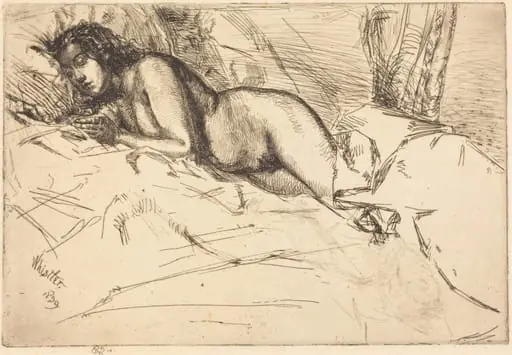 Venus
Venus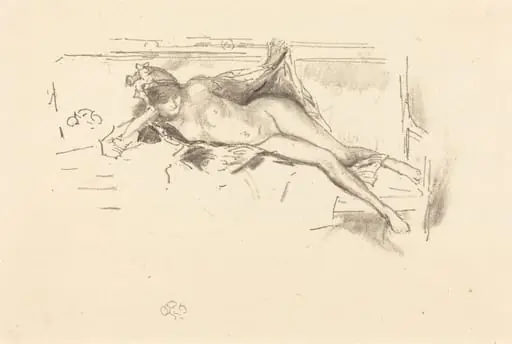 Nude Model, Reclining
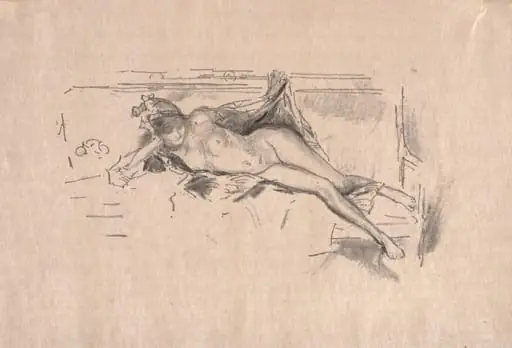 Nude Model Reclining
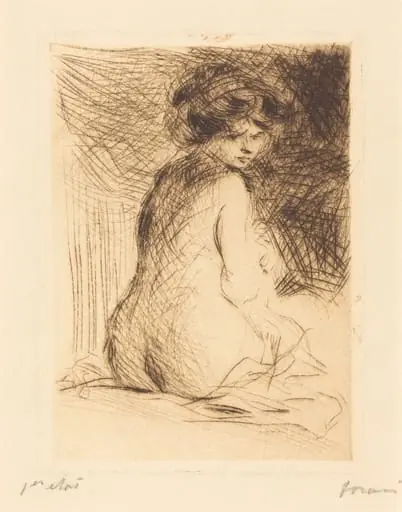 Femme nue vue de dos (Nude Woman Seen from the Back)
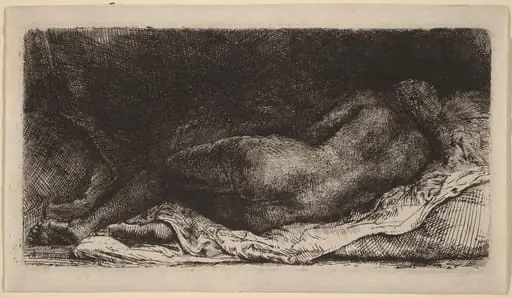 Reclining Female Nude
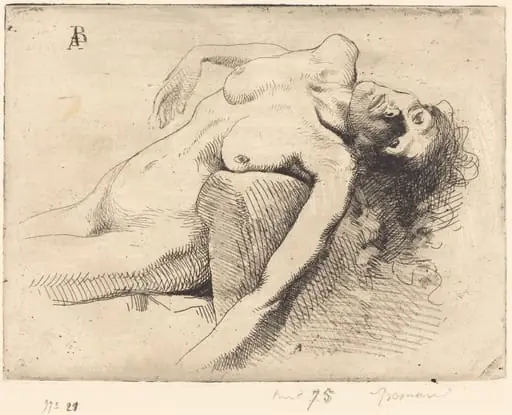 Dying Woman (La Mourante)
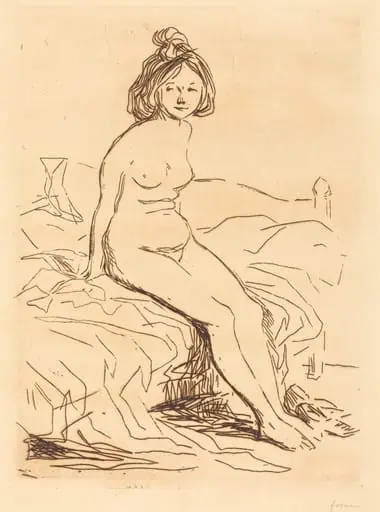 Femme nue, assise sur son lit, de face (Nude Woman, Seated on Her Bed, Front View)
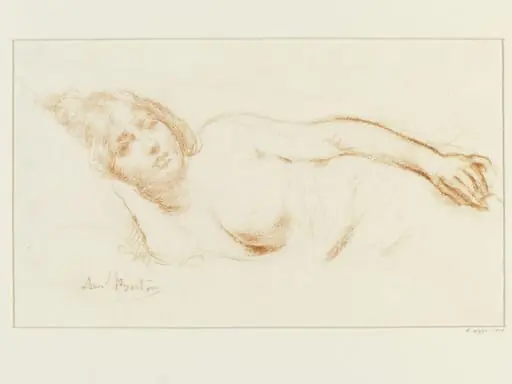 Untitled
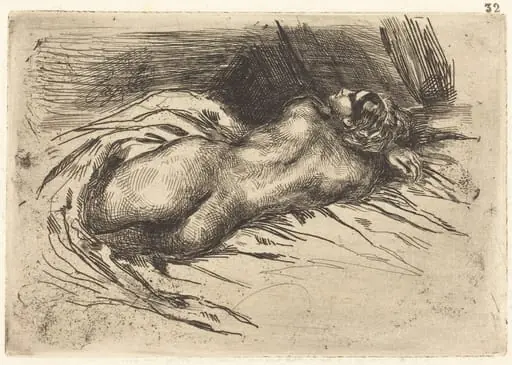 Study of a Woman, Viewed from the Back (Étude de femme vue de dos)