Artwork
Six Marines: Environs de Dieppe
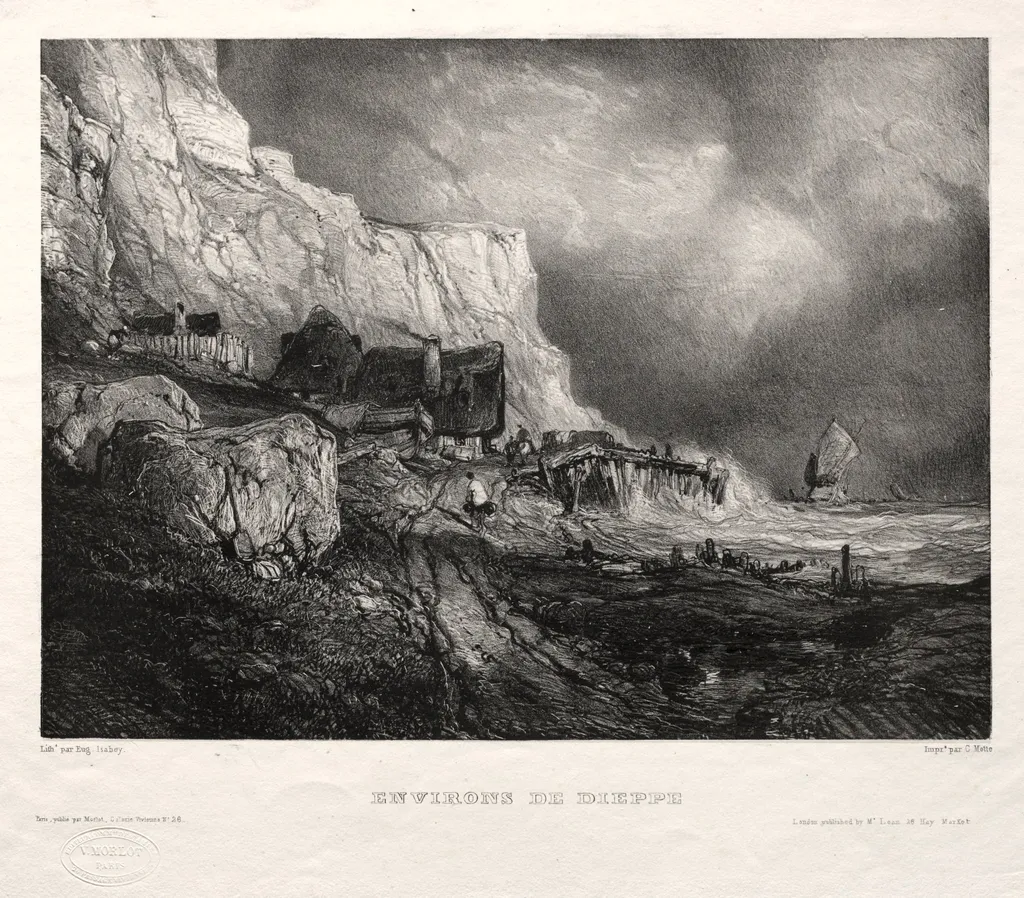
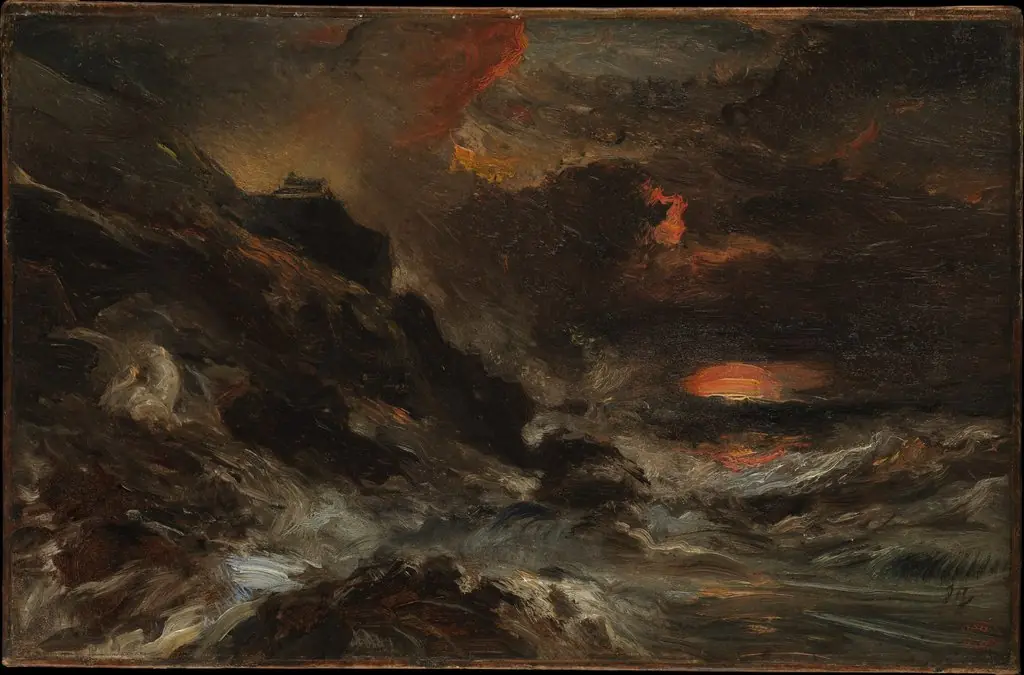
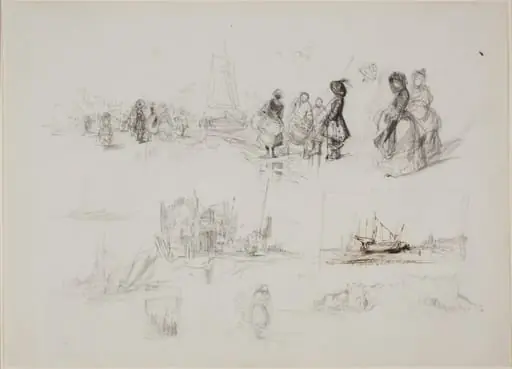
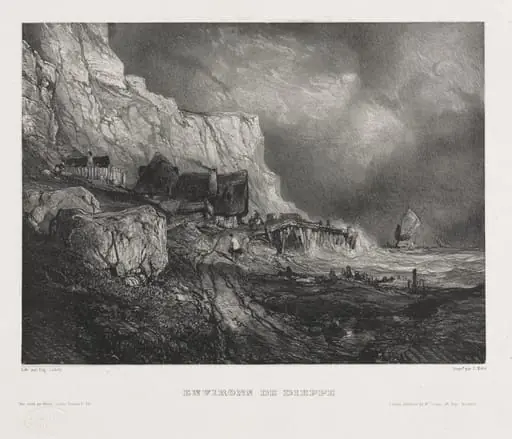
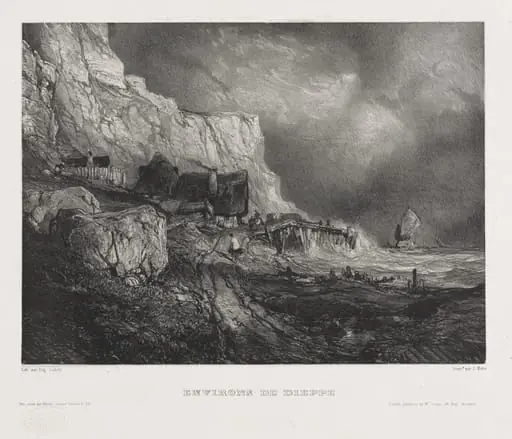
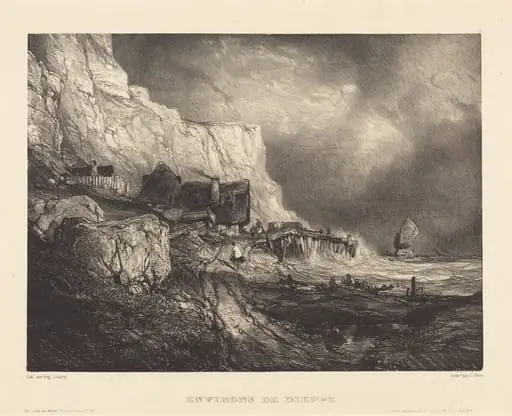
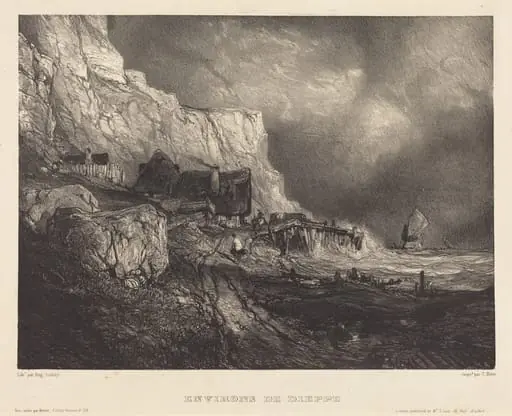
Six Marines: Environs de Dieppe is a print by the Romanticist artist Eugène Isabey. It dates from 1833 and is held in the collection of the Cleveland Museum of Art.
About this work
Overview
Isabey, known for his maritime themes, rendered the landscape with a loose, atmospheric touch that aligns with Romantic sensibilities.
Created in 1833 by French artist Eugène Isabey, this lithograph captures a coastal scene near Dieppe in northern France. Isabey, known for his maritime themes, rendered the landscape with a loose, atmospheric touch that aligns with Romantic sensibilities. The work is part of The Cleveland Museum of Art’s collection and reflects his interest in everyday coastal life, rendered not as idealized spectacle but as a quiet, observed moment.
Subject & Meaning
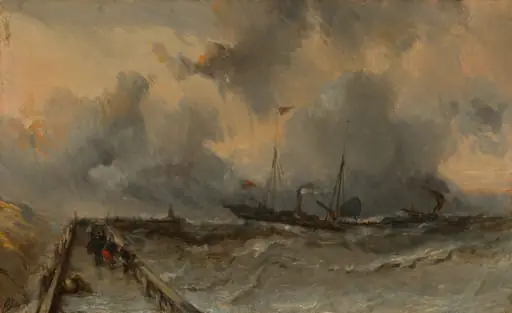
The scene depicts six soldiers—likely French marines—along a rugged shoreline, mingling with local figures near the water’s edge. Their presence suggests military activity in a civilian coastal setting, but no dramatic event is portrayed. The title, 'Environs de Dieppe,' anchors the image in a specific place, emphasizing observation over narrative. The composition invites contemplation of human presence within a wild, untamed landscape.
Technique & Style
Isabey employed lithography to achieve a sketchlike quality, with fluid lines and varied tonal washes that mimic the spontaneity of a watercolor. The cliffs, buildings, and sea are rendered with loose, unpolished strokes, avoiding academic precision. This technique enhances the sense of immediacy and naturalism, characteristic of Romanticism’s preference for emotional resonance over formal control. The rough texture of the print echoes the unevenness of the coastline itself.
History & Provenance
The work was produced during a period when Isabey was actively documenting French coastal regions, often commissioned for illustrated publications. It entered The Cleveland Museum of Art’s collection in the 20th century, likely through a broader acquisition of 19th-century European prints. Its preservation reflects institutional interest in Romantic-era graphic arts and their role in shaping perceptions of place and identity.
Context
In the 1830s, France saw growing public interest in regional landscapes and military life following the Napoleonic Wars. Artists like Isabey responded by turning from grand historical scenes to intimate, localized views. Dieppe, a port town with strategic and commercial significance, became a frequent subject. This print contributes to a broader trend of documenting everyday coastal existence rather than heroic narratives.
Legacy
Isabey’s approach influenced later generations of French printmakers who favored atmospheric realism over idealized composition. While not widely exhibited today, this work remains a quiet example of how Romanticism extended beyond dramatic storms and ruins into the subtle rhythms of ordinary coastal life. Its preservation in a major museum underscores its value as a document of both artistic practice and regional identity.
Artist & collection
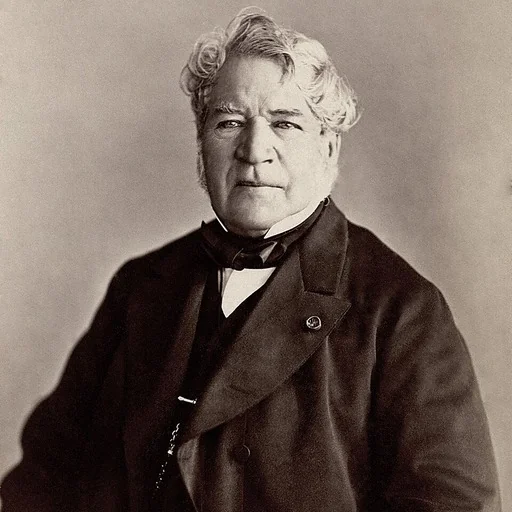
Artist
Eugène Louis Gabriel Isabey (French pronunciation: ; 22 July 1803 – 25 April 1886) was a French painter, lithographer and watercolorist in the Romantic style.