Artwork
Souvenirs: Souvenir of Brittany, Plate 5
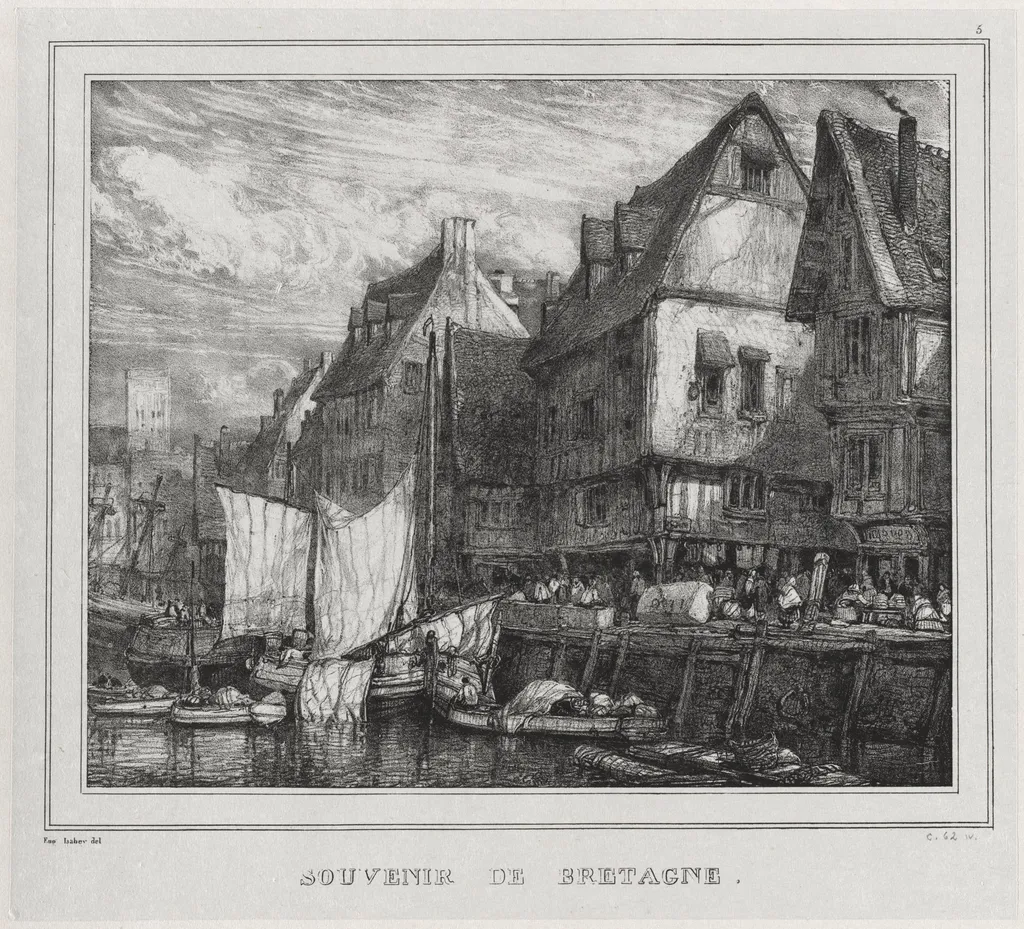
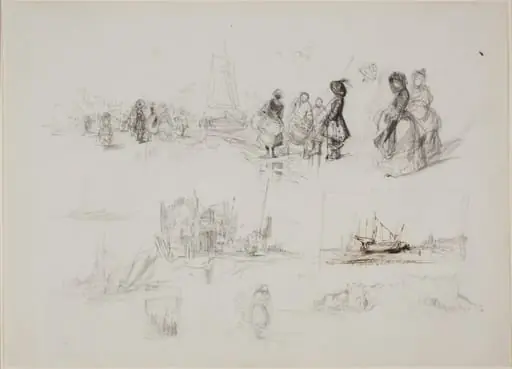
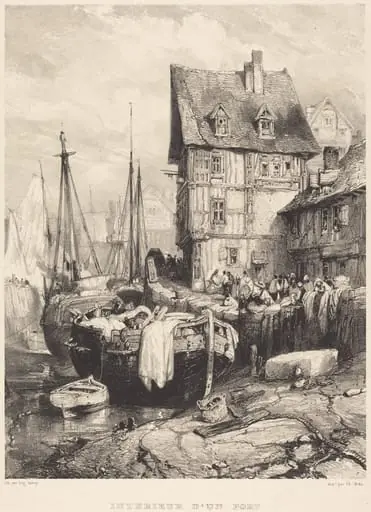
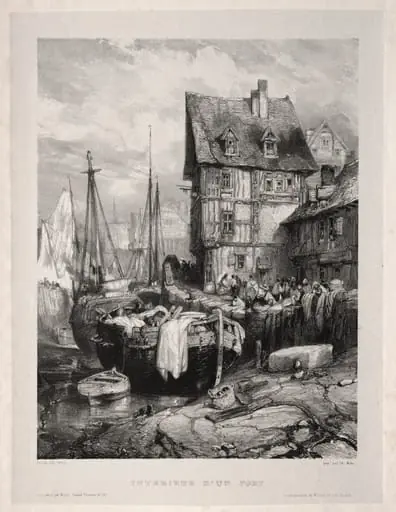
Souvenirs: Souvenir of Brittany, Plate 5 is a print by the Romanticist artist Eugène Isabey. It dates from 1832 and is held in the collection of the Cleveland Museum of Art.
About this work
Overview
Executed in lithographic technique, the work belongs to a broader body of prints that document regional character through intimate observation.
Created in 1832 by French artist Eugène Isabey, this lithograph is the fifth plate in a series titled *Souvenirs*. It captures a modest coastal scene in Brittany, reflecting Isabey’s interest in everyday life over monumental subjects. Executed in lithographic technique, the work belongs to a broader body of prints that document regional character through intimate observation. The Cleveland Museum of Art holds this impression as part of its collection of 19th-century graphic art.
Subject & Meaning
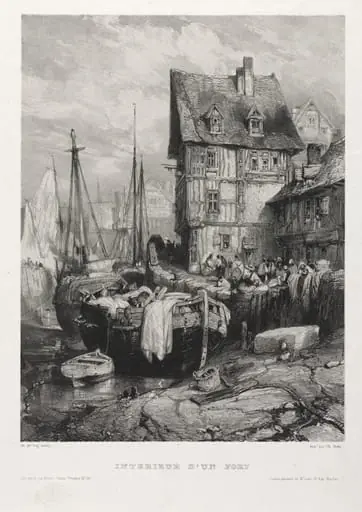
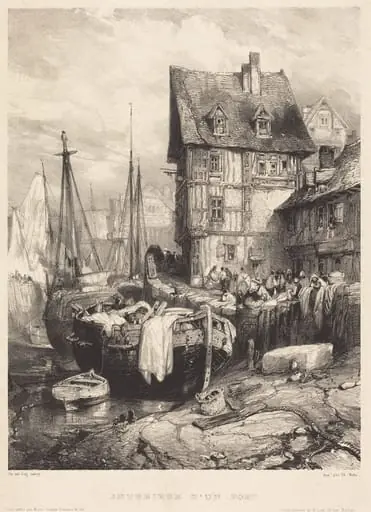
The scene depicts a working waterfront with wooden dwellings, moored boats, and a bustling dockside promenade where locals gather at tables. Laundry dries between vessels, and the architecture suggests modest, functional living. The title, *Souvenir of Brittany*, frames the image not as a tourist postcard but as a personal recollection—emphasizing authenticity over idealization. Isabey’s focus on ordinary activity invites contemplation of regional identity through quiet, unembellished detail.
Technique & Style
Isabey employed lithography to render the scene with fluid, sketch-like lines and subtle tonal gradations. The composition avoids dramatic lighting or heroic scale, instead using loose, observational brushwork to convey texture and movement. The rough edges of buildings, uneven shadows, and casual arrangement of figures reflect a Romantic preference for immediacy and emotional truth over polished finish. The medium allowed for multiple impressions, making such scenes accessible beyond elite audiences.
History & Provenance
The print was produced during Isabey’s active period as a lithographer, following his travels in northern France. It was likely issued as part of a small, privately circulated series intended for collectors interested in regional French life. The work entered the Cleveland Museum of Art’s collection in the 20th century, where it remains as an example of mid-19th-century French graphic art documenting provincial culture.
Context
In the 1830s, French artists increasingly turned to local landscapes and daily routines as subjects, moving away from classical or historical themes. Isabey’s series aligned with this shift, influenced by Romanticism’s emphasis on emotion, memory, and the authenticity of place. Brittany, with its distinct customs and coastal isolation, offered rich material for such explorations, resonating with broader national interests in regional identity during a period of political change.
Legacy
Isabey’s *Souvenirs* series contributed to the growing appreciation of lithography as a vehicle for documentary realism in art. While not widely celebrated in his time, these prints influenced later generations of artists who valued the poetic potential of ordinary scenes. Today, they serve as historical records of provincial French life, valued for their unvarnished depiction of social and architectural detail.
Artist & collection
Artist
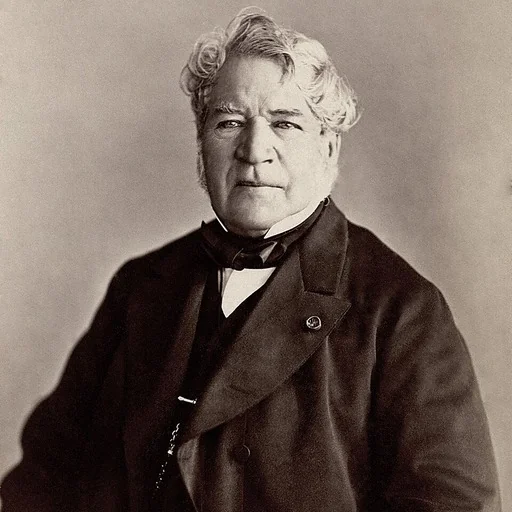
Eugène Louis Gabriel Isabey (French pronunciation: ; 22 July 1803 – 25 April 1886) was a French painter, lithographer and watercolorist in the Romantic style.