Artwork
Harbor Entrance
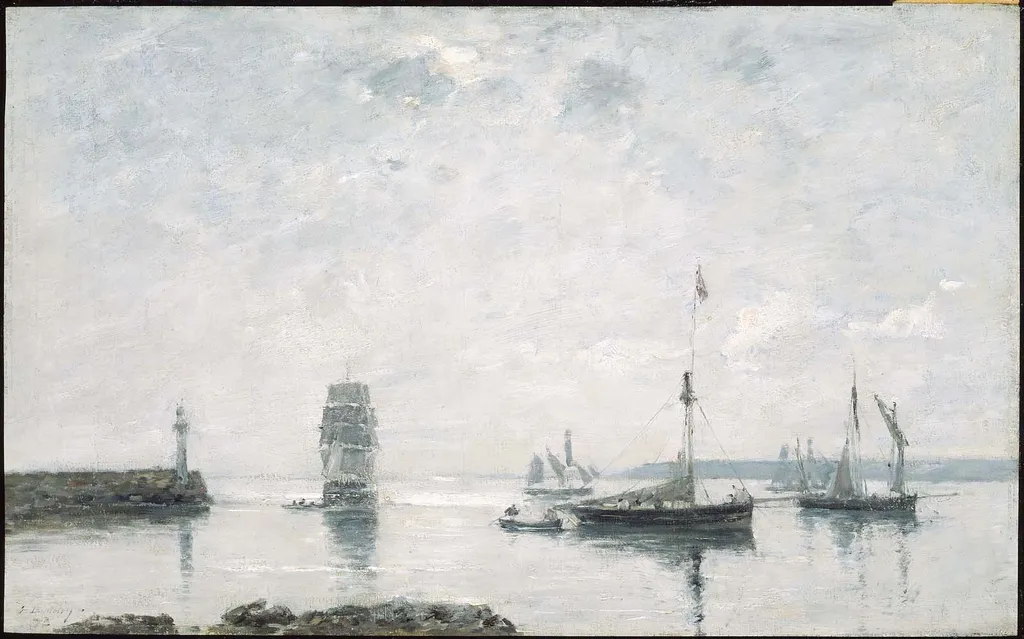
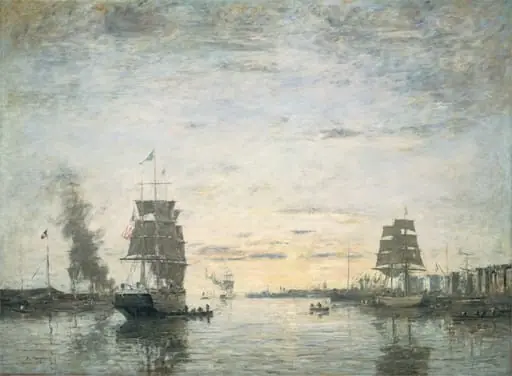
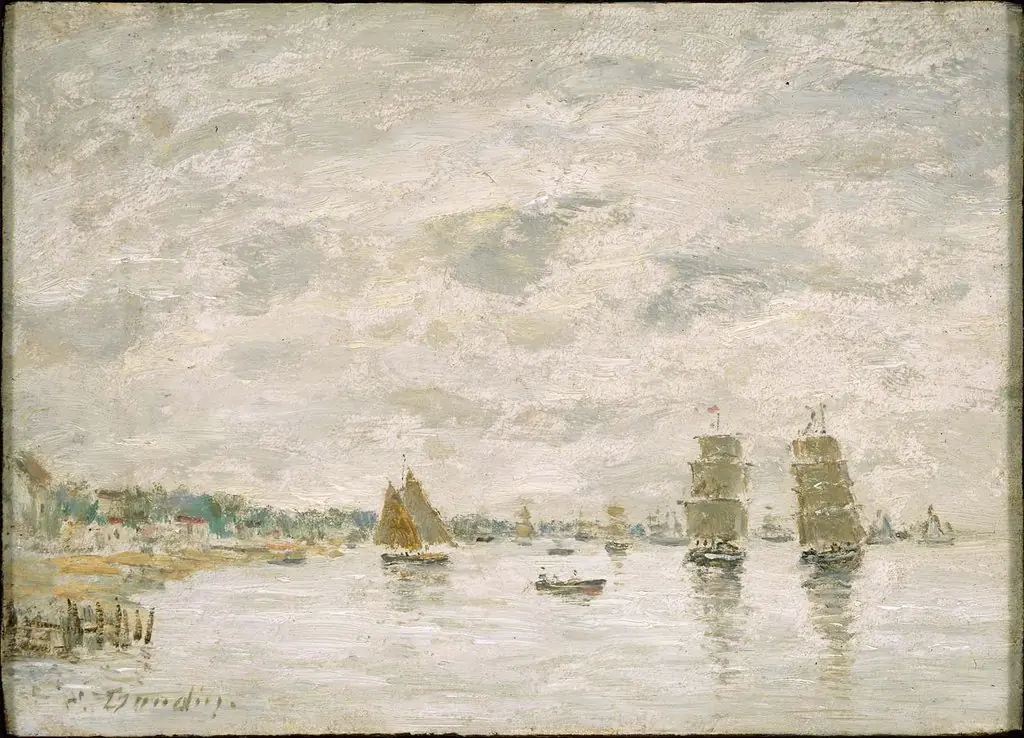
Harbor Entrance is an oil painting by the Impressionist artist Eugène Boudin. It dates from 1873 and is held in the collection of the Museum of Fine Arts Boston.
About this work
Overview
Eugène Louis Boudin painted *Harbor Entrance* in 1873 using oil on canvas, capturing a quiet maritime scene off the coast of northern France.
Eugène Louis Boudin painted *Harbor Entrance* in 1873 using oil on canvas, capturing a quiet maritime scene off the coast of northern France. Known for his dedication to painting en plein air, Boudin focused on the subtle interplay of light, water, and sky. This work exemplifies his early approach to landscape, predating but influencing the full development of Impressionism. The painting resides in the Museum of Fine Arts, Boston, as part of its permanent collection of 19th-century European art.
Subject & Meaning
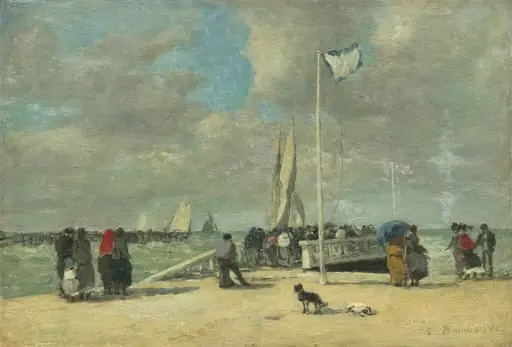
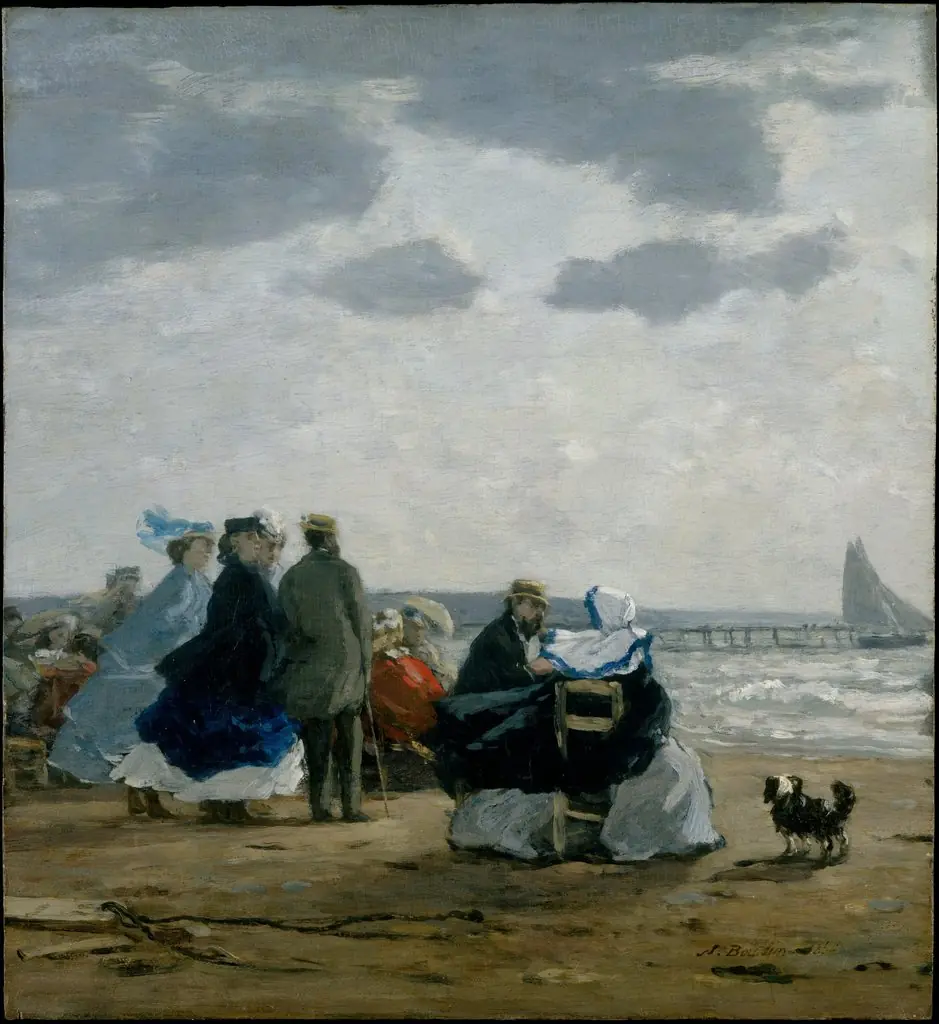
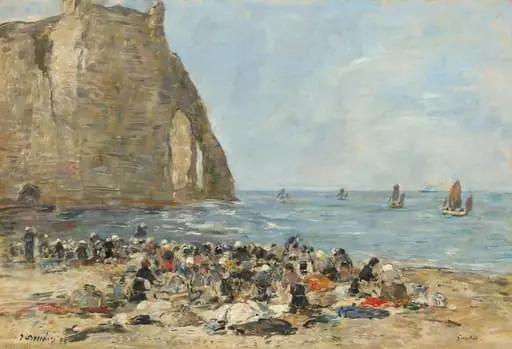
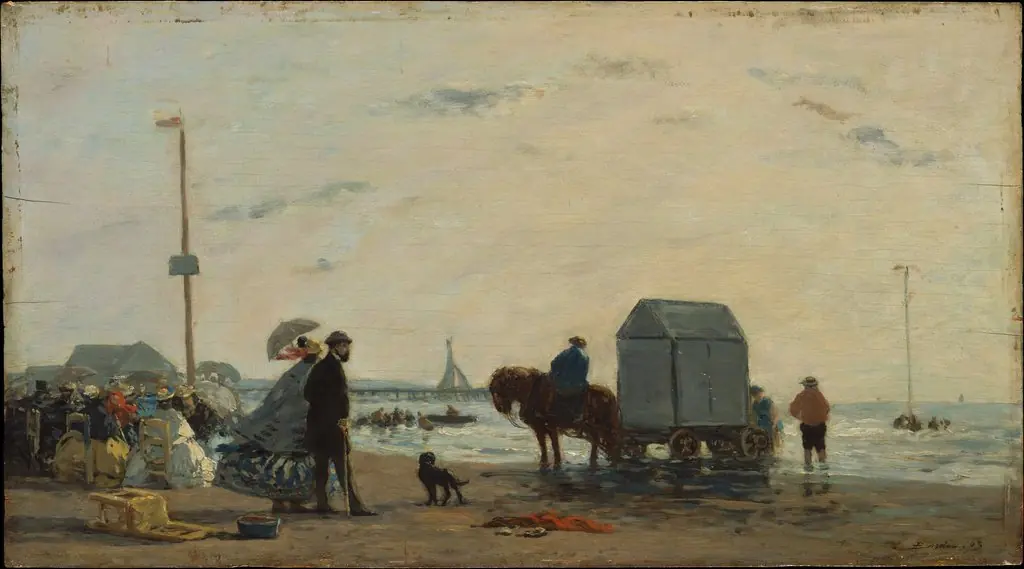
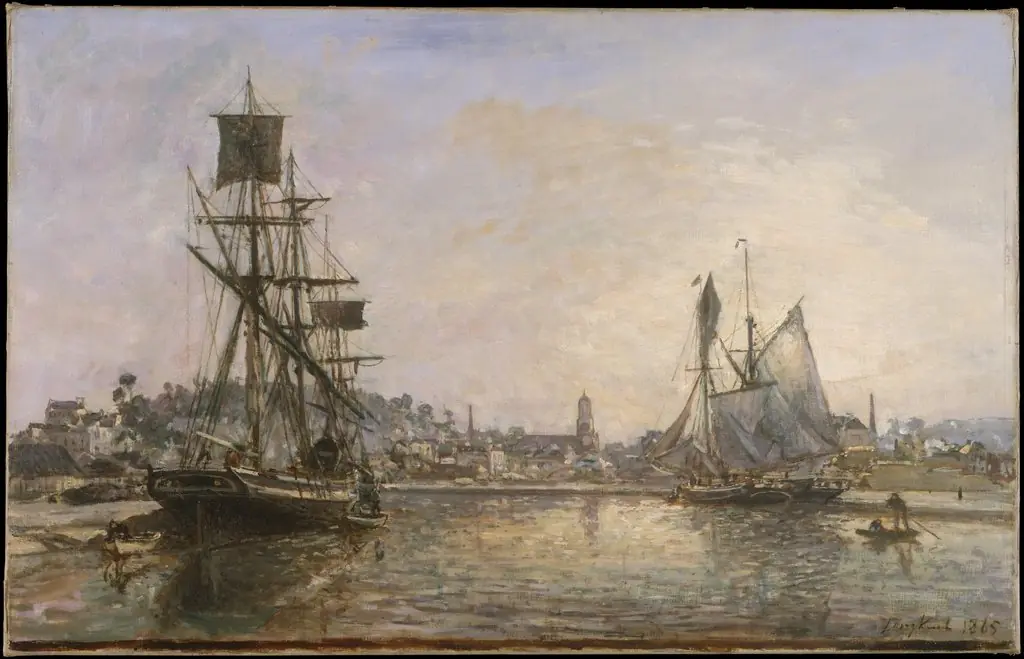
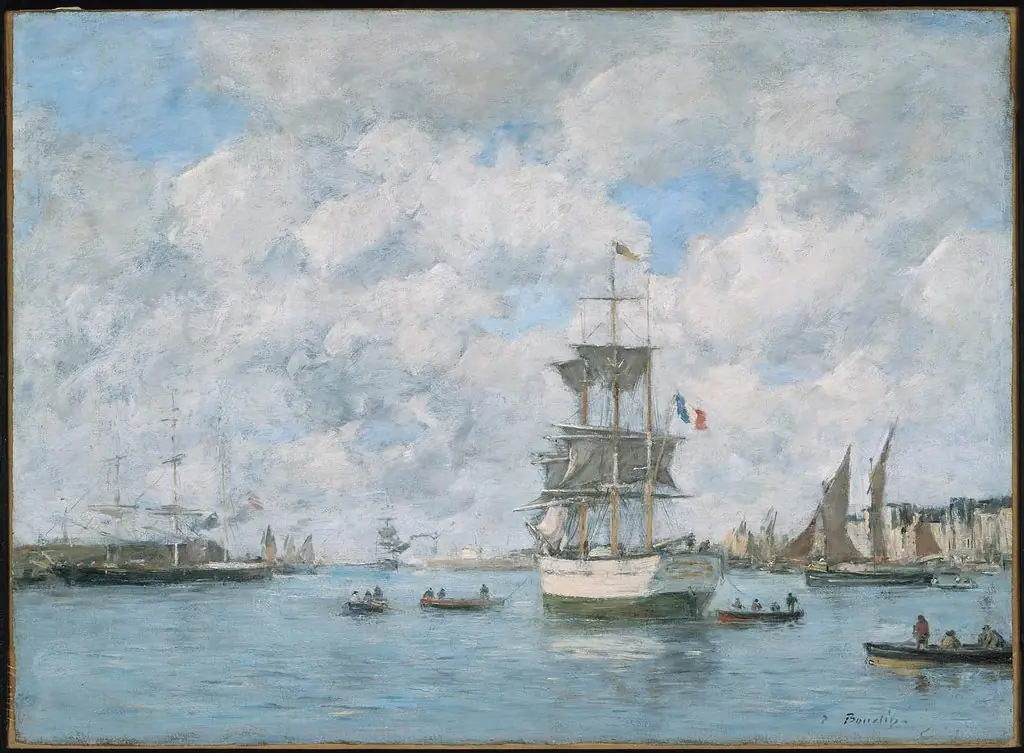
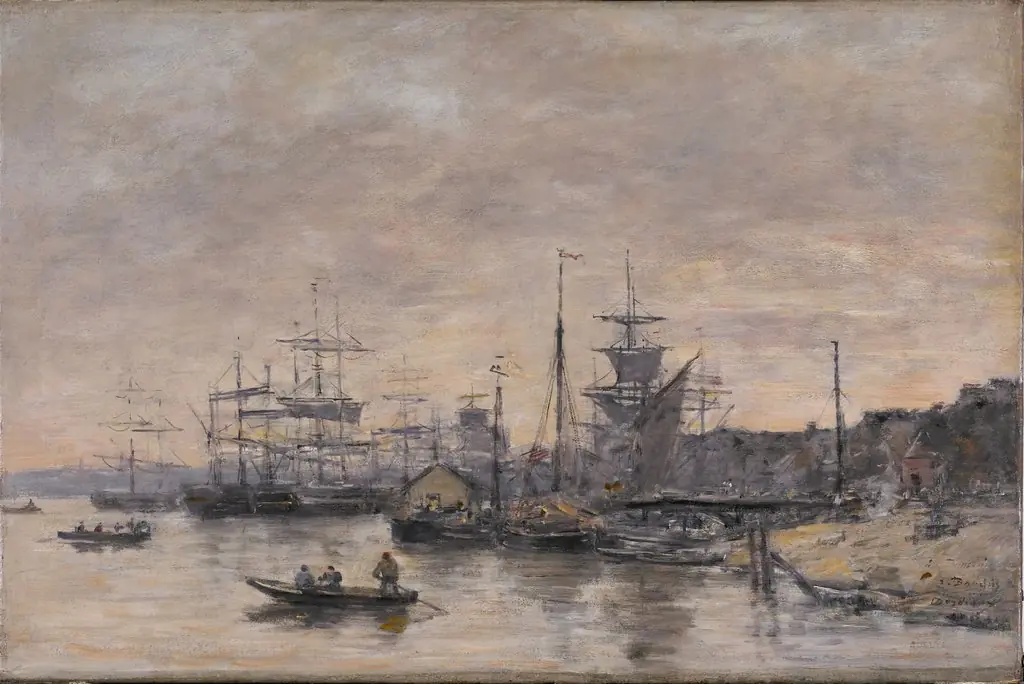
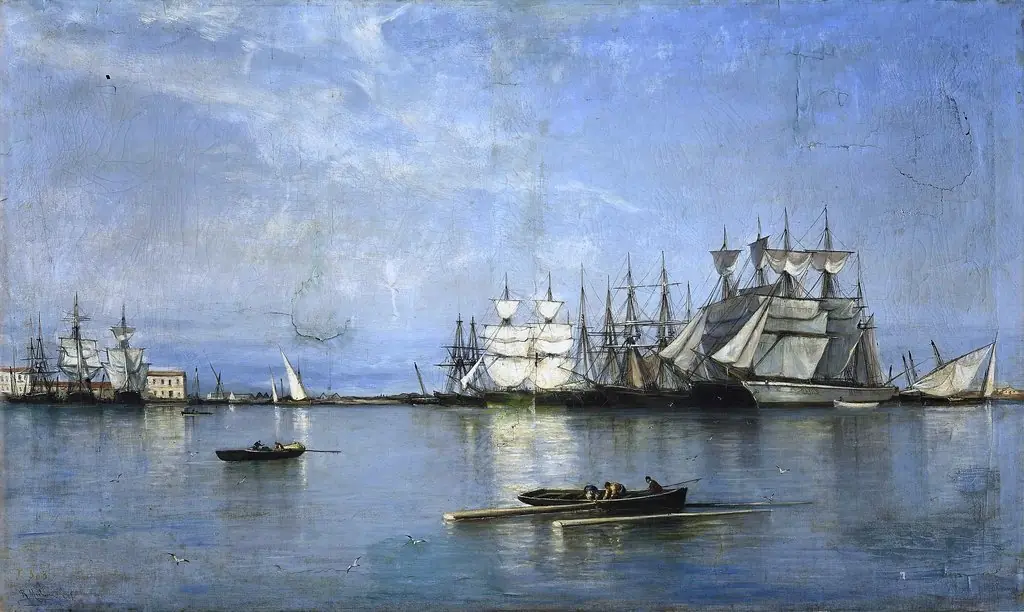
The painting depicts a calm harbor entrance with a central sailing vessel, its sails full, surrounded by smaller boats. A lighthouse stands on a rocky shore to the left, suggesting a navigational point. No human activity is dramatic or urgent; instead, the scene conveys routine maritime life. The stillness and muted tones suggest a moment of pause, neither celebratory nor turbulent, reflecting the quiet rhythm of coastal existence.
Technique & Style
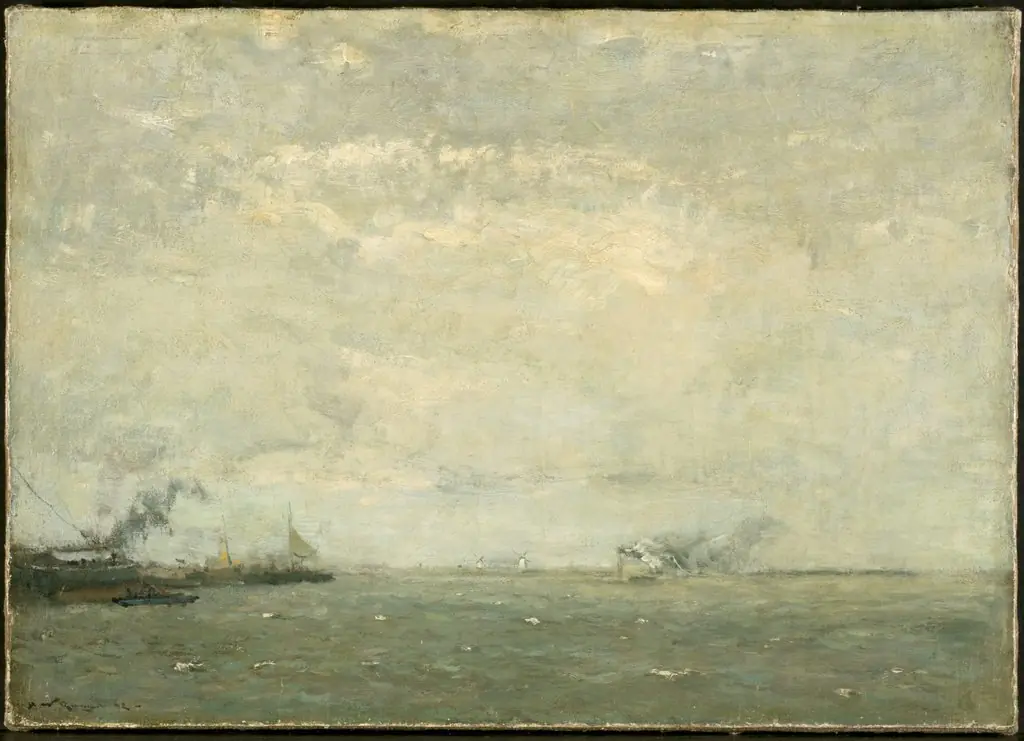
Boudin employed soft, loose brushwork to render the sky and water, allowing tones to blend gently without sharp definition. Colors are restrained—grays, blues, and muted ochres—enhancing the atmospheric quality. The reflection of clouds on the water creates a mirror-like effect, unifying the composition. His technique avoids dramatic contrast, favoring tonal harmony and a sense of immediacy drawn from direct observation of natural conditions.
History & Provenance
Painted in 1873, *Harbor Entrance* emerged during Boudin’s mature period, when he was increasingly recognized for his coastal studies. He had already influenced younger artists like Monet, who credited him with teaching him to paint outdoors. The painting entered the Museum of Fine Arts, Boston, in the early 20th century through a private donation, becoming part of the museum’s growing collection of French Impressionist-related works.
Context
In the 1870s, French artists were shifting from studio-based historic subjects to everyday scenes observed directly in nature. Boudin’s harbor views contributed to this movement, emphasizing transient light and weather over idealized composition. Though not formally part of the Impressionist exhibitions, his practice laid groundwork for their methods. His focus on the sea and sky aligned with broader 19th-century interests in naturalism and the sublime in ordinary landscapes.
Legacy
Boudin’s *Harbor Entrance* represents a bridge between traditional marine painting and the emerging Impressionist sensibility. His commitment to painting outdoors, his sensitivity to atmospheric conditions, and his rejection of theatricality influenced a generation of artists. While less celebrated than his contemporaries, his work remains a quiet testament to the value of observing the natural world with patience and precision.
Artist & collection
Artist
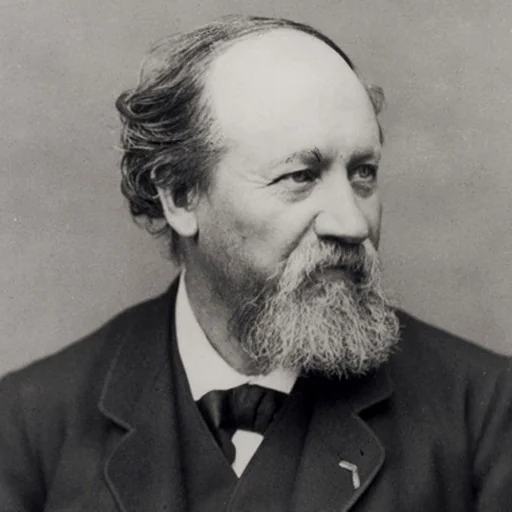
Eugène Louis Boudin (French: ; 12 July 1824 – 8 August 1898) was one of the first French landscape painters to paint outdoors.