Artwork
Brooduitdeling aan de weduwen en wezen te Katwijk
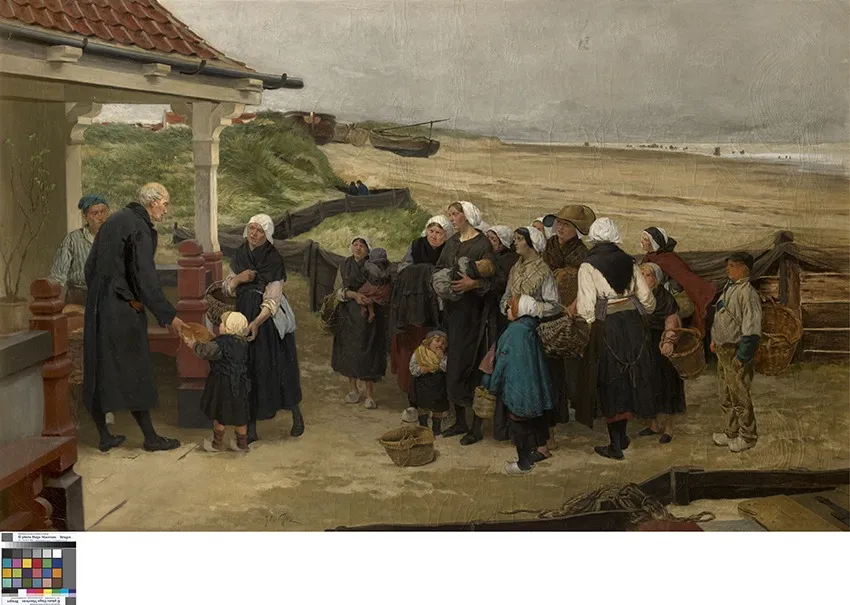
Brooduitdeling aan de weduwen en wezen te Katwijk is an oil painting by the Realist artist Félix Cogen. It dates from 1838 and is held in the collection of the Groeningemuseum.
About this work
Overview
Félix Cogen’s 1838 oil painting, titled *Brooduitdeling aan de weduwen en wezen te Katwijk*, presents a modest coastal scene from Katwijk aan Zee on the North Sea. The work, now part of the Groeningemuseum collection, captures a moment of communal distribution of bread to widows and orphans, set against a tranquil shoreline.
Subject & Meaning
The composition centers on a small group gathered near a tiled-roof building, their dark attire and modest head coverings suggesting modesty and solemnity. Baskets and other parcels are held in their hands, indicating the act of charity. The calm sea and dune backdrop reinforce a sense of quiet generosity within a working‑class community.
Technique & Style
Rendered in oil on canvas, Cogen employs a restrained palette of muted earth tones, allowing the figures to emerge from the soft, atmospheric background. Loose brushwork defines the dunes and water, while finer detailing delineates clothing and the textures of the baskets, reflecting a realist approach typical of early‑19th‑century Dutch genre painting.
History & Provenance
Created in 1838, the painting entered the collection of the Groeningemuseum, where it remains on display. Its provenance traces directly from the artist’s estate to the museum, underscoring its value as a regional historical record of social welfare practices in coastal Netherlands.
Context
The work belongs to a broader tradition of Dutch genre scenes that document everyday life and social customs. By focusing on the distribution of bread to vulnerable members of society, Cogen aligns with contemporary humanitarian concerns and the growing interest in depicting the lives of ordinary citizens rather than aristocratic subjects.
Artist & collection
