Artwork
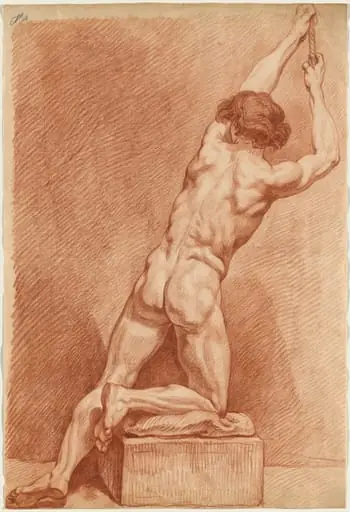
Standing Male Nude Seen from Behind
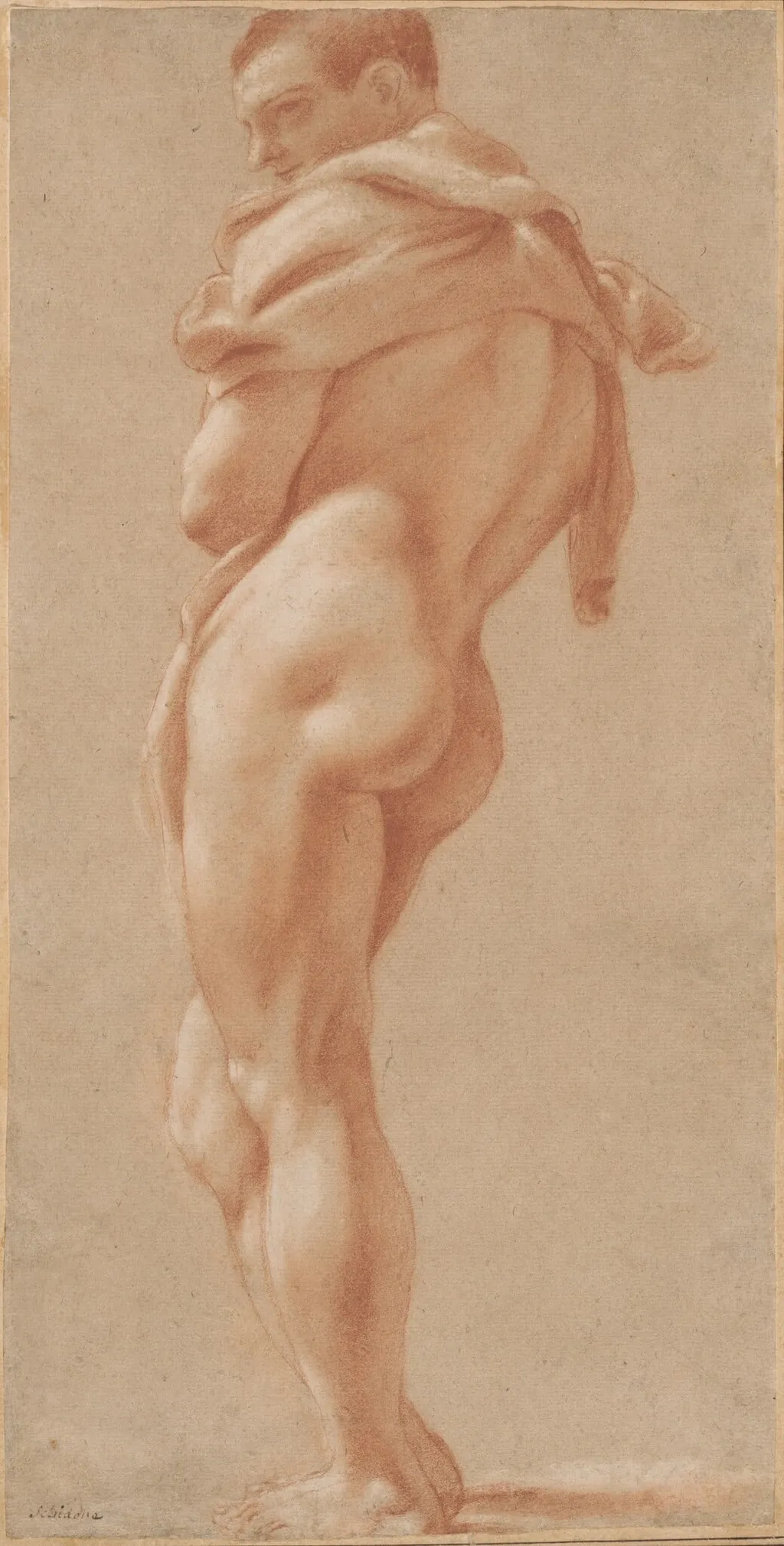
Standing Male Nude Seen from Behind is a chalk drawing by the Renaissance artist Pietro Faccini. It dates from 1590 and is held in the collection of the National Gallery of Art.
About this work
Overview
Created circa 1590, this drawing by Pietro Faccini captures a male figure seen from behind, rendered in red chalk with selective white highlights on laid paper.
Created circa 1590, this drawing by Pietro Faccini captures a male figure seen from behind, rendered in red chalk with selective white highlights on laid paper. As a Bolognese artist active in the late Renaissance, Faccini focused on anatomical study, using drawing as a means to explore the body’s structure. The medium’s simplicity underscores the directness of his observation, aligning with the period’s emphasis on preparatory work for larger compositions.
Subject & Meaning
The figure is anonymous, stripped of narrative or symbolic context, emphasizing form over story. Viewed from behind, the pose invites contemplation of musculature and posture rather than expression or identity. This approach reflects a scholarly interest in the nude as a subject of artistic study, common among Italian draftsmen seeking to understand idealized human proportions during a time of evolving aesthetic values.
Technique & Style
Faccini employed red chalk for its warm tonal range, adding white chalk to accentuate highlights along the spine, shoulders, and thighs. The strokes are deliberate yet fluid, suggesting careful observation rather than idealized perfection. The use of laid paper, with its subtle texture, enhances the tactile quality of the drawing, grounding the figure in a physical, tangible space rather than an abstract ideal.
History & Provenance
The drawing originates from Faccini’s workshop in Bologna, where he produced numerous studies for paintings and prints. While its early ownership is undocumented, it entered institutional collections in the modern era, likely through academic or private donations. Its survival reflects its value as a pedagogical tool, preserved for its technical merit rather than its association with a finished work.
Context
In late 16th-century Bologna, artists were redefining the study of the nude amid shifting artistic currents. Faccini operated between Mannerist refinement and the emerging naturalism of the Baroque, drawing from both classical models and direct observation. This work exemplifies the growing institutional focus on life drawing, particularly in academies emerging across northern Italy during this period.
Legacy
Though Faccini’s paintings are largely lost or obscure, his drawings remain as key records of his artistic process. This figure, like others in his oeuvre, contributed to the tradition of anatomical study that influenced later Bolognese painters. It stands as a quiet testament to the discipline of drawing as a foundational practice in Renaissance and early Baroque art education.
Artist & collection
Artist
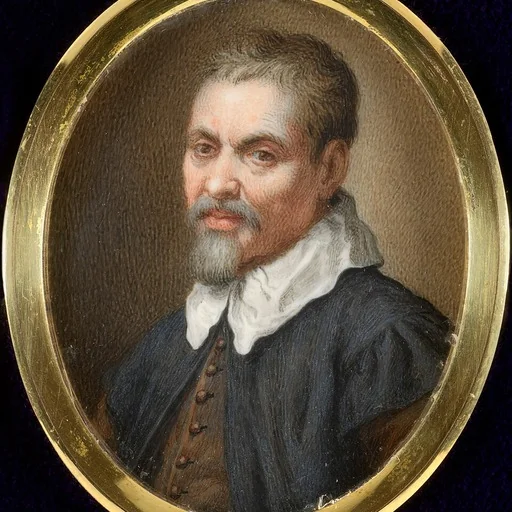
Pietro Faccini or Facini (1562 – 1 April 1602), was an Italian painter, draughtsman and printmaker. He was active near his birthplace of Bologna working in a style bridging Mannerism and the nascent Baroque.

![Nude Man Seen from Behind [verso], by Jacopo Palma il Giovane](https://artifactworldgallery.com/img/jacopo-palma-il-giovane--nude-man-seen-from-behind-verso--2de266ff199c839b-w320.webp)
![Male Nude [verso], by Michelangelo](https://artifactworldgallery.com/img/michelangelo--male-nude-verso--d48a81b2ad2bdbb8-w320.webp)
![Male Nude [recto], by Michelangelo](https://artifactworldgallery.com/img/michelangelo--male-nude-recto--8c3354d89884753a-w320.webp)