Artwork
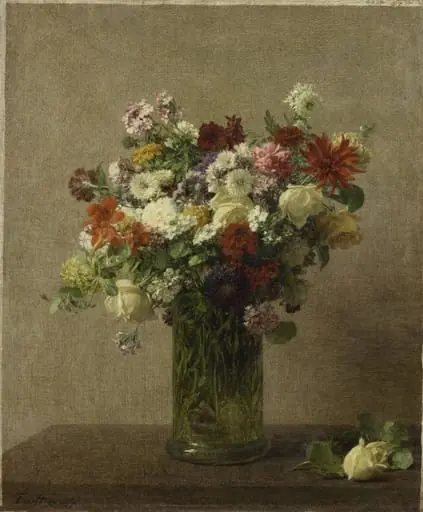
Vase of flowers, with Cherries and Almonds on the table
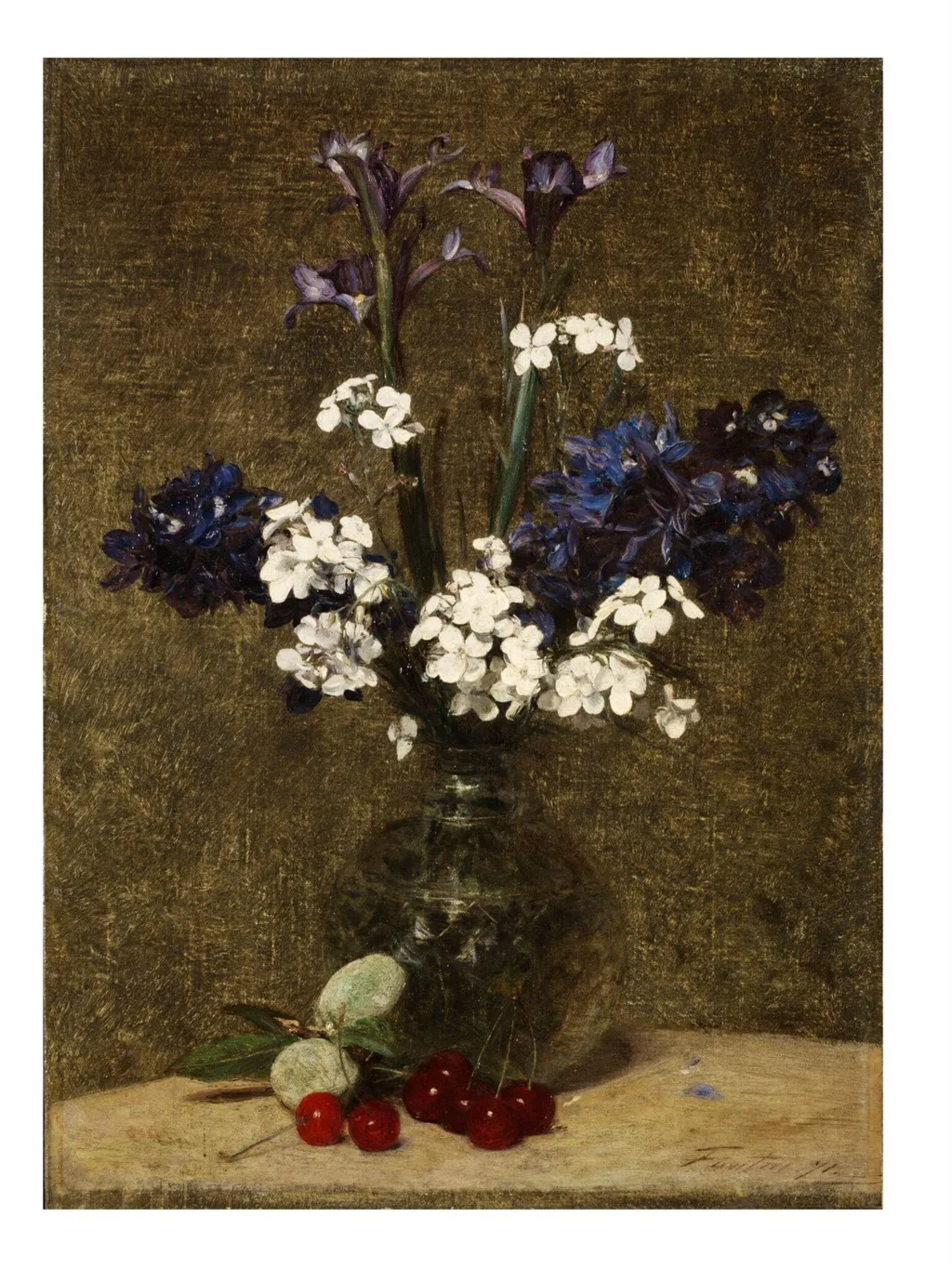
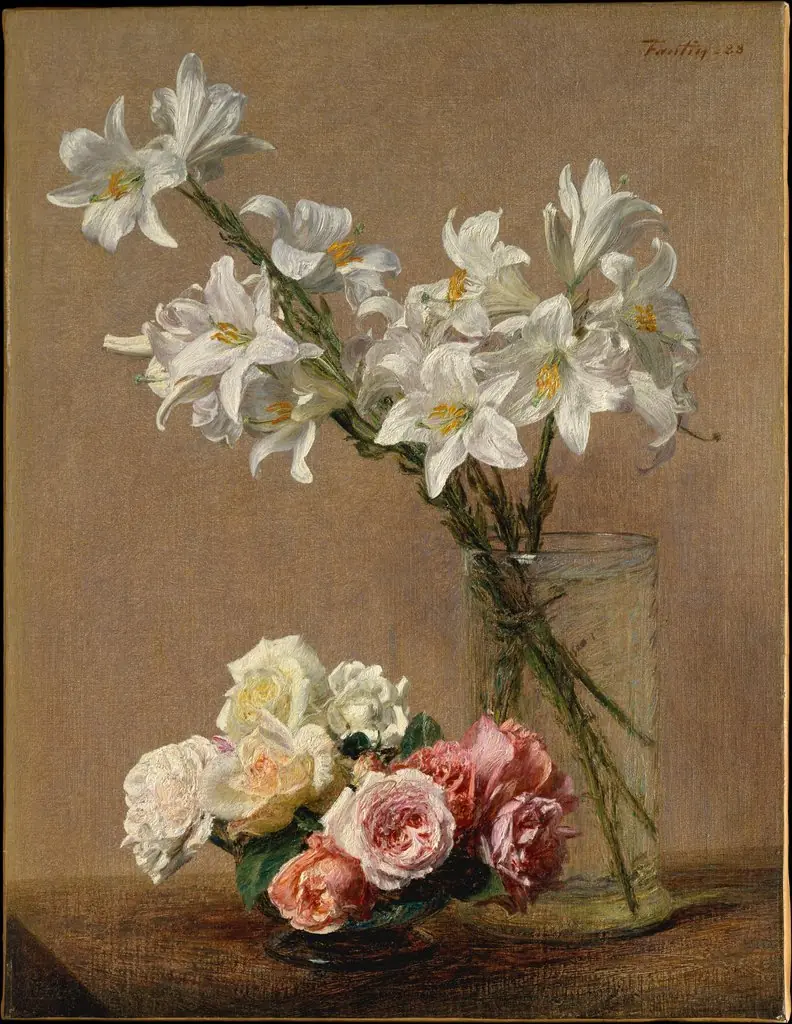
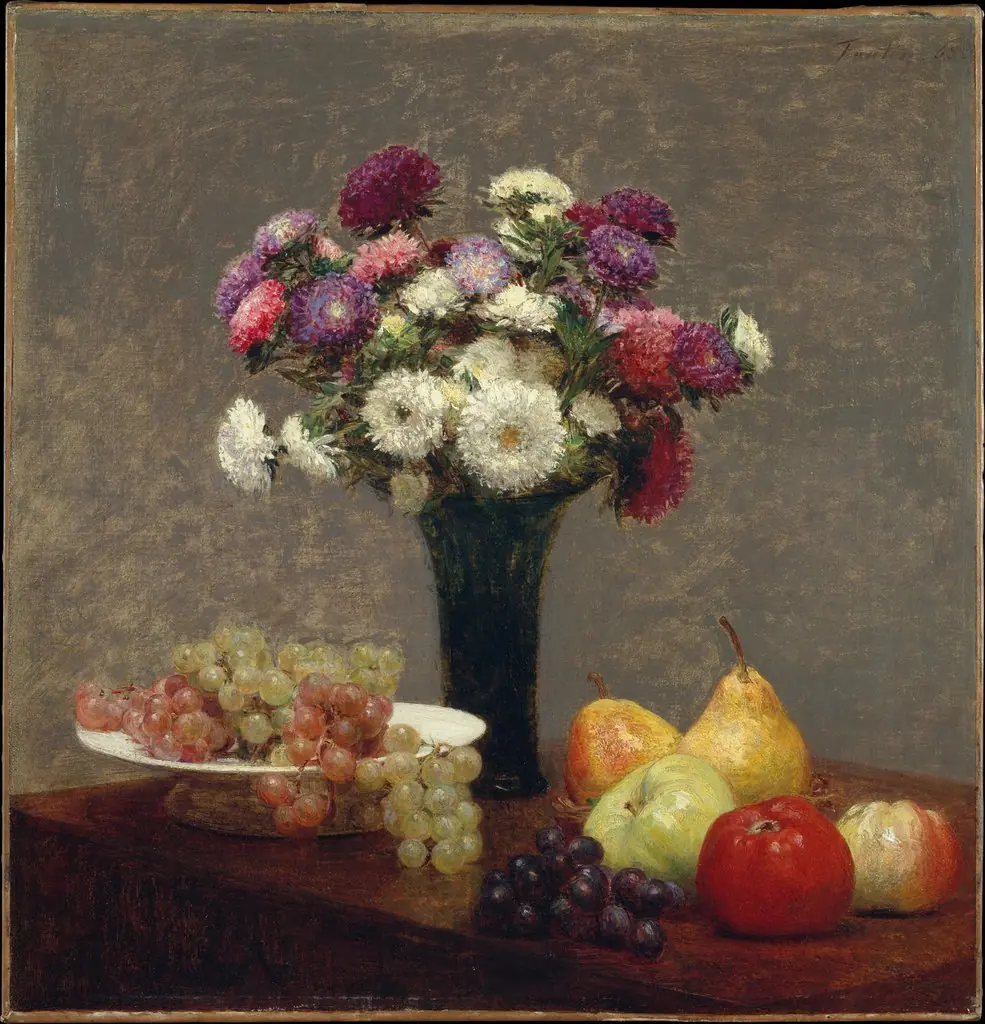
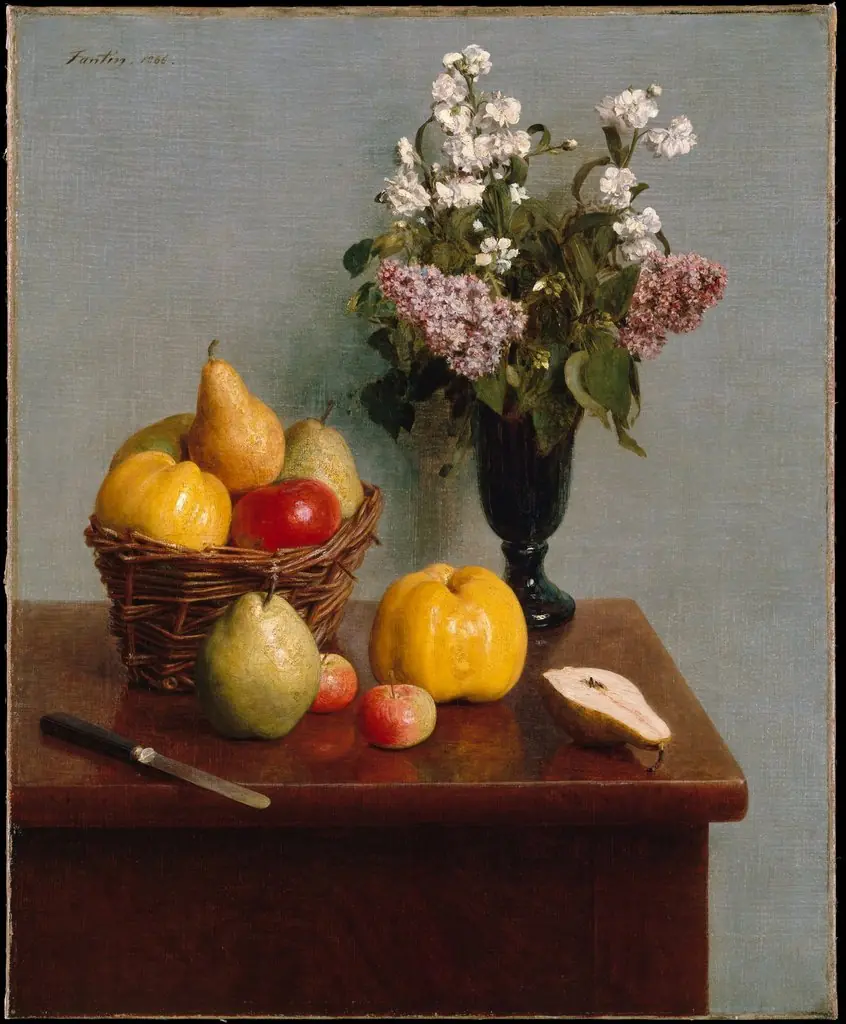
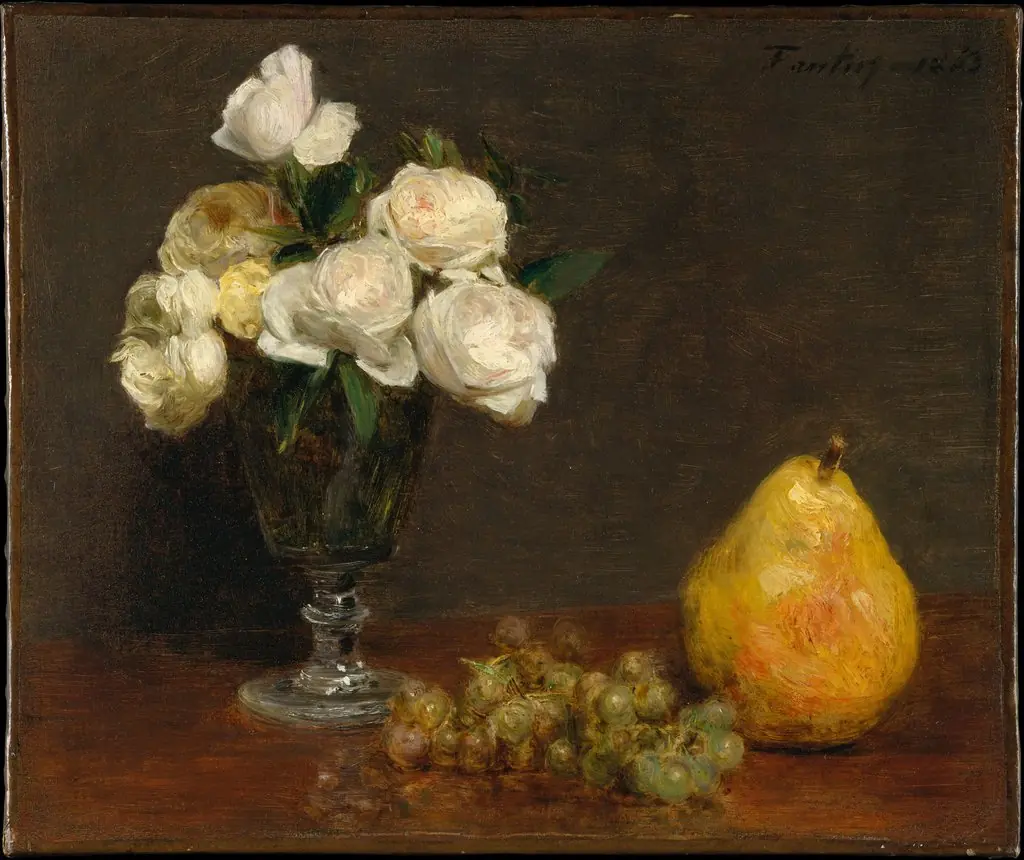
Vase of flowers, with Cherries and Almonds on the table is an oil painting by the Impressionist artist Henri Fantin-Latour. It dates from 1871 and is held in the collection of the Victoria and Albert Museum.
About this work
Overview
Henri Fantin-Latour, born in Grenoble in 1836, began his artistic training under his father and later at the Petite École de Dessin in Paris.
Henri Fantin-Latour, born in Grenoble in 1836, began his artistic training under his father and later at the Petite École de Dessin in Paris. Though he initially pursued portraiture, he gradually shifted focus to still-life compositions, particularly floral arrangements. By the 1860s, his meticulous flower paintings gained recognition, especially among British collectors, leading to regular exhibitions at the Royal Academy in London.
Subject & Meaning
The painting depicts a modest arrangement of iris, delphiniums, and wallflowers in a glass vase, accompanied by a few cherries and almonds on a wooden table. The objects are arranged with quiet precision, avoiding theatricality. The composition emphasizes quiet observation rather than symbolic narrative, reflecting a shift toward sensory immediacy in late 19th-century French art.
Technique & Style
Fantin-Latour applied oil paint in thin, translucent glazes, building color gradually to achieve subtle tonal transitions. Each petal is rendered with soft, deliberate edges, enhancing the tactile quality of the blooms. The dark, unmodulated background isolates the still life, focusing attention on texture and light. His method recalls Dutch Golden Age still lifes, though with a quieter, more restrained sensibility.
History & Provenance
From 1862 onward, Fantin-Latour exhibited frequently in London, aided by his friendship with James McNeill Whistler, whom he met in 1858. British patrons favored his restrained floral works, which aligned with Victorian tastes for refined domestic still lifes. He produced nearly 500 such compositions, making this genre the cornerstone of his legacy. The painting’s presence in British collections reflects this transnational appeal.
Context
Working amid the rise of Impressionism, Fantin-Latour pursued a path of careful observation rather than rapid brushwork. His attention to light, color, and surface texture aligned with emerging naturalist tendencies in French art, even as he avoided the radical breaks of his contemporaries. His work represents a bridge between academic tradition and the new emphasis on sensory experience in post-1850s painting.
Legacy
Fantin-Latour’s floral still lifes remain among the most enduring examples of 19th-century French still-life painting. Though less celebrated than the Impressionists, his methodical approach and sensitivity to color harmony influenced later generations of still-life artists. His works are held in major collections, including the Victoria and Albert Museum, where his technical precision continues to be studied.
Own this work as a print
Artist & collection
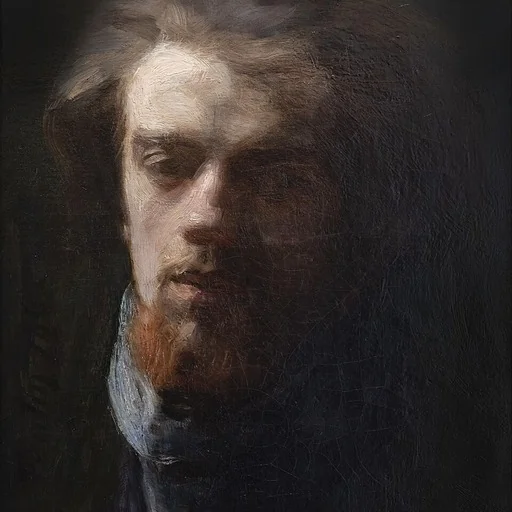
Artist
Ignace Henri Jean Theodore Fantin-Latour (French pronunciation: ; 14 January 1836 – 25 August 1904) was a French painter and lithographer best known for his flower paintings and group portraits of Parisian artists and writers.